Kendrick Lamar is known around the world as one of the best hip-hop artists out today. His searing, culturally relevant lyrics and carefully crafted production have pushed hip-hop as a genre to new heights. His talent and creativity have been recognized across the board, even by critics and institutions that have often dismissed the value of rap and other African-American art forms.
One can get a good feel for how much depth an artist has by looking at the kinds of discussions that listeners have surrounding their work. If you look up Kendrick’s lyrics on Genius, a lyric aggregate website that allows users to annotate lyrics, it is not uncommon to find songs where every single line is annotated and where most of them look more like essays than annotations. Not many artists deliver verses with that much content consistently enough to warrant that kind of discussion.
As the fantastic Youtuber Nerdwriter points out, one thing that makes Kendrick’s music so creative and work so well in a genre with so many different producers and people needed to make the product is because he is a master collaborator. He knows how to take people’s diverse talents and use them in the right way to better the project. One way he does this well is with music videos.
In all honesty music videos can be pretty crappy most of the time. They usually are promotional money-grabs involving a sickening number of jump-cuts showing the band playing in a warehouse or a beach or what have you. But Kendrick Lamar approaches music videos as more of a visual component created specifically to complement each song. In this way, each video sort of takes a new life of its own. Instead of just merely going along with the song, each video augments the material in a new way that provides a different experience than what you would get on the album. Often, Kendrick’s videos are longer than the actual tracks and might contain different beginnings, endings, and transitions.
The music video I wanted to look at in particular is the video for the song ELEMENT. of his 2017 album DAMN. This video, directed by Kendrick Lamar in collaboration with Jonas Lindstroem, is a breath of fresh air from most music videos: The shots are long, most are even in slow motion. Each image is very well composed and the style conveys a sense of close, yet detached observation. Lindstroem began his career as a fashion photographer in Berlin so it makes sense that he composes these shots to be more like images that breath, each one drawing the viewer in closer to the stories contained in each. Most of Lindstroem’s other film work uses the medium in this way, almost as a means of portraiture and I think that Kendrick and his team were very purposeful in choosing him to bring that style to this project.
Opening shot of ELEMENT.
The song ELEMENT. is a very personal one. It revolves around Kendrick’s struggles as a Compton native suddenly living in the spotlight and how he still retains his roots despite how different his life is now. The songs lyrics are a sort of aggressive assertion of Kendrick’s identity amidst an industry with a lot of “whack artists” as he mentions in the third verse. In the video, a lot of this lyrical reflection is manifested through the treatment of violence. Violence is a very prevalent theme in the images of the video and its a part of life in places like Compton where Kendrick grew up. Essentially its a part of his element. In the video these images are strung together in a way that obscures any direct narrative between them. Instead each individual cell acts as a threshold into a story that we are not given the context of, just a single moment. This gives violence a sense of ubiquity and emphasizes the cyclical nature of it in communities like the one Kendrick grew up in. One of the most striking shots to me is the one of the father trying to teach his son how to fight. That is something that my dad has never had to do with me but had I grown up somewhere else, its a big possibility that that would be a part of my life, an aspect I would have to address and be ready for.
One hugely important aspect to this video is the many references it contains to the work of photographer Gordon Parks. Parks was a humanitarian who worked as a photographer primarily documenting urban and African-American life from the 1940’s up until his death in 2006. His work exposed truths about the everyday lives and struggles of impoverished communities to audiences in America that had never been exposed to them before. There are several images from the music video that are direct references to photographs taken by Parks. The provocative opening shot of the video is a hand rising out of the water which is the same subject as an untitled photograph Parks took. Another striking example is a recreation of a photograph by Parks called Boy with June Bug.
Side by side comparison of the shot from ELEMENT. and the photograph by Gordon Parks
Its fitting that Kendrick would choose Parks’ work to pair with his music because both are essentially doing the same thing with different mediums. These references are littered throughout the video which adds a unique dimension of depth and experience that one would not have been able to have from the song alone. Kendrick Lamar has already taken over the rap world with his music alone, but its really cool to see an artist that can navigate other mediums so deftly and still manage to pack a lot of meaning into something as trivial and media-driven as a music video.
Famous Auschwitz survivor, writer, and activist Elie Wiesel once said, “Without memory, there is no culture. Without memory, there would be no civilization, no society, no future.” The quote by itself seems to be just about memory in a general sense but considering the context of Wiesel’s experiences and activism, there is a very poignant truth: there is no hope for future generations to create a better future unless they remember and understand the past. Culture and art as a whole are very reflective of this sense of collective memory. Our movies, book, shows, and art all reflect the accomplishments we remember the most triumphantly and the losses that we feel most the most acutely as a society, particularly on a national scale. The question I am addressing is where music fits in our cultural memory and how a piece like David T. Little’s Haunt of Last Nightfall can serve as a sort of cultural artifact, expanding the awareness, breadth, and influence of a certain point in time on todays cultural memory.
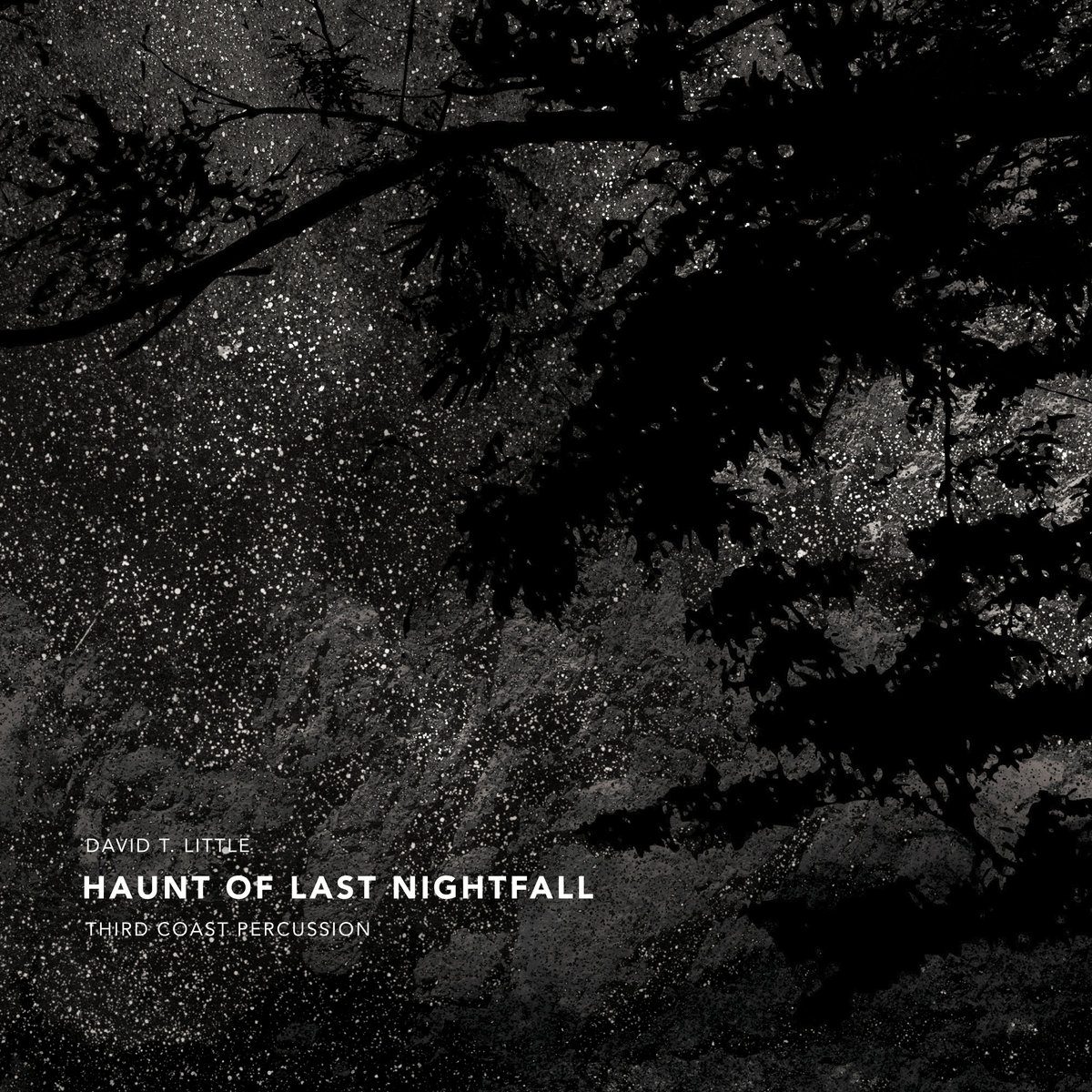
Haunt of Last Nightfallwas premiered and commissioned by Grammy Award winning percussion group Third Coast Percussion. The piece takes influence from experimental metal music, specifically the bands Sunn O))) and One Day as a Lion, and is inspired by the events that took place on December 11th, 1981 in El Mozote, El Salvador where an elite battalion of the Salvadoran government, funded by the United States, slaughtered over 800 innocent civilians. While it is not my intention to be unnecessarily graphic, I believe that this story is important and needs to be told in order to understand what this piece is really about and what it and this history means for us today.
CONTENT WARNING: The accounts of these events involve frequent mention of extreme violence such as murder, decapitation, and rape.
The source material for the account I am about to give comes entirely from Mark Danner’s amazing piece of journalism “The Truth of El Mozote” published in the New Yorker in 1993 which was the first definitive piece written on El Mozote after both the Salvadoran and U.S. governments attempted to deny that the massacre took place. It is a highly fascinating read and delves much more into the details of the Cold War-era politics of the story than I will here.
In the early eighties, El Salvador found itself at the onset of a messy civil war between leftist guerrilla groups and the national government. The right-wing U.S. administration felt responsibility to make sure that fascism crept no further into the western hemisphere and thus had aligned priorities with the Salvadoran government. Avoiding trying to create another Vietnam, the U.S. chose to provide funding and training for the highly inept Salvadoran armies rather than actually send in troops. Early on in the war the guerrilla groups remained ever elusive to the government but with military reform, the government began an operation called “Hammer and Anvil” in the northeast portion of El Salvador called Morazán where they knew guerrillas were hiding. The operation was spear-headed by an elite group of government soldiers called the Atlacatl Battalion lead by the ruthless Domingo Monterrosa. The Atlacatl had a fire in them that the rest of the army didn’t when it came to exterminating the guerrillas or as they called them, “delinquent terrorists”. They proceeded throughout Morozán destroying all villages that could be guerrilla outposts, not matter the cost. Locals in villages in the area knew that the army was headed their way and were actually told by richer villagers that they trusted to stay put and that the relatively small town of El Mozote would be safe since they largely did not deal with guerrilla fighters. El Mozote also had a large population of Protestant Evangelical Christians which helped their case considering Catholic liberation theology had been contributing to guerrilla recruitment in other villages, so guerrillas had learned not to recruit there.
This fact is what made El Mozote special. Most of the towns ravaged by the Atlacatl in Morazán did at least have some guerillas there or civilian guerrilla sympathizers, but El Mozote was known to be largely outside the sphere of influence of the guerrilla fighters. Yet because of great intelligence and mobility the guerillas were able to stay one step ahead of the government and the army grew increasingly frustrated. Then on the evening of Thursday, December 10th, 1981, the Atlacatl arrived in El Mozote and went around through the village banging on doors, forcing the residents from their homes into the street. As night fell, the soldiers lined the entire village up and forced them to lie literally mouth down in the street. Much what actually happened in El Mozote is known from a single eye-witness account, Rufina Amaya, who was the sole survivor of the massacre.
She, along with her husband and four children were among those laying in the dirt that night as the soldiers kicked them and asked where the guerrillas were. After some time the soldiers ordered everyone back into their homes threatening that they would be shot if “even so much as their noses” were poking out of the door.
David T. Little’s piece follows this narrative of events pretty faithfully although it is not completely programmatic. The first movement “Curtain, El Mozote” sets the scene for the piece and story with a sultry marimba voice, clapping, and deep synthesized bass. It is also worth noting that in the video recording of Third Coast playing the piece, the stage is almost completely dark except for a few lights lighting the instruments and performers. This adds to the haunting, night-time feeling the piece capitalizes on. The second movement, “Between the Hammer and the Anvil“, is quicker, full of deep, aggressive drumming, piercing brake drum sounds and introduces electric guitar which plays a prominent role representing violence throughout the rest of the piece. The third and fourth movements then begin to focus on the events of the night that the Atlacatl arrive. The third is called “Last Nightfall” and to me it evokes the feeling of silent dread and uncertainty of that night. The fourth movement “Line Up/ Face Down” returns briefly back to the chaotic drumming and guitar of the second movement before melting into the lush, hammond organ sounds of the fifth movement: “Coda: And there was evening…” This concludes the first half of the piece which David T. Little describes as ” a ghost play in two acts”.
On the morning of Friday December 11th, 1981 the soldiers ordered everyone in El Mozote out of their homes and into the plaza again. From there they were divided into groups of men and then women and children and then sent into separate locations: men in the church and women and children into the home of one of the local residents. An officer involved in the operation later said that the plan was to interrogate the village for information about the guerrillas yet it is unclear how strong this intention was because after roughly an hour of questioning, Rufina and the other women and children could hear the men shouting from the church and see the soldiers marching bound and blind-folded men out of the church and into the plaza and streets. From a small window in the house they were held Rufina and her nine year-old son Cristino saw her husband Domingo Claros in one of the groups try to escape with another man and watched as the Atlacatl soldiers gunned them down on the spot and then walk over to the still breathing men and use their machetes to behead them. After a similarly brief questioning period with the women, the soldiers came in and started picking off young women and girls as young as ten and marching them out of the village and into the nearby hills named El Chingo and La Cruz. The rest of the women soon could hear the screaming coming from the hills of the girls being raped and shot. As the afternoon wore on, the soldiers began taking the mothers from the children and out into the town to be killed as well. Rufina was in one of the last groups, leaving behind a house full of screaming children, to be marched into the streets where the soldiers began burning houses full of corpses. Once the women saw the bodies screaming and chaos broke out. Rufina fell to her knees in despair and managed to crawl out of sight of the guards under a bush near a crab-apple tree. Some of the soldiers came to rest near where Rufina was hiding after they started burning more buildings. She could overhear them discussing whether they should kill all of the children or not. She heard one finally say, “We have orders to finish everyone and we have to complete our orders. That’s it.” After that she could hear the children begin screaming as the soldiers finished them off too.
As evening fell, shrieks could still be heard from the girls left on the hills and the soldiers began to burn the rest of the village. Soon silence began to fall and the Atlacatl eventually marched out of El Mozote, killing even the animals, leaving nothing behind. Rufina eventually escaped far enough to reach the guerrillas and share her story of survival through their underground radio.
The second half of Haunt of Last Nightfall opens up with the sixth movement “… and there was morning- the Second Day”. The beginning starts as softly and innocently as the people of El Mozote woke up that fateful morning, conjuring images of a sunrise with small metallic sounds. The movement drastically shifts towards some of the most aggressive music heard yet on the piece, with large, all-encompassing electric guitar chords that become almost unbearable. The next movement “Smoldering Hymn” still uses the ominous and terrifying guitar sounds but pairs it with Hammond Organ at a much slower pace. The eighth movement of the piece is entitled “Prayer (for No. 59)“. This title has an interesting background though that isn’t immediately obvious. In the beginning of Mark Danner’s article he describes the work of Argentinian Forensic Anthropology Unit that is there to examine some of the remains of the people that died in El Mozote. One young woman is examining the remains of a young child labeled No. 59, and finds in the shreds of clothing left, a bright orange plastic horse. In his program notes David T. Little makes the sad connection that although this child’s family was well off enough to provide them with a nice toy, it was not enough to be able to escape a horrible fate.
The last movement of the piece also has a bizarre backstory. Entitled “Postlude: The Girl on La Cruz“, it refers to a haunting story told by soldiers in the battalion that was also recorded in an official report of the operation. The story is of a girl who instead of screaming while being raped repeatedly on La Cruz, sang strange evangelical hymns. Even after being shot in the chest it was told that she continued to sing. Mark Danner’s article describes it best:
“She had lain there on La Cruz with the blood flowing from her chest, and had kept on singing — a bit weaker than before, but still singing. And the soldiers, stupefied, had watched and pointed. Then they had grown tired of the game and shot her again, and she sang still, and their wonder began to turn to fear — until finally they had unsheathed their machetes and hacked through her neck, and at last the singing had stopped.”
Danner explains that this story is related to a certain supernatural fear the soldiers came to have for the people of El Mozote. Guides with the soldiers at the time told of hearing the soldiers talk about the evangelicals as if they had a strange power about them. Some, like the girl on La Cruz, also sang as they died, while others did not resist the soldiers and delivered themselves over to God as they died. I think that David Little’s description of this piece as a ghost play relates to this idea. Theres a strong sense in his piece of the permanence of memory. To me, this piece doesn’t come across necessarily as a purely programmatic piece that accompanies these events like a film score. Rather, it seems like this piece is almost revisiting the memory of these events or perhaps visiting them for the first time as someone who doesn’t know of these stories.
I think that power of this piece comes from that idea of reflecting on something that has come to light, because I, and I assume most other people, have never heard of this tragedy. I find it absolutely astounding that an event that can be called the largest massacre in modern Latin American history can be something that lives outside of the public eye. And while I can’t speak for many other nations, I believe that it has a lot to do with America’s unwillingness to deal with ugly parts of its past. Even in the decade of civil war El Salvador endured following the massacre at El Mozote the U.S. continued to support and fund the Salvadoran government, in light of these atrocities. The worst part about the immediate aftermath of El Mozote is that while in El Salvador, where Rufina’s story was being blatantly denied or ignored, the story was widely reported in America but failed to garner any real action from Congress, who decided that it better let the atrocities in El Salvador slide because who knows what will happen if the communist guerrillas win, all the while downplaying the extent of the massacre in El Mozote to try to save face and rationalize their decisions.
To me it all seems very relevant in today’s discussion about preservation or removal of Confederate monuments. If we as a nation cannot agree that the actions taken to suppress the humanity of others over 150 years ago were wrong and motivated by hatred, then it begins to make sense why America would rather collectively forget the hundreds of families that were slaughtered by our guns in the hands of troops we trained. Mark Danner’s article was published in 1993 and his book on the subject was released in 1994. Danner has been the only real voice on the subject since then yet the Salvadoran government did not formally apologize for the atrocities until December of 2011.
This is why I think that pieces like Haunt of Last Nightfall are so important. I would never have known about these events had I not heard of this piece and been interested enough to look up what it was about. I really love pieces that suck you in and make you want to learn more about them. Because now I can say that I know something about the United States’ response to the Cold War and how it relates to politics today that I definitely didn’t know about earlier and might not have ever known. Its very similar to what the Santa Monica Symphony was trying to do by inviting Dennis Prager. They wanted to use him as a tool to reach a larger classical music audience. David T. Little essentially does the opposite by using music to reach and connect with a larger audience that may not know about this terrible political tragedy.
This piece and this story are not ones that you are likely to forget and I think thats important especially considering the distance between these events and today’s generation. I think that as a part of this generation we have a responsibility to history that needs to be shared and learned from, and not only to tragedies like this that we are removed from but especially to mistakes and pasts that we may be a little closer to. And I think that art makes encountering those things a little more bearable, or at least a little more humbling. It provides a common ground on which we can meet with others and helps us remember what is most important, individually and as a society. I think that David Little sums it up perfectly in his thoughts about why he wrote the piece:
“What we know shapes us, and whether I like it or not, I now know this.”
I super-duper love my metronome. My metronome is one of the oldest musical friends I have, at least in this leg of my musical journey. I have had it since 8th grade and I’m pretty sure I prepared for one of my first All-state auditions with it. Its been with me since day one. Its also been paramount to my musical success as a percussionist and often its easy to forget the role that metronomes in general have taken as a part of my musical growth.
My metronome and the most popular other metronomes on the market today are a part of a line of metronomes called Doctor Beat that are made by Boss. Now the smallest member of this lineup is the DB-30 which is the cutest little clip on thing you’ve ever seen and it was actually the metronome I had before I bought my current one. Then there’s also the celebrity DB-90 which looks like this:
DB-90 Metronome
The DB-90 is best known for single-handedly keeping every single drumcorp or marching band in the country in time. The mere sound of it has been known to trigger traumatic episodes among former band members, causing them to relive the sights and sounds of getting screamed at by their psychotic band director whilst simultaneously getting roasted by the sun. Its clunky silver plastic casing weighs at least a couple of pounds and it quite literally eats 9 volt batteries. It comes with enough weird, useless grungy beat presets to run an underground Polish nightclub along with probably the most disturbing synthetic counting voice samples in existence that have never once helped anyone play in time better ever. And the worst part, at over $150 on most sites, the DB-90 is probably the stupidest piece of technology available. Yet in spite of the the supreme extra-ness of the DB-90, metronomes have come a long way through history to earn the prominence they enjoy in today’s musical culture.
The history of metronomes is actually not all that fascinating. It pretty much starts out in the same place as clocks, where Galileo observed and the described the properties of a pendulum. As time and discoveries progressed pendulums were able to be made with adjustable weights which affected how fast the period of the swing was. In 1814, a man by the name of Dietrich Nikolaus Winkel invented the metronome while studying pendulums. His design was the first truly successful metronome because it made sound and had a spring acting as as escapement that kept it ticking. Winkel was not successful at patenting his “chronometer” although, and in 1816 another fellow named Johann Maelzel took Winkels design, slapped a scale on it designating certain bpm’s, and called it his own.
Maezel Metronome
This type of metronome is the one we have all come to know and love as the “classic” metronome. With the advent of mass-produced electrical appliances in the 20th century, metronomes like the Franz electric metronome began gaining ground. Nowadays most metronomes are digital, but Maelzel’s classic style metronomes still appear and are even written for in pieces like Casey Cangelosi’s “Slight of And Evil Hand.” Their effect on the way we write, perform and interpret our music today is immense.
My personal metronome in particular has a special place in my heart, unlike the teeny DB-30 and the utterly awful DB-90, I have a DB-60 which is juuuust right. It has all of the basic functions that you actually need in a metronome plus a few other actually useful extra ones. Best of all its extremely durable, I’ve dropped it on hard floors all the time, and I’ve changed the batteries less than ten times in the 6+ years I’ve owned it. I recently misplaced it for a few weeks over the summer and I was pretty surprised by how upset I was, I mean this little guy has been with me this whole time and even though its just a metronome, I really appreciate all it can do for me everyday. Its amazing how much I end up using it and its so easy to take something simple like that for granted every day, so even though my heart doesn’t skip a beat every time I see it, this metronome definitely clicks for me ;D