Round of Applause for Lady Gaga

There is no arguing that Lady Gaga takes her artistic ideas to the next level. Whether it be her fashion decisions, or her music videos, she is not easily missed. She showed up to an award show in a dress made entirely of meat cold cuts. She wears shoes that put her 12 inches above her normal height of 5’2’’, wigs of every color from platinum blonde,  jet black, and all the colors in between. Lady Gaga’s confidence to be a nonconformist and stay true to her views of art is what I believe makes her thrive in the industry. I cannot imagine what being a part of that pop music industry must be like, but there are certain trends within it that come and go but, I believe, that in some cases society adheres to. Lady Gaga introduced artistic ideas, both in her appearance and music videos and music which were new at the point that she entered and began to rise in the field. When given this assignment and reading through the prompt, Lady Gaga was the first to pop into my head. Honestly, it has been a while since I have listened to her music, as I find myself drawn to music that is of more a laid back feel. I wanted to write “calming” but I figured there are people out there who find upbeat music something that can calm them down.

After watching a few of her videos, I found that each one I watched were, obviously, very different. However, with all of the ones I watched, I thought: dark colors with pops of bright colors, scantily clad dancers and Lady Gaga, music video does not distract from the music itself, it just adds to it. I have seen some music videos in the past where the video content does not add to the music, but is just what I would have expected with a song. For example, videos which are just the song but in movie form, Taylor Swift’s videos from 2010 or so come to mind.

Lady Gaga’s video for “Applause” stuck out to me the most. I enjoyed the pops of colors that she incorporated in the video. Also, before she even starts singing, we already see eight shots of her, in four different outfits already. That’s 15 seconds, 8 shots, 4 outfits. You can tell the detail in which she and her producers/directors think through the video, second by second. She stays active throughout the video, dancing, or being suspended from the ceiling. Also, even when she is wearing very little clothing, the bra she is wearing is designed as a pair of hands, which makes sense as the song is called “Applause” but still, I think it is pretty creative. I think shots such as 1:13 are really cool when the background is black out and but she is wearing bright blush and yellow eyeshadow, which must have been enhanced digitally. But that goes to show how detailed this video is and how the editing process must have taken a lot of thought and precise work. Her choreography is very angular which fits well together with the beat and the abrupt cutting from one shot to another. One of the lines in the song is “art and pop culture and me”. I think this line really ties together Lady Gaga and her presence in this industry. And it goes beyond that as well, as she voices her opinions on political and societal issues.

It is clear that she has a strong influence on her fans as I could not find a single critique in the comments. And that was after scrolling for 5 or so minutes and I did not even get through all the comments. A few of the comments stood out to me, as many of them were about how she had reached 300 million views.

7 months ago, semar R wrote: “she’s definitely underrated. so authentic and beautiful. she’s a living work of art”.

Around the same time, Hanna D wrote: “this is ART.”

This came from Avatar Wan TV: “This music video is a masterpiece. It’s SO trippy, colorful, fresh, creative, original, artistic, etc. the list goes on. I just love how daring and experimental Lady Gaga is, not only in pop music, but in pop culture as well. I respect her dedication. I also heard she’s back in the studio working with RedOne again. She’s returning and I can’t wait.

claps claps claps”


I liked all of these comments because in an article about her in Rolling Stone Magazine, the author wrote, “The former Stefani Joanne Angelina Germanotta is on a mission: to prove that Lady Gaga is art and that her art is not a mask. It is her life,” (http://www.rollingstone.com/music/news/the-broken-heart-and-violent-fantasies-of-lady-gaga-20100708).


All in all, Lady Gaga has made and is making her mark in pop culture and this industry. She is going above and beyond and does not back down in using her voice and showing her artistic ideas.

https://www.google.com/search?biw=1279&bih=619&tbm=isch&sa=1&ei=asUdWtiDCqWXjwTs7Lm4AQ&q=lady+gaga+meat+dress&oq=lady+gaga+meat+dress&gs_l=psy-ab.3..0l10.3360.4646.0.4802.11.7.0.4.4.0.251.823.2j3j1.6.0….0…1c.1.64.psy-ab..1.10.835…0i67k1.0.NycdZPpUNnE#imgrc=4xyLyBHxOUdBYM:

LOS ANGELES, CA – SEPTEMBER 12: Singer Lady Gaga accepts the Video of the Year award onstage during the 2010 MTV Video Music Awards at NOKIA Theatre L.A. LIVE on September 12, 2010 in Los Angeles, California. (Photo by Kevin Winter/Getty Images)

Source List:

http://www.rollingstone.com/music/news/the-broken-heart-and-violent-fantasies-of-lady-gaga-20100708

http://mashable.com/2010/01/31/lady-gaga-social-fame/#2lSALztS9aqN

https://en.wikipedia.org/wiki/Lady_Gaga

https://www.ladygaga.com/
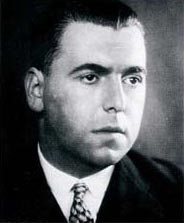
 

Schulhoff and Socialist Realism

Erwin Schulhoff was born in 1894 to a Jewish family in Prague. He died in 1942 in a Bavarian concentration camp. He studied with Debussy in his early writing years and was heavily influenced by ideas of the Second Viennese School. He was also one of the first European composers to experiment with elements of jazz and incorporate them into his own works. He was drawn to avant-garde trends and experimented with the less traditional ideas during that time. Schulhoff studied in the cities of Vienna, Leipzig and Cologne before he was drafted to serve in the Austrian Army at the outbreak of WWI. However, he continued to compose throughout the war and had his first pieces published immediately after the war ended. Politically, Schulhoff, an outspoken socialist, was very liberal throughout his life and would turn even more left towards the end of his life. He was described as a “radical artist”. Being of Jewish decent, Schulhoff found himself drawn to communist ideas as his life became more difficult as he was committed to Soviet Communism, a party that promoted democracy. In the 1930s, Schulhoff moved back to Prague, but once he realized he and his family were in danger, applied for Soviet citizenship. Shortly after, Hitler would attack the USSR and Schulhoff was sent off to the Wulzburg concentration camp in Bavaria. He stayed committed to his political ideas to the end of his life in 1942.

One of his works written before his turn towards socialist realism is Five Pieces for string quartet, written in 1923. The quartet I am a part of has been working on this piece this semester, which is what inspired me for this blogpost. While not long or particularly difficult in a technical sense, this piece is filled with musical ideas that take a lot of conversation amongst the members of the group. For example, the first movement has waltz-like qualities with a feeling of 1, 2, 3, 1, 2, 3. However, it is written in 4/4 meter. There is a lot of chromaticisms and harmonic idiosyncrasies that might take a couple of hearings to be able to grasp on to. I would say that this piece, although early for the genre, hints at some “jazz-y” ideas in the Tango, the fourth movement. His music was rejected by the Nazi regime as he was of Jewish and German descent. I think it is safe to say that music is inspired by experience. And even if we are not the ones writing the music, when we perform it, we reach for ideas of experiences that would strengthen our performance of any given pieces.

https://open.spotify.com/user/1256778210/playlist/07aNycgbaxlZFUR53Aof6L

He was a supporter of the ideas of Socialist Realism. He was both jewish and a communist which put him in danger once World War II started. Schulhoff commissioned libretto based off the Communist Manifesto which he would go on to write music to in 1932 for choir, vocal soloists and wind ensemble. His goal was to make his works easily accessible by audiences and the general public as he wished to “convey politically meaningful programs”. The Communist Manifesto by Erwin Schulhoff was written after his writing style took a turn towards socialist realism. In 1931, he participated in a workers’ theatre group, as he continued to stay heavily invested in music. His later music was aimed towards pleasing the audiences. His past works had been well received and his career had been at a peak when Germany invaded. This work, the Communist Manifesto, in comparison to Five Pieces, sounds much more tonal. It has a militaristic element to it rhythmically. Also, with it being written for wind ensemble, and no strings, I think one might be reminded of a military bands, with the drums keeping steady and very taut rhythms. Also, from the beginning of this piece, there is a steadiness which makes me thinking of marching in unison. The choir sings in unison rhythmically, which, when added to the instruments, gives the sense of unity, which may have been a political statement that suggests “us against them”. There is a very clear difference between the music of his earlier influences with the music after he became interested in the idea of socialist realism.

Socialist Realism is an idea that music serves a political purpose and is easily accessible by public and audiences. The article, Colin Kaepernick and the Radical Uses of “ The Star Spangled Banner” talks about the anthem and how it has been changed politically over time. I think there is a fair point to the Kaepernick’s argument. There are lyrics in the anthem, “land of the free, home of the brave”, which seem a little dark and ironic when one takes into account the fact that it was written by a Francis Scott Key, who is believed to have been a slave owner. It may be a stretch, but Schulhoff’s music also changed as his political views became more prominent and important to himself and his music. It is definitely interesting to see how music of such different genres have so much in common (in this case, representing political ideas in music), and how they are still thought over and understood by individuals today.

http://orelfoundation.org/images/composers/schulhoff.jpg

Erwin Schulhoff

Steel or No Steel?

The strings on my violin are an everyday technology for me. They do not get changed as often as they should, but about once every couple of months. Strings are much more than just “the four thin strands of metal” we bow, (or pluck), on our instruments. A lot of thought is put into the string, what brand to use, what material, the thickness, et cetera.

Strings have made quite an evolution over time. The strings that were first used and used on baroque instruments are gut-strings. They were mostly made from sheep and lamb intestines. The gut strings are said to have a warmness in quality that has yet to be matched. They are still used today. Sometimes, people use different types of strings on their instruments and like the use of both metal and gut strings on their instrument, as they prefer the qualities in their sounds or tones that are the result of these combinations. For example, among my many hours of research, I read that Jascha Heifetz would use gut A and D strings, which is uncommon because on the modern violin, one would tend to use a gut string on the upper strings, not the middle combination.

These days, the most popular are the metal, steel core strings. The metal strings were introduced in the early 20th century. They produce vibrant sounds with many colors. However, it is said that they do not have the same richness to the core that gut strings provide. Also, metal strings tend to have a bigger and brighter sound and are more stable in pitch. It is interesting to see how there used to be no choice in the type of string one used to play and now there are many options within the three main material families of strings. We have to take into account that metal strings tend to last longer. Thus, it is a better investment to buy them so one does not have to spend too much money and change his/her strings too frequently.

There are also synthetic strings, which are described as the “bridge” between metal and gut strings. These were introduced in the early ’70s and produce a sound that is said to be more similar to the gut strings but synthetic strings are more durable. However, they lack the “complexity” that gut strings are popular for.

I would say that the reason I use the strings I do is because it is what has been suggested to me by family, teachers, and the luthier who I usually bring my violin to. Overtime, it has become a habit to just stick with what I am used to. These days, I always buy Dominant A, D (silver wound) and G strings and a Goldbrokat E string. The Goldbrokat E string is the newest member of the set, suggested by the luthier I see in my town. I have not ever experimented with gut strings on my own violin but I have played instruments with gut strings on them, and I do understand why some may prefer them. From what I remember, the tone quality is very sweet and rich. I do like a more sweet and vibrant tone quality on the top without it being too bright, while I prefer a darker, richer sound on the bottom range. I understand that it takes more than just four strings to produce the type of sound that I like but something that I have learned through this research is that it is important to understand how each string has its unique qualities. I wonder now if I have found the best combination for my instrument, but at the moment, I will probably stick with what I am used to and what I know works for me and my violin.

Sources:
http://www.violinstringreview.com/history.html

https://www.gamutmusic.com/new-page

http://www.violinist.com/wiki/violin-strings/

http://www.ifshinviolins.com/Articles/articleType/ArticleView/articleId/411/Guide-To-Choosing-and-Using-Strings-for-Violins-Violas-and-Cellos

http://www.the-violin.com/violinstrings/ (Helpful layout of the pros/cons of each type of string)

Media:
Slideshow of how strings are wound : https://www.gamutmusic.com/violin-setups-1

Video of violin strings slow motion: https://www.youtube.com/watch?v=QXjdGBZQvLc
4:36-4:50

How gut strings are made: https://www.youtube.com/watch?v=wRQq_0VM110