Tyler, the Creator

Tyler, the Creator is a leading figure in rap music as a rapper and producer. One of his most famous songs is called Yonkers, apparently based on the town Yonkers, NY. What is so interesting about this song is that everything contradicts itself, and the music video doesn’t seem to connect much to the lyrics. Many try to read between the lines to find deeper meanings, but Tyler always denies that there is a deeper meaning in any of his music. It is very easy to believe that something is more special than it is meant to be, and it seems to be very important to the listener that there is predetermined intent in the music.
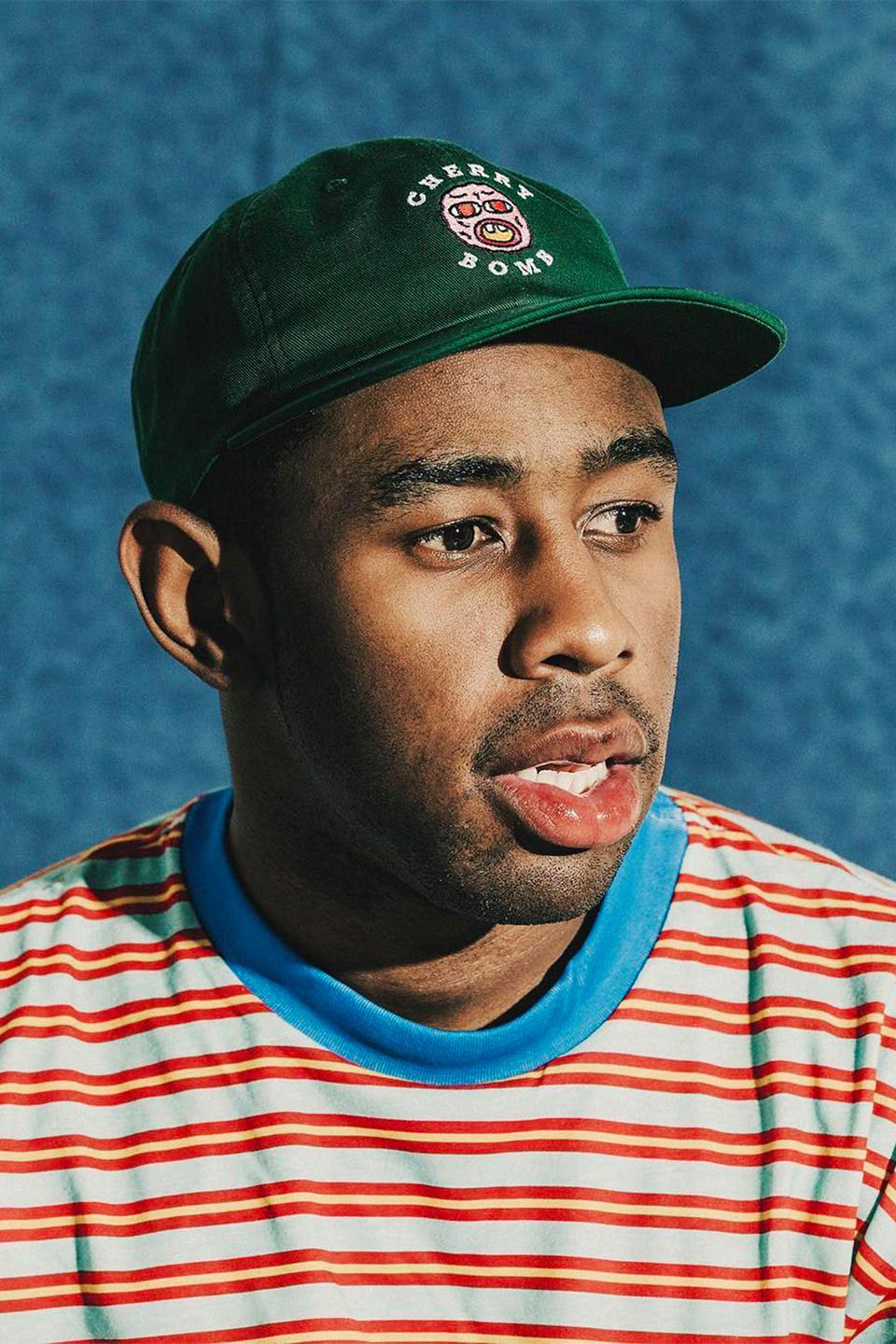
Tyler, the Creator uses many techniques in his rapping that reminds me of some other artists we know in the classical world like Schumann. I find this because he uses characters in his pieces, the most important one being his alter-ego Wolf Haley, as well as a fictional therapist named Dr. TC. Much of his rapping uses extremely offensive slurs and plots, including rape and violence against women, and homophobic slurs. Yet Tyler always says none of it means anything, and it is all “simply…an admittedly absurd story that was never meant to be taken seriously”. He was one of the first to publicly support Frank Ocean when he came out, and has never been known to use violence. After knowing this about Tyler, the Creator, does it make sense to treat his music seriously or try to look deeper into his music to find hidden meanings?
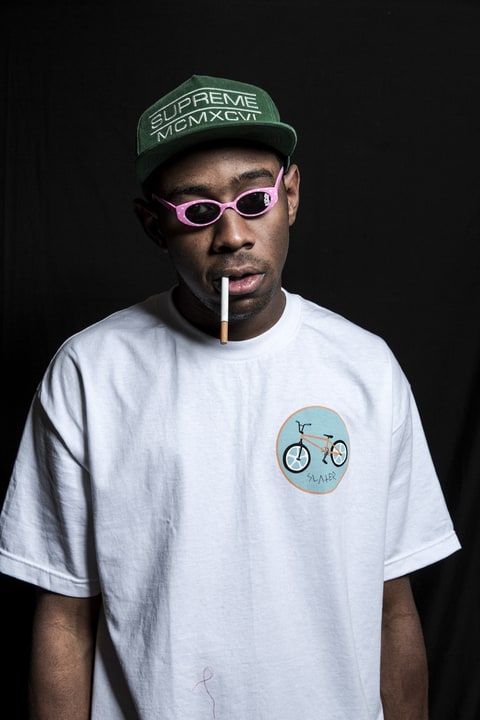
Yonkers uses lyrics that contradict themselves at every turn. Starting at the beginning, “I’m a f***in’ walkin’ paradox – No I’m not”. These lyrics make no sense, but many in comments on sites used to describe what the song means, say that one of the sides is Tyler and the other side is Wolf Haley. All the contradictions are really happening in his own mind, at least that’s what the song is about. Many of the youtube comments however are very different, I found dozens that commented on the line “I’m not gay, I just want to boogie to some Marvin” suggesting that Tyler is gay (many of these comments came out because in Tyler’s new album he comes out as gay). “”I’m not gay, I just wanna boogie to some Marvin.” yah okay” – AKFORTYKAVIN.  Some comment on the contradictions between the lyrics: “the reason he did this is because wolf haley (the kid with button ups and shorts) is his evil self. if you look closely at the lyrics he is constantly contradicting himself, like him fighting against his other self. its pretty cool.” -DirtWormGames. But most just comment on how crazy they think Tyler is or how bad they think the song is: “Well f*** me, this was seriously bad all the way through. I came to this YouTube-account to understand what even makes this guy a thing to begin with, and I did not get any wiser. This was just terrible along with the rest of the things he made.” -IcaJerry and “This n**** still freaks me out to this day.”. 

The music video is quite simple. It is black and white picture, of Tyler sitting on a stool rapping with a cockroach that he eventually eats and throws up. His eyes then turn completely black before he hangs himself (shown by him knocking down the stool). It is interesting because it doesn’t really have anything to do with the lyrics, agreeing with what he said in his interviews about there not being any meaning behind the lyrics. A connection I do find between the video and the lyrics, is this conflict between Tyler and his alter-ego. You can see this when the video blurs back and forth between sides of him, and with the suicide at the end of the video.


Whether or not Tyler, the Creator really meant for any of these lyrics or this video to have meaning behind it, it is still natural for the listener to find some human connection. When something is random, we try to find a pattern even if there is none. If a piece is atonal, we will hear some bits of tonality just naturally. Is it wrong to try to find meaning in something that didn’t mean to have meaning? Is it wrong to write a song that has no meaning behind it? Whether it is or isn’t, listeners have a natural magnetic pull to connecting dots and finding meaning in the random.
Musicians During the Great Depression

How important is it for artists to create or play music that is personal to them? Artists during the Great Depression were hired to be in the WPA by the American Government in the 1930s. They were paid to write and play music that lifted the spirits of a poor nation, that showed patriotism and pride in the US. Orchestras would play selections from the European classics as well, but were always required to play music from an American composer. These American composers were heavily influenced to write in as American of a style as possible, with the overall goal of ending the Depression.

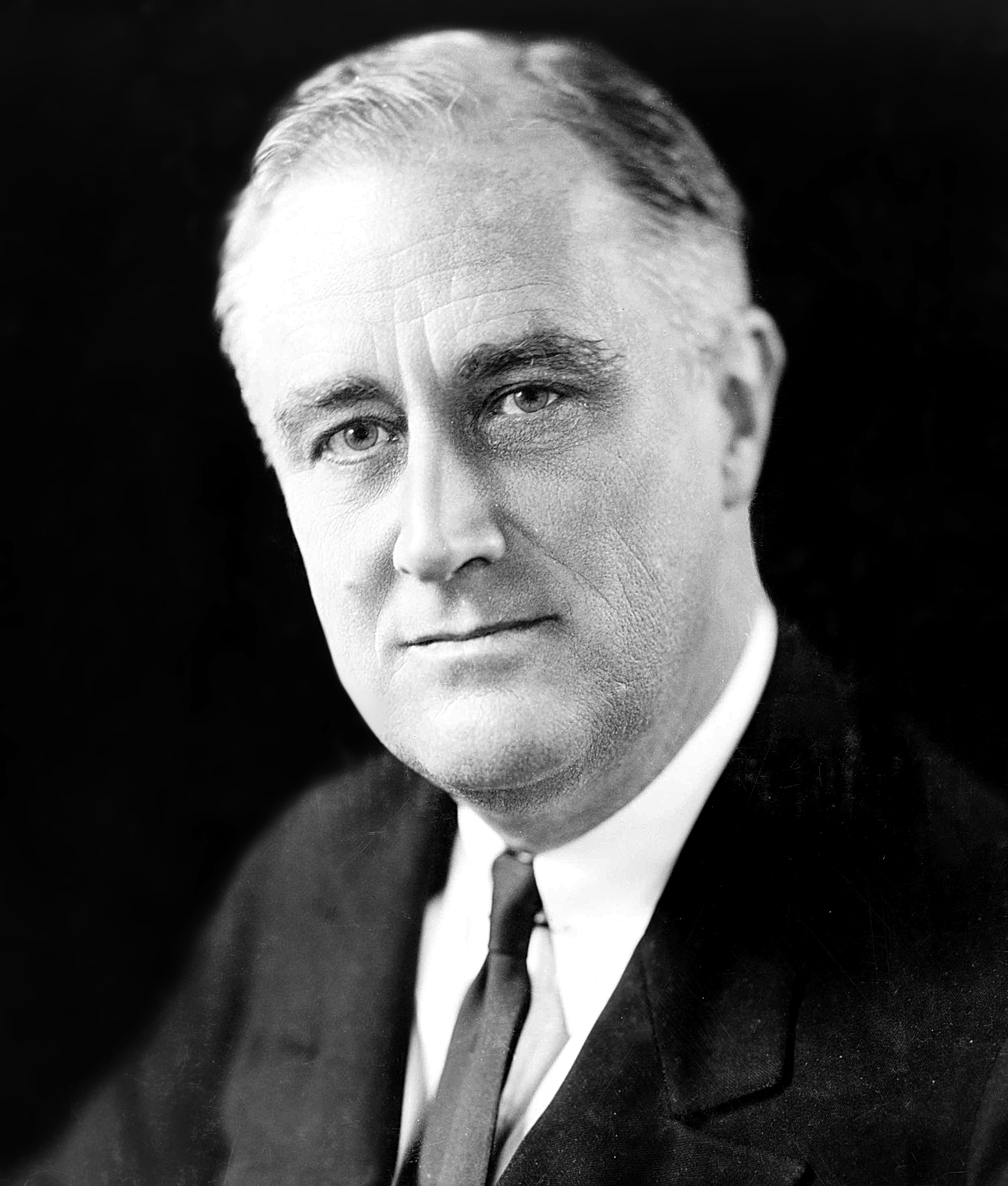
The WPA began on May 6th, 1935 by the Franklin D. Roosevelt administration. The purpose of the Works Progress Administration was to give jobs to Americans during the Great Depression. This was part of FDR’s New Deal, and the idea was to put the Americans to work being creative and uplifting the spirits in the nation. Eleanor Roosevelt was a major influence on FDR to create jobs for Americans in their field where they could be paid, this was very important for boosting the pride and self confidence of Americans. The WPA had many branches to it, and the one for musicians was called the FMP (Federal Music Project). The FMP hired all sorts of musicians including teachers, orchestral players, chamber music players, jazz musicians, singers, composers, etc. It was a bit of a struggle to get classical musicians to support American music at the time, because there was a huge appreciation for European music. Since the WPA was made to create American jobs and focus on American success, it was very important to the US government to insist on a certain amount of the music to be composed by American composers.

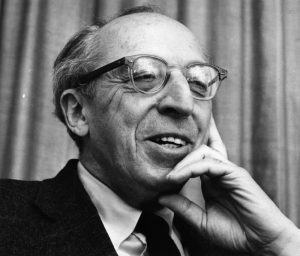
One of these American Composers hired by the WPA was Aaron Copland. Many composers of this time were pretty far left on the political scale, and Copland was not necessarily an exception although he didn’t seem to be an activist. During this war and anti-communist period, the political party in power was the Democratic Party but it was on the conservative side, so as not to appear socialist. This made far leftist musicians not the majority, although the majority of artists and intellectuals were interested in socialist values. Despite some political differences, the WPA still hired musicians based on merit more-so than political ideology (although there were a few cases where the government would not fund a show if it had “inappropriate” content, such as in the play The Cradle Will Rock by Marc Blitzstein). Copland was very popular among the population and the government. He created the sound that we associate “American” music with now. Some of his most famous pieces include Rodeo, Billy The Kid, and Appalachian Spring. He used many American folk tunes to create nationalist music, very similar to how European composers wrote their nationalist music. For example, Appalachian Spring is heavily influenced by Stravinsky’s Rite of Spring because of its use of authentic national music.


https://www.youtube.com/watch?v=WVahuS9hk_s

The question that I have to ask about this program; did it cause composers and musicians to write or play music they wouldn’t naturally have done? And is it the right of the American government to dictate what should be written and played? In the 2017 article Trump is Wrong if He Thinks Symphonies are Superior, Mr. Tommasini writes that President Trump believes that Western music was far superior to specifically Radical-Islamic cultures, essentially encouraging American classical composers to write music to show how much better we are than other cultures. Many politicians during the Great Depression were so afraid of communism (much like Trump is of Islam), that they wanted music to influence American values to show how different they were from communists. Yet by doing this, they copied what the Soviet Union was doing during the Socialist Realism period. Composers in the Soviet Union, like Shostakovich, were afraid of writing music that wasn’t liked by the government because they could be arrested, so they had to find ways to write music following those rules or at least hiding it so well that no one understood. Copland wasn’t afraid of the government coming to take him away in the middle of the night, but it is possible that composers would fear they wouldn’t have a job if they wrote anti-American music. They had to create something that they didn’t necessarily believe in, especially if they were socialists/communists.

Where is the line that we as musicians shouldn’t cross to remain true to our creative selves? Is it more important to treat music as a job or as an art, or can it be both? I don’t think it is fair to say that Copland was a sellout to the American government, but how much should we allow the government to dictate what we can create as art?

Mass Production

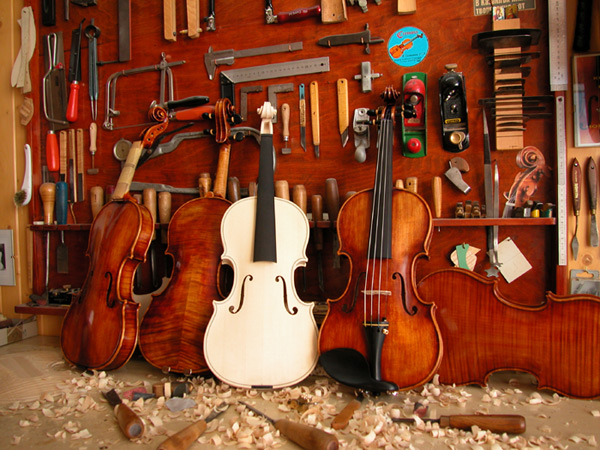
The birth of the first cellos were made almost 500 years ago in Italy by Andrea Amati. They were hand carved pieces of art, and all of the decisions were very deliberately made. The craftsman needed to know exactly which wood to use for each part of the cello, and how to fit it with strings and bridges that would resonate the most on that particular cello. Now in the 21st century, professionals strive to play on those old beautiful instruments especially by the widely popular Stradivarius and Guarneri, which have rich tones and can produce many different qualities of sound. However their prices can become rather high; from hundreds of thousands to millions of dollars. Is it worth spending all that money for a handcrafted, old instrument? Many of the strings and bridges string players use on their instruments cost a fortune on their own, cello string sets costing around $300 and lasting for only a few months. To get a full set of one of the most popular strings for cello, “Larsen”, it costs $227 on Amazon. To get your bow rehaired at Sullivan Violins in Rochester it costs $70, and to get a new bridge could be in the hundreds. Repairing your instrument will always be expensive, so why not buy a mass produced computer-perfected instrument?

Recently, the Chinese have started to sell instruments in the violin family that are under $5,000 (I’m playing on one right now). These instruments, although not as brilliant as a Strad, are not too shabby. They can have beautiful sounds, and can be fixed up with proper strings and a better bridge if needed. The reason these instruments are so cheap, is because they are partially (if not fully) factory made. Yes, instruments are becoming mass produced products, rather than finely crafted pieces of art. Some will be painted with spots trying to look old and used, to appeal to an audience or buyer that appreciates antique instruments (kind of the equivalent to pre-ripped jeans).

Although this baffles the mind of most classical string players, these cellos and violins are not the first factory made and mass produced instruments. Super-stores are selling guitars for very cheap. “Huge U.S. chain stores, such as Costco, Wal-Mart and Sam’s Club, are beginning to sell low-cost instruments, appealing to spontaneous buyers. Those stores have been partly behind a fivefold increase in the sales of electric and acoustic guitars in the U.S. market since 2000. ‘The average selling price (of a guitar) has gone down from $630 or $640 to somewhere in the $300s. That is almost a direct result of Chinese manufacturing,’ Lamond said”. These mass produced instruments are changing the way we think about music and craftsmanship. Is it important to always require authenticity and individuality as artists? Even for poor college students who just want to learn how to play guitar in an elective class during their first semester sophomore year?

This applies to all forms of art, not just music. Just the other day I was shopping in my favorite store, Target, and I saw many pieces of art for sale. It was very obvious that a computer had created it, my good friend Raina pointed out the straight lines on the canvas that suggested an automatic machine painting in a factory setting.

There were many upsetting aspects to this “wall art”, but there were also some nice things to consider. The price is always fairly cheap at Target, the symmetry can be very pleasing to the eye, and the colors in the painting are very real and don’t have anything to do with the artists themselves. If the buyer is not an art expert and wants something that will brighten up the room rather than something to really sit and think about, this should be perfect for them.

So is it really important that someone is handcrafting your instrument? Aren’t machines made to perfect what the human body cannot do on its own? For some it isn’t important, and that is okay. Not everyone needs to be an expert on what the latest painter likes, or all the latest fashion trends, or have the most beautiful sounding cello. Some buyers really want to experience something raw and human; to notice a connection between themselves and the artist. It is obviously not essential to use machines, as the best instruments we have are made by craftsmen in the 17th and 18th centuries who made glorious instruments all on their own.

But do these instruments really sound different? In a blind test where a violinist played the same piece on a Stradivarius and a modern instrument, the results were never actually what we would expect. Some of the time performers and listeners would like the Strad the least!

https://www.youtube.com/watch?v=ZtlTJkbUqkA

Does this mean that mass produced instruments can sound the same as a Strad? Is there actually a difference in the instrument’s sound, or are we just pretentious? Maybe spending thousands or millions on a fancy instrument is just a waste of money, and buying mass produced instruments is the way to go.