Blue Mountains – Sam Amidon

Sam Amidon is an extremely creative American Folk singer, and is currently producing music. He is a beautiful storyteller through his words, melodies, and music videos. Let’s look at the song “Blue Mountain” from his 2014 album entitled Lily-O. This album is a very beautiful work in its own and has top notch musicians on it consisting of Bill Frisell, a legendary jazz/folk guitarist.
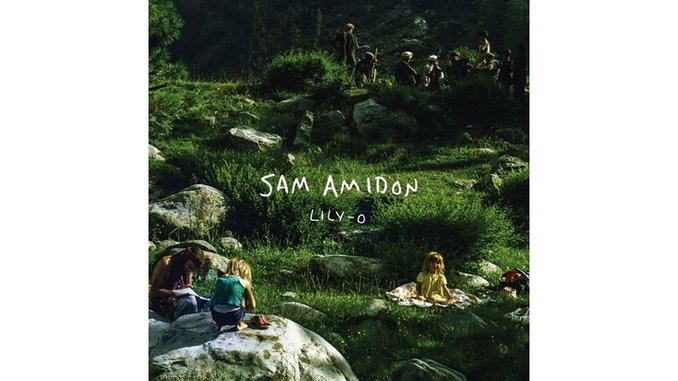
The lyrics to Amidon’s Blue Mountains come from a traditional folk song called “Across the blue mountains,” although he leaves out quite a bit of the middle part. The song tells the story of a married man who asks a younger girl, Katie, to run away with him and cross the blue mountains. I think the music video to this song is an excellent representation and addition to the feelings conveyed in the song. In the music video, there is an almost slow motion and nostalgic effect happening. The video mostly consists of a girl (Katie) lying on the ground and going through some sort of conflict. This conflict is in herself, as she has to choose between being safe at home or running away with the love of her life. Her expressions and motions broadcasts the innocence of being a younger woman running away with an older man. In the original lyrics of this folk song, there is a part that Amidon left out that shows how Katie’s mother is desperately trying to talk her out of it. Although Katie’s mother is never mentioned in Amidon’s version, I believe her mother can be seen in the video. At around 3:58 in the video, we can see Katie on the ground with two pairs of arms reaching out to her. She crawls into one pair of arms that belong to the man she is running away with. However, I believe that the other pair of arms is meant to be her Mother’s, as she does not want Katie to go. This video beautifully illustrates the conflict that Katie must face between the love of her life and home. This video adds to the story of the song in a positive way.

“In spite of subject matter that’s often dark, the music on Lily-O somehow feels deeply reassuring (NPR). The music video to Blue Mountain also contains a sense of reassurance, especially with the focus on Katie and the objects around her. Specifically, hands bring by miniature horses and houses that go along with the story being told. The expression of Katie’s face reflects wonder and reassurance that she’s making the right decision by running away with him.

I believe the sign of good art (music or visual) is when it brings a feeling of nostalgia even when it’s the first time you’ve been exposed to it. In an interview, Joni Mitchell said something along the lines of “If you hear my music and you see me in it, you’re missing the point. If you hear my music and see yourself, now you’re getting something out of it.” With Sam Amidon’s Blue Mountain, I definitely see myself in it, and others do too. A YouTuber named Pikasde commented “I don’t know why but it reminds me of my first love. TY Sam for bringing back those emotions. Just thank you.” I think it is beautiful that a piece of art and film can stir up such emotions. Others commented “thank you sam, magic piece of film here (Brendan Timmons)” and “wat an amazing expression of feelings..man this video just rocks..(Vishal Nagabhushan)” and more. It seems that the reception of this video has been generally positive and people describe it as magical. I would describe it as magical too.

I believe this music video adds to Sam Amidon’s musical experience in a positive way. The film plays an important role in the storytelling, as it goes beyond what the words say.
Politics/Community of Jazz

Jazz music has historically been a part of a much broader culture, specifically with African Americans. The music has unified communities, protested injustice, and most importantly been a vehicle for self expression.

Integration in Jazz Bands

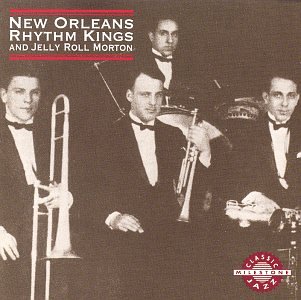
While jazz has influences of spirituals and work songs, it also has a heavy influence of western European harmonies. However, it started as mainly an African American art form. As technology prevailed in the early 20th century, the recording studio and invention of the radio became a significant way for black musicians to be heard. “Opportunities were given to black musicians by the radio and recording industry and popular black bands were promoted as long as there was a demand for jazz music by white Americans.” This was an important leap forward socially for black Americans, as the demand for jazz music was high. Another thing that occurred in the realm of jazz was the integration of orchestras and bands. Back then, it was common to have all white or all black jazz bands. However, these bands started to become integrated around the 1920’s. Black musicians would play in white bands and vise versa. One of the earliest examples of this integration was when Jelly Roll Morton, a famous creole. pianist, recorded with the Rhythm Kings, a white jazz band. This was an extremely unusual since people of any color in America were harshly discriminated against. Jazz culture was a beautiful thing because in a world where there was crude social injustice against the underrepresented minority Americans, jazz culture began to promote unity in some ways.

Jazz and the Civil Rights Movement

In the 1960’s Jazz had collided with the civil rights movement. Jazz had gone through many transformations by this point since the beginning of the 20th century. The evolution started mainly with New Orleans  jazz, then evolved into swing/dance bands, and then bebop, cool jazz, and hard bop. In the 1950/60’s, an emergence of free and avant garde jazz occurred. (This is a generalization). One of the main leaders of this new music was Ornette Coleman. Free jazz was all about the individual, and the freedom of expression as it delineated from traditional forms of jazz and music in general. In the 1960’s the civil rights movement came into place. There was a huge reaction to this movement in the jazz community, as many black musicians made their voices heard through their music.


An example of a musician reacting to this was John Coltrane’s “Alabama,” which he wrote about the Birmingham church bombing in 1963. 

In 1959 bassist/composer Charles Mingus recorded an album entitled “Ah Um.” This album had a track on it called Fables of Faubus, which was a response to Orval Faubus’ prevention of nine African American students’ attendance of a school in Arkansas, even after Eisenhower integrated schools in America. Fables of Faubus was a part of the civil rights movement, and here are the Lyrics:

Fables of Faubus:

Oh, Lord, don’t let ’em shoot us!

Oh, Lord, don’t let ’em stab us!

Oh, Lord, no more swastikas!

Oh, Lord, no more Ku Klux Klan!


Name me someone who’s ridiculous, Dannie

Governor Faubus!

Why is he so sick and ridiculous?

He won’t permit integrated schools

Then he’s a fool!


Boo! Nazi Fascist supremists!

Boo! Ku Klux Klan (with your Jim Crow plan)


Name me a handful that’s ridiculous, Dannie Richmond

Faubus, Rockefeller, Eisenhower

Why are they so sick and ridiculous?

Two, four, six, eight:

They brainwash and teach you hate

H-E-L-L-O, Hello

Musicians like Charles Mingus, John Coltrane, Nina Simone, and more made their voices heard through powerful music that was written in response to the civil rights movement of the 1960’s.

Unfortunately, there is still a great deal of social injustice against African Americans today, and we keep seeing responses to this all over the place. Recently, the quarterback of the San Francisco 49ers ,Colin Kaepernick, sat while the national anthem was played. He said that “I am not going to stand up to show pride in a flag for a country that oppresses black people and people of color.” This is an example of a modern day response to the injustice at hand. Kaepernick wanted to make a statement, so he refused to stand during the national anthem. This is not unlike how certain people reacted through music during the civil rights movement. “To me, this is bigger than football, and it would be selfish on my part to look the other way. There are bodies in the street and people getting paid leave and getting away with murder,” Kaepernick said. Whether it is through sports or through music, it is important that underrepresented Americans of color have their voices heard. We have seen this been done through music during the civil rights movement, and in protests worldwide. Through media, more and more people are being informed of the problem at hand every day.

Evolution of The Trumpet

The Modern Trumpet

The metal Trumpet has been around for thousands of years, dating back to around 1500 B.CA basic trumpet is not difficult at all to make, believe it or not. When I was about 4 years old, I would buzz my lips into a plastic funnel and was able to get a sound out of it. This is not that much different from the earliest versions of trumpets. All you need is a tube, theoretically. Here is a video of a man demonstrating this:


So how do we get from simple tubes to the shiny triumphant metal beasts that we are so familiar with today? Before the 1800’s, the trumpet had very limited facility. Since there were no valves or holes, the person playing it would have to use air, embouchure, and tongue position to change the note. These notes are referred to as partials, and are limited to the harmonic series.  Since they were limited to the harmonic series, the trumpet’s role in music was focused around military events and bugle calls. However, when the valve system was invented in the 1800’s they were then able to play in chromatic musical contexts. The valves reroute the air blowing through the trumpet to change the distance your air travels from mouthpiece to the bell , which ends up changing the note. There are 7 different valve combinations, each one having its own harmonic series.


Since then there have been minor innovations to the trumpet, yet it has remained a relatively consistent design for the past 100 years or so. Nowadays trumpets are very customizable in regards to metal type, bore size, mouthpiece type/size, key (C/Bb/Eb/etc), and finish, yet they all stick to the same basic formula.


Technical Advancements in Player Ability/Extended Technique

Since the trumpet has gotten more advanced, the playing ability has also increased. Many technical advancements in the player have occurred recently in the 20th and 21st Century. A few noteable players are Rafael Mendez, Allen Vizzutti, Louis Armstrong, Laurie Frink, Woody Shaw, Peter Evans, and Ambrose Akinmusire. All of these people have pushed trumpet to technical limits that were thought to be unreachable.


Many technical innovations of trumpet players have happened in the Jazz idiom. This makes sense since jazz music is constantly exploring boundaries. One of the greatest innovators was Woody Shaw , who explored large interval improvisation, especially with 4ths and 5ths. Intervals are very difficult on the trumpet. They require a relaxed embouchure and air flow, which is counter intuitive when you try to perform them. Ambrose Akinmusire is a modern trumpet player who also has a very intervallic style of improvising, taking it even further than Woody Shaw. Ambrose also tends to emulate the human voice frequently by pushing the valves halfway down to get a muffled and slippery timbre.


Peter Evans is perhaps one of the greatest technical trumpet players to ever live, and has taken trumpet to its limits. He plays high, fast, slow, intervallically, and melodically, all with ease. Evans’ music is also highly experimental and crosses over into the avante garde umbrella. He uses what we call “extended techniques” to create sounds on the trumpet that are totally unique to him, and require masterful technique. This makes Peter Evans a great innovator of the trumpet.


The Electronic Trumpet

The EVI (Electronic Valve Instrument) is an electronic wind instrument created by Nyle Steiner. It uses the bottom half of the octave fingerings for trumpet, and the rest is controlled by the octave dial and partial key. This is a wind powered instrument that uses MIDI technology to create sounds. This means that the entire soundscape for trumpet players has opened widely since this was created. It also allows the person to play in 8 octaves, instead of 2 or 3. This is a major innovation that was conceptualized with a trumpet in mind, and a ton of beautiful music has come out of its creation. A couple notable EVI players are John Daversa and John Swana.


There have been many major innovations of the trumpet since its creation, but many of those innovations have happened in the last 200-300 years. I’m excited to see what the next “big thing” is.