Cats and Absurdism

The best part of Thundercat and Eric Andre’s collaboration in the music video for “Tron Song”, is that the images and music absolutely do not combine to create any form of traditionally meaningful or powerful experience. Instead, the video consists of an amalgam Thundercat’s numerous personality quirks slammed together with Eric Andre’s distinctive directorial style and absurdist humor, resulting in three minutes and change of wackiness and tonal ambiguity that both confound and enchant the listener.

A track off of Thundercat’s second album, Apocalypse, Tron Song has all of seven distinct lines of lyrics, with the majority of the track consisting of Thundercat’s chordal bass guitar (emphasis on the guitar) technique, paired with multiple tracks of Thundercat’s floaty falsetto harmonizing over itself. To call the track a ballad is misleading, especially with Flying Lotus’ constantly shifting percussion that occasionally underlines Thundercat, but the feeling behind the track is that of a traditional ballad with the main lines of the hook, “Don’t you ever leave me turbo troooooooooooooooon, Don’t ever wonder where I’m going”, being a loving reference to Thundercat’s cat, Turbo Tron Over 9000 Jesus Baby Sally.

This provides a segue into how a video of this aesthetic even came into existence.  A comedy collective named JASH began a series on YouTube (of which this is the second video) with the simple premise of giving $5,000 and full creative control to a comedian and musician tandem to create a music video. It’s fitting that JASH chose one of the most unique voices in television currently, as Eric Andre hosts quite possibly the most absurd talk-show of all time on Adult Swim. A bonafide master in the art of cringe comedy, low-budget spectacle and all around nonsense (as evidenced by simply the intro of his first show), Andre is the perfect choice to direct for this premise, and pairing him with the most singular bassists since Jaco Pastorius (and one of the most unique personalities in the music scene today) was a great way to extend such as the 5K music video idea.

As for the video itself, low budget is the name of the game as Eric Andre uses effects to create tape glitch or distorted effects, reminiscent of schlocky 90’s b-movies that you would find on VHS in the back of a video store. This could easily come off as gimmicky if it weren’t for the fact that Thundercat looks and dresses like a character straight out of a 90’s B-movie with hair in every direction and a wardrobe that defies any conventions, ranging from varsity jackets to Vegeta’s armor from the TV show Dragon Ball Z. If there was any doubt over the nonsensical direction this music video would take, Andre eliminates it by cutting in an image of Thundercat playing his bass on backside where there are no strings in the first thirty seconds. The breaking point in the video is around the 40th second where Thundercat’s discovery of a handgun (and subsequent suicide?) in a human-sized litter box coincides with Flying Lotus’ drum pattern crashing in. The following images that range from police brutality to Thundercat traveling through Tron’s anus into space to defecation and sexual acts in the aforementioned litter box are almost to an extent disturbing, especially considering the cute quirkiness of the first half a minute. Herein lies Eric Andre’s brilliance though, as he employs a technique he used to make his talk show a viral hit. Andre takes a pre-established format familiar to the average person (such as a talk show, or in this case, a typical love song video), but throws out every semblance of internal logic and coherence, instead attempting to provoke simply any type of reaction, be it disgust, incredulousness or anger via increasingly absurd images. This type of direction and aesthetic is perfect for Thundercat, who as a bassist also capitalizes on a level of incredulity and subversion. The traditional bassist plays on four strings, single notes, and for the most part is part of the background and foundation of the music rather than the ornament. Thundercat turns all of these standards on their heads, playing a six-string bass in a very guitar-like matter, with outrageous eye-catching clothes and a penchant to very rarely play on the low-end of the instrument (similar to his perpetual falsetto), all of which serve to emphasize the absurdity of his existence as a musician.

As for Youtube’s response to the video, the majority of people appear to already have some knowledge of either personality involved so this portrays their general reaction after watching the video.

Some people though, such as Unreal Psycho, are more perplexed that there was any money involved, asking, “where’d the 5k go to?”. In all actuality, my guess would be that the most expensive aspect of the video was having to buy the rights for the outro where Andre’s head blows up and Mortal Kombat’s classic FATALITY is said. Past that, the most expensive part would probably be buying a chroma key program (not expensive) to impose Thundercat playing bass over weird locations.

Jesse Smith states: “fuck this man. This is him just messing around, but the melody is life threateningly good”. I can’t exactly argue with this logic, but I’m not sure what Smith was expecting since none of Thundercat’s previous artistic output has ever been extremely self-serious.  His whole artistic personality is based off of tongue in cheek humor and sarcasm. Finally, with a more serious comment attempting to process the track itself, Hambloko says, “really digging the chord progressions. It’s like Prog R&B”. In general, I feel as though attempting to categorize someone as unique as Thundercat just ends up in redundancy, giving people both expectations that are impossible to fill, since Thundercat doesn’t fit into any category perfectly, while also possibly turning off potential listeners, especially since genres like Prog have a somewhat elitist and indecipherable connotation. He is right that the chord progression is dope though.


Opportunities for further exploration:

Or any other Eric Andre skit or interview (there’s plenty of compilations on Youtube)

An interview to get a better idea of Thundercat and his beliefs in music and life

Hannibal Burress and Chance the Rapper’s JASH video
 

The Powers That Be

“Let me tell you the story of Right Hand, Left Hand. It’s a tale of good and evil. Hate: it was with this hand that Cain iced his brother. Love: these five fingers, they go straight to the soul of man. The right hand: the hand of love. The story of life is this: static. One hand is always fighting the other hand, and the left hand is kicking much ass. I mean, it looks like the right hand, Love, is finished. But hold on, stop the presses, the right hand is coming back. Yeah, he got the left hand on the ropes, now, that’s right. Ooh, it’s a devastating right and Hate is hurt, he’s down. Left-Hand, Hate, KO-ed by Love.”

(Actual song starts around 2:00, music video by Spike Lee)

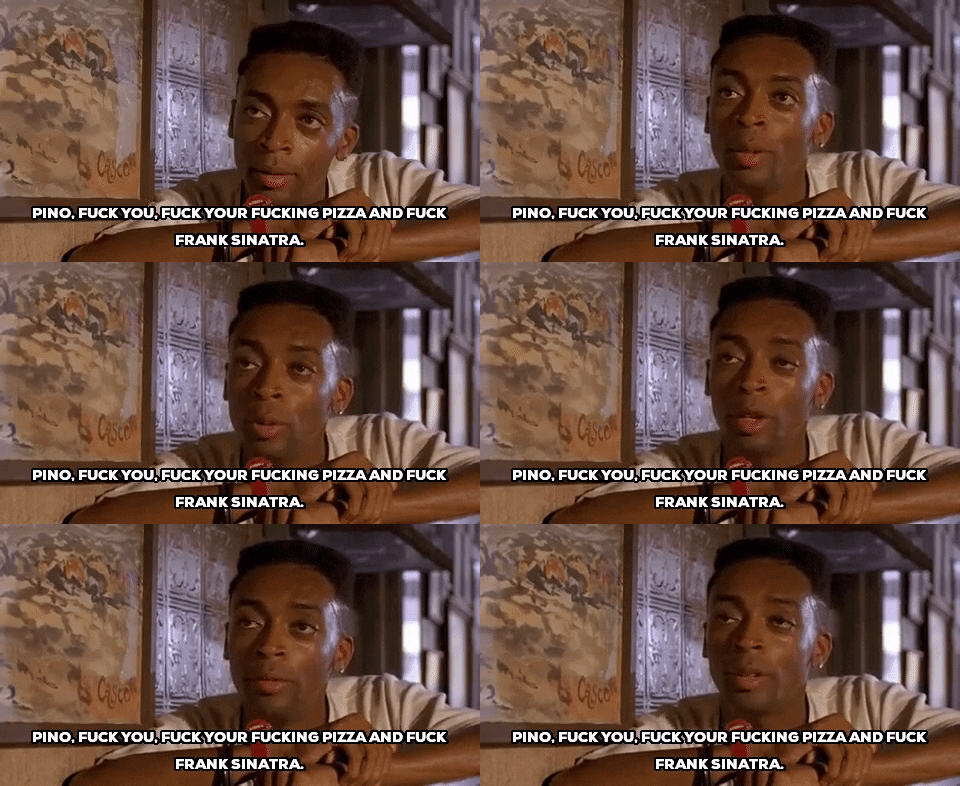
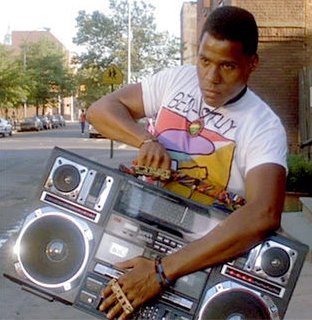
So goes one of the only main monologues attributed to Radio Raheem throughout the film Do the Right Thing. Instead, he spends most of his time cruising the streets of Brooklyn, radio in hand blasting Public Enemy’s “Fight the Power”.

Fight the Power was commissioned by Spike Lee, specifically for the film. The song takes the refrain of a classic Isley Brothers tune and turns up the energy and rhythmic impulse past 10, resulting in an anthem of protest and unity. Fight the Power’s release is a pivotal moment in the development of hip-hop, with Public Enemy injecting political and social values into the nascent genre of hip hop while combining with Spike Lee’s film to create a unified form of social protest for a restless youth population, forever cementing hip-hop as a unique way to combat social institutions.

In the article, “Does music trump politics”, Lamell, an organizer of a community orchestra who hired a controversial political talk show host to conduct a Haydn symphony, states that, “music and politics ‘are two entirely different worlds: Political discourse is one realm, and music is another realm”. While this may be true for some forms of absolute music, the logic behind this statement blatantly ignores the composer and (more importantly), human behind the piece, not to mention the performers who bring that piece to life. Political ideologies perpetually affect every decision humans make, even if this filter occurs unconsciously. Not only that, but this statement also appears to be made under the assumption that only Western classical music is worth acknowledging as “music” because anyone who has been living in America within the past half a century has witnessed politics as a hotbed for music, not just in hip hop but the entire punk movement (notables such as Bad Brains, Dead Kennedys) as well as folk music with Crosby Stills and Nash, Neil young, and Bob Dylan just to name a few. Both Spike Lee and Public Enemy resoundingly reject this idea of fine arts simply being an escape from everyday life, with astute portrayals of urban cultural conflict and unified protest respectively, specifically revolving around power and its’ abuse. In the words of prominent African-American author, Ta-Nehisi Coates, “All the world’s boomboxes were transformed into pulpits for Public Enemy. Before now, the music was escapist and fun– some beats and the dozens, fat chains and gilded belt-buckles. But Chuck D pulled us back into the real….. Here in Baltimore, brothers would put on the Enemy and recoil. We had never heard anything so grating–drums crashed into whistles, sirens blared off-beat. But the cacophony was addictive and everywhere”.

To understand Fight the Power, first one must understand what the hook, “Fight the power, We’ve to fight the powers that be” actually means. It’s easy to take the line at face value and assume that Public Enemy is simply calling for retaliation against any and all authority but instead the line is referencing the systematic abuse of power by those in positions of authority, and how these systems keep the poor and rich (many times along racial lines) disparate. Off of the second verse the lines, “People, people we are the same, No we’re not the same cause we don’t know the game, What we need is awareness, we can’t get careless…” reinforce this concept. Even groups such as NWA (who formed slightly after public enemy but had songs like Fuck the Police that were released before Fight the Power) who had traces of socio-political message hadn’t fully capitalized on how unique of a position hip-hop was in to educate and unite African-Americans, and this mentality coincides with Mike D’s belief mentioned earlier in the second verse, “What counts is that the rhymes, Designed to fill your mind”.

So what exactly is it about Fight the Power that made it so anthemic for millions of people? Firstly, is the song’s (as well as much of early hip hop’s) roots in African American culture, specifically through the use of samples as well as shout outs like, “Sound of the funky drummer” in reference to the James Brown song (a break beat responsible for an unfathomable number of hip hop beats). A cursory glance at the song’s WhoSampled page (a site that breaks down both what samples are used in hip hop songs as well as the ability to look at the various ways in which a single song has been sampled throughout history), brings up names such as James Brown, Isley Brothers, Sly & the Family Stone, the J.B.s, Bob Marley (I know, technically not African American), and Syl Johnson, a who’s who of progressive black artists. Pair these reworked cultural touchstones with scathing lyrics such as,

“Cause I’m Black and I’m proud
I’m ready and hyped plus I’m amped
Most of my heroes don’t appear on no stamps”

and,

“Elvis was a hero to most
But he never meant shit to me you see
Straight up racist that sucker was
Simple and plain
Mother fuck him and John Wayne”

and it becomes easier to understand why this resonated with millions of young black people in the 1980’s, especially after epidemics such as AIDS and the war on drugs that destroyed urban areas had been mishandled by the powers that were. While the Elvis line is a bit of hyperbole considering Elvis himself was respectful to his African-American inspirations (admitted to here by Chuck D), the line is supposed to convey the frustration that for  the majority of America, Elvis was the be all end all of rock music, blocking out any recognition of all of the African-American musicians that preceded and inspired him. John Wayne on the other hand had this to say in a Playboy interview back in 1971, “I believe in white supremacy until the blacks are educated to a point of responsibility. I don’t believe in giving authority and positions of leadership and judgment to irresponsible people”, so the bitterness is understandable.

(Spoiler alert for Do the Right Thing ahead)

The culmination of all the events in Do the Right Thing leads to a showdown in the only pizza joint in the neighborhood owned by a white Italian family, with a riot catalyzed by the shop owner breaking Radio Raheem’s box with a baseball bat due to his refusal to turn the hip-hop off. This is a mightily simplified version of a very complicated film, yet serves as potent foreshadowing by Spike Lee of both the power of hip-hop as a social statement as well as the apprehension and fear it caused when it first started becoming popular. While the summer of 1989 was maybe not the first moment that politics and hip hop intertwined, it served as a visceral introduction for mainstream America to a very frustrated and very vocal group named Public Enemy.

Further Exploration:
-Do the Right Thing (film)
-http://www.npr.org/event/music/560379652/the-roots-feat-bilal-tiny-desk-concert (very current example of hip-hop and politics)
-Fear of a Black Planet (album by Public Enemy)

Fretting over the past

Always known to have a flair for the dramatic, Jaco Pastorius’ 1962 Fender Jazz bass was aptly named the Bass of Doom. Although no one except Jaco knows the origin of the name, as a fellow bassist, one theory I have is simply the awe and terror (of inferiority) instilled in other musicians who witnessed the combination of Jaco and the instrument while on stage.

EXHIBIT A (feat. The Bass of Doom):


Besides the ridiculous chops and musicality displayed in this performance (he flips the notion of people talking during a bass solo on its head), one of the most striking aspects of this video is the warm, fuzzy tone that Jaco produces. Electric basses typically have a defined low-end with precise pitches, such as all fretted instruments, but the distinguishing feature of the Bass of Doom is its’ fretless nature, allowing fluidity between pitches and Jaco’s ability to make the bass sing via vibrato. Legend goes that Jaco found the Jazz Bass for $90 at a pawnshop sometime around 1970 and decided to take out the frets with a butter knife and replace them with polished pieces of “plastic wood”, then finishing the fret(less)board with a few coatings of boat epoxy, thus creating the first fretless bass.


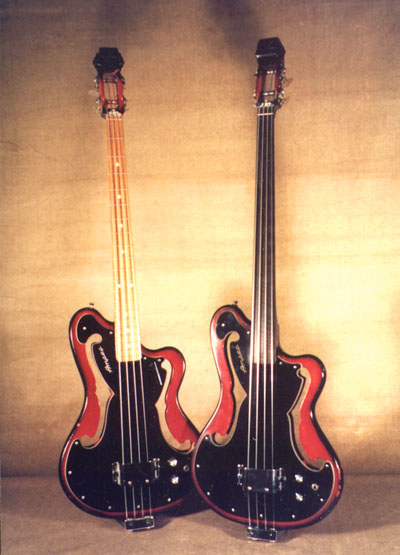
As is the case with many folk-heroes and tales though, these facts are widely disputed, with the possibility that Jaco’s bass may have already been fretless when he purchased the instrument. Not only is the origin story possibly fabricated, but there are also contradictions over the origin of the fretless bass that all come down to a person’s opinion on what defines a fretless bass rather than who was the first to invent the instrument. The following image is of Ampeg AUB and AEB basses made circa 1968, at least two years before Jaco’s “discovery”,and it is apparent that the inspiration for the bass’ design comes from the electric bass’ ancestor, the contrabass (which could be argued is THE original fretless).

From the scroll-like headstock to the ebony fingerboard, both instruments look like and sound like a miniaturized version of an upright. Not only was Ampeg producing them around 1966, but according to Billy Wyman of Rolling Stones fame, “… I made a bass in 1961, before I joined the Stones, and it was a fretless bass. It was the first fretless bass ever made. I didn’t know that at the time, and I didn’t know that until 10 years ago. It predated fretless basses by about five or six years”. Rumor has it that the bass he had purchased was buzzing due to the frets so he decided to take them off. The issue here is that all we have to take for the validity of the claim is his word rather than recorded performances or videos of him with said makeshift bass. These differing origin points are where some debate comes in, as the Ampeg AUB and AEB are obviously derivative of upright basses, while Wyman’s choice was pragmatic in response to a functional issue but had no lasting impact. Jaco’s decision may have been a mixture of both due to his jazz background and influences and the questionable quality of pawnshop purchases, or it may have just been a stylistic quirk, the kinds of which he exhibited so often throughout his career. The main distinguishing factor when discussing any type of bass though is the tone, and any modern-day listener will instantly point to Jaco’s warbling, growling sonorities as the definitive fretless tone, even if it was not necessarily the “first” fretless, or a traditional fretless instrument.

As with so much of rock lore and history, stories are passed down via word of mouth for decades, resulting in tales that are irresistible but also sometimes easily refuted by the internet. While the anecdote about Jaco’s Bass of Doom being the original fretless may not be wholly true, it speaks volumes to how history is written, with the age-old adage of how the “victors” are the ones who write history. These conflicting origin stories pose some interesting questions about how the history of certain innovations is recorded. Does it matter who officially invented a technology if that person is hardly relevant to the cultural impact of said technology? Or, is it wrong to mythologize the origins of certain innovations if there’s an educational purpose behind it? While Jaco in many cases was no victor, in a sense, the history of the fretless electric bass begins and ends with him. Any person who performs on a fretless bass is instantly compared and contrasted with Jaco, similar to Michael Jordan’s shadow hanging over every single NBA superstar. The role of the fretless electric bass in any musical context is so entwined with Jaco’s legacy that even though the fretless had a precedent before the 70’s, it was Jaco and his eponymous debut album in 1976 that led instrument producers to market and produce these fretless instruments while also inspiring legions of bassists to pick them up in efforts to imitate him.


Further exploration:

Jaco Pastorius (Eponymous Debut Album)

Rick Danko (bassist for the Band, on left in yellow jacket) utilizing an Ampeg AMUB-1 Bass