The Power of Sight and Sound

Music has always been something that we, as humans, have listened to. Unless we were watching a live performance, music has solely been aural however within the past 40 years, artist have begun adding video performances to add a different artistic perspective to the song. Often, these videos have been used to show live performances of the band, or create an artistic vision of the song, however in recent years, these music videos also create a story for the song and expand on the lyrics even more which can evoke a large range of emotions in people.

Music videos began growing in popularity in 1981 after the opening of MTV which aired new and popular videos on a weekly TV show. Although MTV was not super successful to start out, it grew in fame after many of Michael Jackson’s songs were aired on the show. One of the first music videos that really stood out to producers and fans and helped propel the music video business forward was Michael Jackson’s “Thriller” video. The actual song starts about 4 and a half minutes into the video, and everything before then paints a small scene to make almost a miniature movie out of this hit song. After this video came it, it began to change the way artists viewed their own songs and how they wished to portray the thoughts and emotions they were feeling while performing. Other artists began using MTV as a way to increase their recognition as an artist, which worked for many of them. Madonna took this approach as well as Duran Duran and Peter Gabriel, all of which are big household names to this day.

This remained a way for artists to both release their music to a wider audience while also adding a new artistic outlook to their songs for a while, however as MTV began to decline, the internet began to grow and a little thing called YouTube emerged, which became a new medium for artists to create and share music videos on.

YouTube ironically began as a website where the creators had hoped people could post videos of themselves and meet others, almost as a dating website. However, this was not favored by many people so the three creators took their idea and decided to keep the foundation, but change the videos from ones of a dating profile to funny TV or news clips people were always searching for: the idea was a hit and the website took off. Although YouTube began as a platform for people to post dumb videos, artists began to use it as a way to post their music videos in hopes that if enough people saw it, their career could take off. Other artists posted their videos there so that it could reach a broader range of people. No matter their reasoning however, YouTube became a very prominent place to succeed as an artist and has only grown as such in recent years.

One of the newer musicians these days who uses YouTube as a means to spread their music and music videos is the rapper Lil’ Dicky. He is known for his songs “$ave Dat Money” and “Lemme Freak,” however his song “Molly” which features Brendon Urie (the lead singer of the band Panic! At the Disco) is emotionally haunting and these emotions are highlighted in his music video.

Born David Andrew Burd, this rapper claims he was extremely awkward in high school (weren’t we all though?) and didn’t even get into rap until his later years. He gained popularity because he chooses not to rap about the typical “rap topics,” but instead about his own life, even going as far to make fun of himself on a regular basis. This is why is song “Molly” is so hauntingly depressing.

After listening to the song, yeah, it’s upsetting, but once you watch the music video, the tears will start flowing. The song is about how Lil’ Dicky was dating a girl named Molly, but she became fed up with his constant need to put rap above her, so they broke up and now, years later, he’s at her wedding watching her marry a different man even though he still loves her. In the song, he basically says he regrets everything he ever did to her but knows that she deserves someone better.

Obviously, anyone with a heart will sob watching it. Although the song itself is sad, the music video adds a second layer of emotions and deepens the understanding we have of the situation. The video is similar to Jackson’s “Thriller” as it begins with an opening scene which then leads to the music and creates a small movie out of this one song. The trick to this video however is that in the opening scene, the viewers expect that Lil’ Dicky is the one getting married, and it isn’t until the chorus of the song enters for the first time that we are all sorely disappointed. Had the chorus and the images not lined up at that exact time, the video may not have had the same effect. Everything in this song lines up with a scene in the video that helps portray the lyrics in a more expressive manner. This allows the true emotions of the song to emerge in a way where it is very obvious to viewers and affects them in a strong way.

Now, without looking at the comments, I could assume that I am the only person who had such a strong reaction to this video, however many people did comment and it is very obvious everyone had a similar, heartbreaking reaction. One person commented “Didn’t expect such emotional music from Dicky.” Another person commented “God damn this got me good…” and someone else said “Damn Dave… This shit is deep, has me all up in the feels. Much respect homie.” Although not all of the comments have to do about the emotions of the music, those that don’t are really only talking about the featured artists in the video. Virtually everyone who commented on here said something about how deep this song is and how the video is very misleading, which only makes it more emotional in the end. One reactor made note of how they felt fine watching the video until 1:50 into it, and thats when they were dumbfounded and began to cry.

Although the song on its own is fantastic, the music video for “Molly” just adds many extra layers to it helping portray the emotions Lil’ Dicky hoped to express. The video with this music creates a story and a powerful image for viewers which evokes a lot of strong reactions out of people. The addition of this music video allows viewers to not only experience Lil’ Dicky’s emotions aurally, but also visually, and usually people are more keen to grow attached to something while both viewing and listening. The video for this song, and many others, adds another dimension and allows the artists to be creative and even more expressive than if they were to just record audio which is why music videos have stuck around and are still spreading artist’s songs across the world to a large base of people.

Vietnam War Protests and Rock n’ Roll

The Vietnam War is one of the most controversial wars in all of history. This seemed to be the first time where the majority of people living in the United States were unhappy with the government’s decisions to go to war, and the first time that the government actively chose to ignore the complaints of the people. Protests broke out across the country- in the streets, in Washington, even on college campuses. These protests were very forward, but one way that many people used as a medium to express their unhappiness with the U.S’s involvement in the Vietnam War was through music, or more specifically, rock and roll.

Elvis, the father of rock and roll

Rock and roll first appeared in the United States in the 1950’s and was a fusion of electric blues, boogie, country and jazz. This music was created for the younger generation and explored risqué themes for the time (obviously these themes grew more vulgar as the years went on), but when these songs came out, they were targeted at the younger generation and almost always made the older ones scoff in disbelief. This transformed rock n’ roll into the rebellious and powerful genre it is now. Its music had such a wide fan base, especially in the younger generation, that it was able to serve as a fantastic medium to get thoughts and values of the bands to others, and also served as a way so that the rock and roll fan base could express their own values.

A photo from a Vietnam protest gone wrong

When the Vietnam War began, people already felt that the U.S did not need to be involved since they had already just spent nearly twenty years at war with their involvement in WWII and the Cold War. The Vietnam war also turned out to be expensive, much longer than predicted, and resulted in more than 58,000 american casualties. To state that people were not happy with these facts after not wanting to join the war would be an understatement. The majority of Americans were angry with their government, especially the younger generation since they were the ones forced to go fight in Vietnam: this began a surge of protests across the country, many of which ended up violent, however rock and roll artists were able to take their music and incorporate the emotions they were feeling at the time which began a whole new way people were able to express their opposition to the war.

Woodstock became one of the largest, most famous concerts in the world.
A Woodstock poster

Since musicians were now writing songs left and right urging for a change during this war, there was a greater chance for the people’s voice to be heard. One song that grew very famous and popular during the time of the Vietnam war war was Buffalo Springfield’s “For What It’s Worth.” This song delves into the horrors of the war, and urges people to look around and ask themselves what is really being fought. Springfield also urges everyone to look around and realize how many people are against the war, because if people, specifically those in the government, were to just look beyond their close-minded opinions, they would see how many are angry, hurt, and trying to show their leaders that they are not happy. With this song, it is very obvious that Springfield was trying to bring the war protests to an even greater level. With his ability to share his music with so many, he had the power to bring this issue to light. Although many other people were able to make a difference with their protests, many of the most notable protests were violent ones, and Springfield was able to share his anger and frustration through a peaceful means. These rock bands even began addressing their concerts as a way to protest peacefully: Woodstock was advertised as being “three days of peace and music.” This is very important to note, considering the riots that were occurring at colleges like University of Buffalo, Kent State, and many others. These musicians were able to change the ways people were protesting which resulted in much fewer injuries and deaths, and also showed the government that these people were willing to work out issues in a peaceful and reasonable manner, something they may not have seen through all of the violence in previous protests.

Seeing what all of these musicians did to speak out against war despite the controversy makes it difficult to get angry at the athletes who have begun to protest the National Anthem. Although many people see it as a sign of disrespect, this is a peaceful way to make it clear that they are in opposition to to obvious racism that lies within the anthem’s lyrics, as well as the racism that still exists in the country. Music has always been a way for people to peacefully protest while also getting their message out to hundreds of thousands of people and will continue to be a means for people to express their dissatisfaction. The music during the Vietnam War is only one small portion of music that was written to share frustration with political issues, but nonetheless, these seemingly simple rock and roll songs became a powerful way for people to express their anger with the government at the time. Of course the war did eventually end and rock and roll moved onto different, up to date topics, but these songs, especially “For What It’s Worth,” will remain in history as songs that allowed people to speak their mind and make a change in the world with out harming one another.

The Evolution of Headphones

Today, if you were to walk outside and observe others meandering through town, or rushing from place to place, you would probably notice that almost everyone is in their own world. It may not be obvious at first glance, but if you look closer, you’ll see two small white ear buds in each ear, playing a wide range of music, hand picked by the listener themselves. These tiny headphones have evolved so much over the past decade, let alone century, and have changed the way people listen and hear music.

Seeing as when the first headphone appeared, and how they have evolved, everyone should be very grateful that they do not have to use the first one. Weighing around 10lbs and carried on one shoulder (of your choosing of course), the first headphones were obviously not ones people enjoyed using [1]. 

Woman using the first headphone

This evolved into a different headphone, which was created in 1910 by Nathaniel Baldwin [2]. This is what people could consider the first modern headphone, however they were not used for music, but instead for the Navy. This use for the headphone continued until around the end of World War II, in which “record bars” began showing up around towns which resulted in headphones being used to listen to music there [2]. Having grown up with music as such an individual entity, thinking about people gathering in one place just to listen to music on their own is just so fascinating. Just like the movie theatre, people had a place to gather and enjoy art, alone or with friends, and did not have to worry about anything else, however not having music whenever they wished, and having to go to a store for individual music is a concept very foreign to me, and I’m sure for all of my fellow millennials.

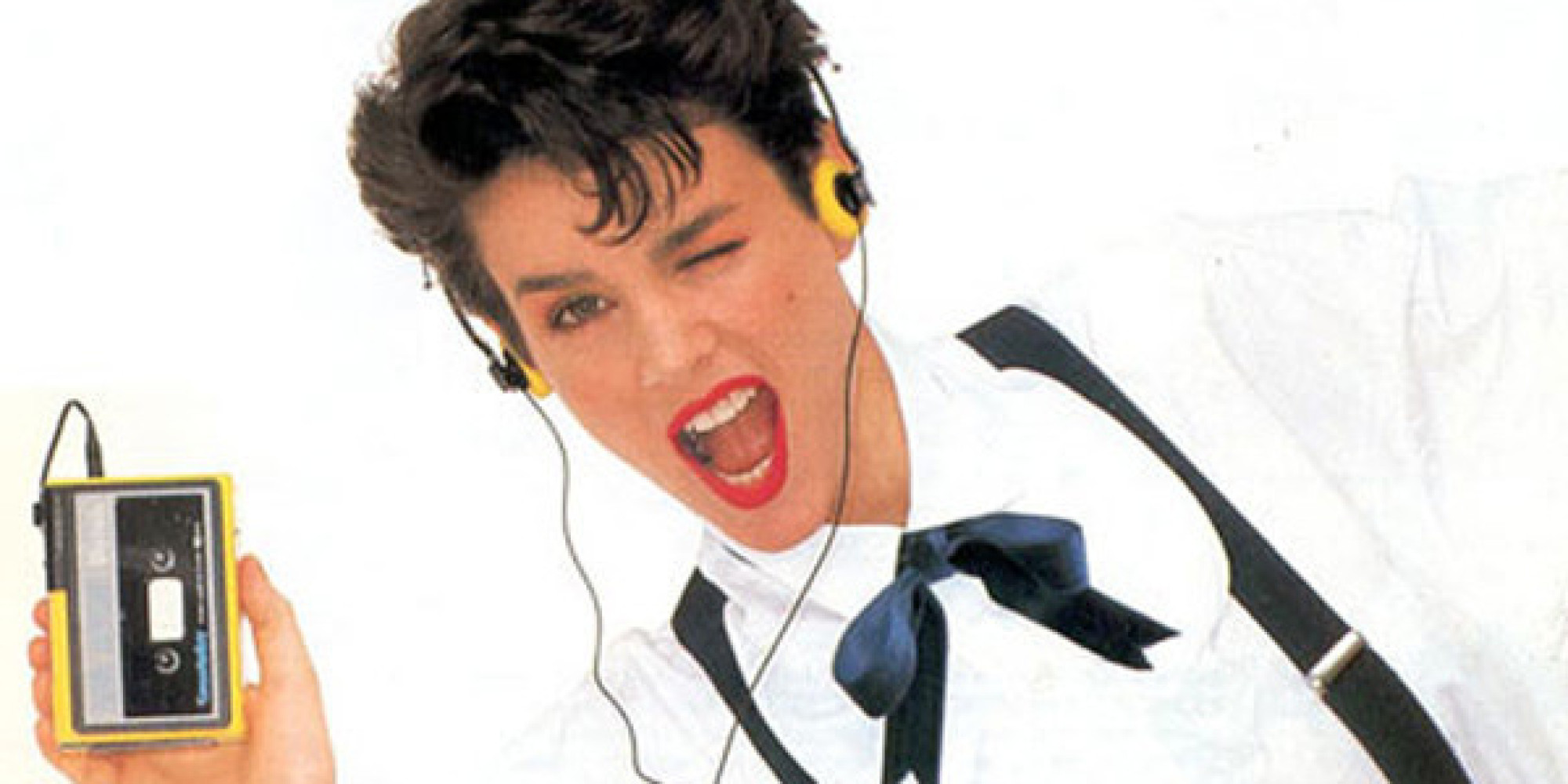
What really led rise to the use of headphones in an “every day” type of situation was when the Walkman was released. All of a sudden, people could use their Walkman, play music with headphones and walk anywhere they wanted to. From when it came out in 1979 until its decline in 1990, this device led a huge revolution in the audio world and improved how people were able to listen to music that they liked, whenever they wanted [1,3].

As you can see, people thought they were real cool when they had one of these.

In the 1990’s, the noise cancelling headphone came about, allowing people to have a new experience while listening to music. Instead of dealing with extra outside noise, people were now able to experience music where they did not have to deal with distractions other than the music itself. Originally, these headphones were designed for aviators as flights are very loud with out any sound reduction, however they soon began to produce them for the average person [4]. 

As headphones began to advance, out came the iPod and so began the era of portable music (in a much broader sense). In October of 2001, the iPod Classic was released, and depending on the number of gigabytes bought, could hold around 2,000 songs [5]. This was revolutionary as no other device had been able to store so many songs in such a small place. With this device, Apple also released small, in ear “earbuds” [5]. After this, the trend became for people to use smaller, in ear headphones that made it less obvious they were listening to music compared to the larger and clunkier over ear headphones [1]. Through out the years, this trend continued, and soon, even smaller headphones were created, such as wireless in-ear earbuds, which are so small that no one would be able to tell someone was listening to music with out getting a close look at their ear.

Apple’s new “Airpods” which are wireless in-ear earbuds.

For about the past hundred years, how people listen to music has changed drastically, and the ability for people to customize their playlists has improved drastically. Now, people have the option of playing music whenever and wherever they like without disrupting anyone else in the process. So, because of all of these innovations, hundreds of people are able to walk down the same street, not distract each other, and listen to completely different music while to someone just watching everyone, it would appear as if everything were silent.

  1. Newman, Mike. “The History of Headphones.” Cool Material. Accessed September 18, 2017. http://coolmaterial.com/roundup/history-of-headphones/.

2. “The History of Headphones.” Visual.ly. Accessed September 18, 2017. https://visual.ly/community/infographic/technology/history-headphones.

3. “Headphones: The Complete History.” Stuff. Accessed September 15, 2017. https://www.stuff.tv/features/headphones-complete-history/rise-walkman-1979-1990.

4. Denison, Caleb. “From Pilot to Passenger: A history of the noise-cancelling headphone.” Digital Trends. October 3, 2014. Accessed September 16, 2017. https://www.digitaltrends.com/home-theater/a-history-of-the-noise-cancelling-headphone-as-told-by-bose/.

5. Costello, Sam. “History of the iPod: From the first iPod to the iPod Classic.” Lifewire. September 22, 2016. Accessed September 16, 2017. https://www.lifewire.com/history-ipod-classic-original-2000732.