“Back In the USSR”: Parody or Political Statement?

In early 1968 , The Beatles went on a meditation retreat in Rishikesh, India. They aimed to study Transcendental Meditation with their guru Maharishi, and eventually become teachers of this craft. Mike Love, from the Beach Boys, was also on this trip.
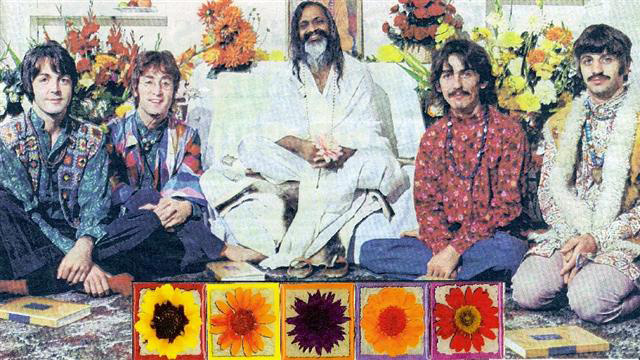
The Beatles with the Maharishi Mahesh Yogi

Love recalls  “sitting at the breakfast table and McCartney came down with his acoustic guitar and he was playing ‘Back In The U.S.S.R.’ and I told him that what you ought to do is talk about the girls all around Russia, The Ukraine and Georgia. [Paul] was plenty creative not to need any lyrical help from me but I gave him the idea for that little section”. McCartney did in fact take Love’s suggestion and wrote about admiring girls from Georgia, Ukraine, and Moscow, all locations represented in the USSR (Union of Soviet Socialist Republics).

Album Sleeve


A performance of “Back in the USSR” by the Beatles


“Back to the USSR” represents influence and power that music has in creating political controversy. When the song was released in 1968, America was at war with Vietnam. Because Russia supported the Viet Cong, conservative Americans immediately rejected this song, believing the Beatles were sympathizing with the enemy and promoting communism. The lyrics to this song fueled anger in Americans, especially the John Birch Society, who were particularly offended by the lines “You don’t know how lucky you are, boys”.

Additionally, this song caused controversy in Russia. Rock and roll was not respected at the time and the Beatles were not either. This said, Back in the USSR became wildly popular in Russia, and people sought to listen to the song even from tapes smuggled into the country. Elton John performed the song in Moscow a year after Americans had boycotted the 1980 Summer Olympics in Russia and wrote “they went ape s—. It was like playing ‘Philadelphia Freedom’ in Philadelphia”. The fact that there was such varied reactions to this song only made it more controversial.

Paul McCartney argues the claims of this song being politically charged by explaining this song as a parody of Chuck Berry’s hit “Back in the USA”.

McCartney says “I just liked the idea of Georgia girls…and talking about places like the Ukraine as if they were California, you know?…Its a jokey song, but it’s also become a bit of an anthem now…In my mind its just about a [Russian] spy who’s been in America for a long time and he’s become very American but when he gets back to the USSR he’s saying ‘Leave it ‘til tomorrow to unpack my case, Honey, disconnect the phone’”. It is interesting that McCartney had to defend himself for attempting to humanize young people on the other side of the world, and was also forced to defend the feeling of pride and comfort when a person returns home.

Performance of “Back In the USA” by Chuck Berry


In the article “Colin Kaepernick and the Radical Uses of the Star Spangled Banner”, Robin writes “Our national symbols are always more complicated than their original myths”. Kneeling at a football game to illuminate long-standing racism is viewed as a disrespectful and criminal act amongst conservatives. This can relate to Back in the USSR. Just as kneeling down during the Star Spangled Banner has become a controversial symbol of a larger national issue, Back in the USSR developed into a symbol of controversy during a time when a war was taking place . A parody song aiming to humanize non-American young people became a highly political debate.

This topic is very relevant to our class so far because we have focused so much on audience reception, the power of change and imitation, and how composers adapted to political ideals or brought to light political issues in their music. Politics and music will always be intertwined because politics inspires the cultural environment. As music is a pillar of culture, it is fair to say that these two will always have a powerful connection.
Miriam Makeba: “Mama Africa”

It is crazy to think that apartheid, the system of institutionalized racism in South Africa, was abolished way too recently in 1991. It was just twenty-six years ago that South African people were classified into four different racial groups with the goal of maintaining white supremacy. It gave rise to some of the most influential protest movements, within the country, by characters and heroes such as Nelson Mandela, as well as on a global scale. The arts and specifically music had a huge role in the fight against apartheid, with singer Miriam Makeba as a leading musician campaigning against the cruel injustices of apartheid in South Africa.

I’m sure you will recognize Makeba when listening to her performing her awesome “Pata Pata”:

However, today we will be focusing on her performing of the song “Soweto Blues,” by her one of her husbands, which talks about the 1976 Soweto uprising in South Africa. It was decreed in 1974 that the language Afrikaans was to be taught as much as English in schools. Because Afrikaans is inherently linked with racism, between 10,000 and 20,000 black students took to the streets of Soweto to peacefully protest the new law. The police quickly applied their forces very violently, leaving thousands of people injured and around 100-700 dead (the number of casualties is unclear).

Upon this tremendous tragedy, Miriam Makeba performed “Soweto Blues” at every chance. Its lyrics exclaiming,

“There was a full moon on the golden city Looking at the door was the man without pity / Accusing everyone of conspiracy / Tightening the curfew charging people with walking / Yes, the border is where he was waiting / Waiting for the children, frightened and running / A handful got away but all the others / Hurried their chain without any publicity.”

Miriam Makeba had an extensive musical career and participated in various bands, jazz bands, musicals, and films in Africa since very young. She got to travel to Venice to receive an award for her role in the controversial movie Come Back Africa, a documentary on South Africa. Makeba was soon in trouble with the African authorities for it because it portrayed their true and terrible side, and they obviously didn’t like it. She decided to not come back to South Africa, even if it meant she would practically get no payment for her performances. South Africa then revoked her passport, having Makeba officially in exile and preventing her from attending her mother’s funeral in 1960.

Miriam took refuge in London before coming over to the United States, where she would shoot to fame, performing for president John F. Kennedy, as well as alongside Nina Simone and other legendary artists in different occasions. She became a major activist against the injustice of the apartheid system.

“Music was a central part of the struggle against apartheid. The South African government censored many forms of expression, while many foreign entertainers refused to perform in South Africa and discouraged others from doing so in an attempt to isolate the white authorities and show their opposition to the regime. . . From abroad, Ms. Makeba acted as a constant reminder of the events in her homeland as the white power structure struggled to contain or pre-empt unrest among the black majority.” 

As if her stunning singing wasn’t enough, she even went on to testify for the United Nations Special Committee against Apartheid:

No wonder she is often called “Mama Africa!”

Let’s connect this to present day events, shall we? This movement against apartheid very clearly connects to Colin Kaepernick’s refusal to stand during the rendition of “the Star Spangled Banner” in protest and awareness of the oppression people of color are still living every day in the United States. I find the discussion on the various transformations of the anthem very meaningful and relevant to the crucial issue at hand—the oppression of an entire group of people because of their race—and directly connects to the music of protest and activism against apartheid in South Africa.  The Civil Rights Movement in the U.S. and the anti-apartheid movement in South Africa shared various similarities and both achieved a lot for people of color in terms of legal equality. However,  there is still a lot to be done in terms of social equality, and that’s what characters like Colin Kaepernick are rightfully protesting.


Musicians During the Great Depression

How important is it for artists to create or play music that is personal to them? Artists during the Great Depression were hired to be in the WPA by the American Government in the 1930s. They were paid to write and play music that lifted the spirits of a poor nation, that showed patriotism and pride in the US. Orchestras would play selections from the European classics as well, but were always required to play music from an American composer. These American composers were heavily influenced to write in as American of a style as possible, with the overall goal of ending the Depression.

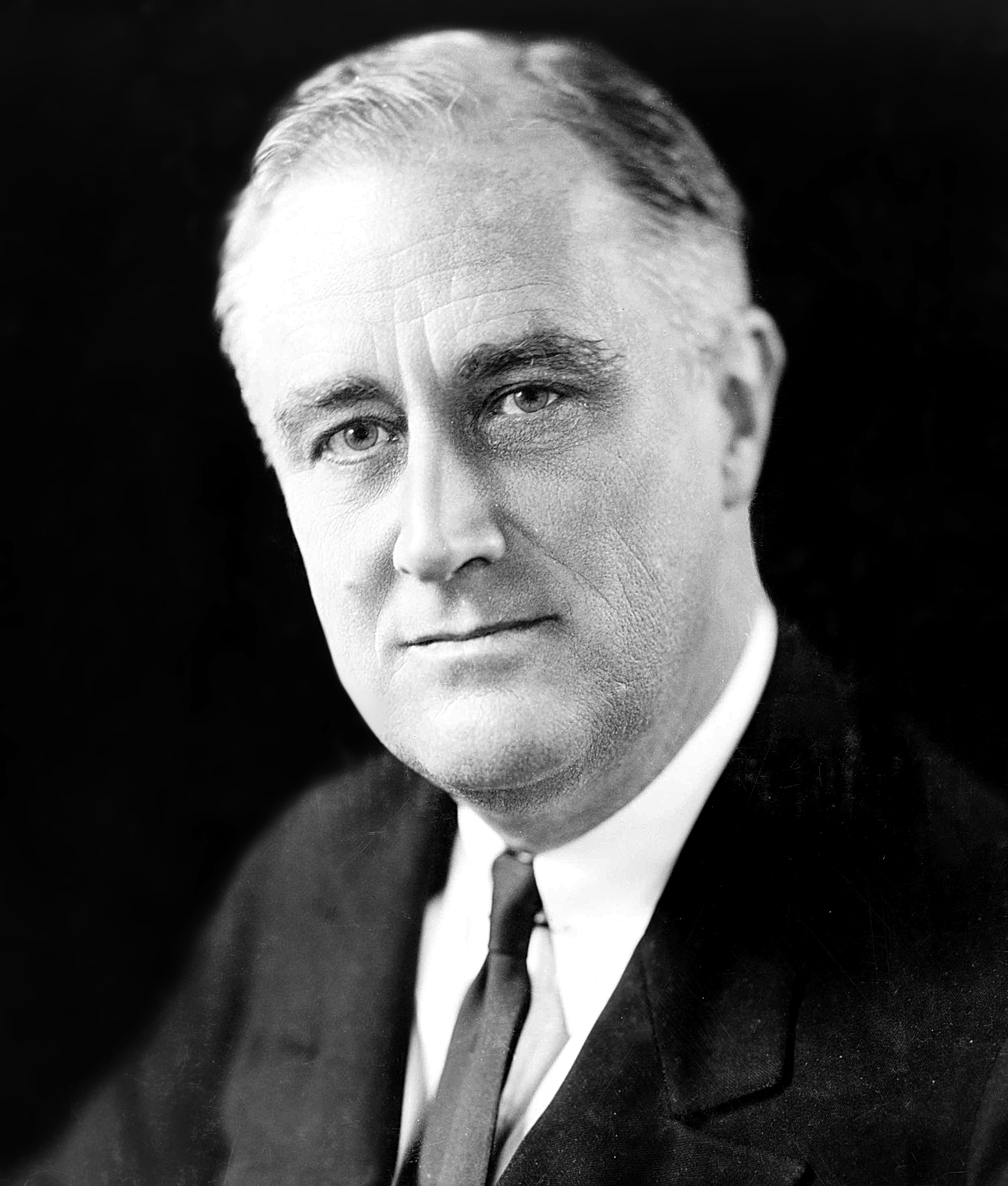
The WPA began on May 6th, 1935 by the Franklin D. Roosevelt administration. The purpose of the Works Progress Administration was to give jobs to Americans during the Great Depression. This was part of FDR’s New Deal, and the idea was to put the Americans to work being creative and uplifting the spirits in the nation. Eleanor Roosevelt was a major influence on FDR to create jobs for Americans in their field where they could be paid, this was very important for boosting the pride and self confidence of Americans. The WPA had many branches to it, and the one for musicians was called the FMP (Federal Music Project). The FMP hired all sorts of musicians including teachers, orchestral players, chamber music players, jazz musicians, singers, composers, etc. It was a bit of a struggle to get classical musicians to support American music at the time, because there was a huge appreciation for European music. Since the WPA was made to create American jobs and focus on American success, it was very important to the US government to insist on a certain amount of the music to be composed by American composers.

One of these American Composers hired by the WPA was Aaron Copland. Many composers of this time were pretty far left on the political scale, and Copland was not necessarily an exception although he didn’t seem to be an activist. During this war and anti-communist period, the political party in power was the Democratic Party but it was on the conservative side, so as not to appear socialist. This made far leftist musicians not the majority, although the majority of artists and intellectuals were interested in socialist values. Despite some political differences, the WPA still hired musicians based on merit more-so than political ideology (although there were a few cases where the government would not fund a show if it had “inappropriate” content, such as in the play The Cradle Will Rock by Marc Blitzstein). Copland was very popular among the population and the government. He created the sound that we associate “American” music with now. Some of his most famous pieces include Rodeo, Billy The Kid, and Appalachian Spring. He used many American folk tunes to create nationalist music, very similar to how European composers wrote their nationalist music. For example, Appalachian Spring is heavily influenced by Stravinsky’s Rite of Spring because of its use of authentic national music.


https://www.youtube.com/watch?v=WVahuS9hk_s

The question that I have to ask about this program; did it cause composers and musicians to write or play music they wouldn’t naturally have done? And is it the right of the American government to dictate what should be written and played? In the 2017 article Trump is Wrong if He Thinks Symphonies are Superior, Mr. Tommasini writes that President Trump believes that Western music was far superior to specifically Radical-Islamic cultures, essentially encouraging American classical composers to write music to show how much better we are than other cultures. Many politicians during the Great Depression were so afraid of communism (much like Trump is of Islam), that they wanted music to influence American values to show how different they were from communists. Yet by doing this, they copied what the Soviet Union was doing during the Socialist Realism period. Composers in the Soviet Union, like Shostakovich, were afraid of writing music that wasn’t liked by the government because they could be arrested, so they had to find ways to write music following those rules or at least hiding it so well that no one understood. Copland wasn’t afraid of the government coming to take him away in the middle of the night, but it is possible that composers would fear they wouldn’t have a job if they wrote anti-American music. They had to create something that they didn’t necessarily believe in, especially if they were socialists/communists.

Where is the line that we as musicians shouldn’t cross to remain true to our creative selves? Is it more important to treat music as a job or as an art, or can it be both? I don’t think it is fair to say that Copland was a sellout to the American government, but how much should we allow the government to dictate what we can create as art?

The not so crazy Eminem Freestyle.

Earlier this month the BET awards showed a ‘highly controversial’ cypher featuring rapper Eminem bashing Donald Trump. The video can be seen here:

https://www.youtube.com/watch?v=LunHybOKIjU

While this naturally received a slew of press, celebrity endorsements, and right-wing hatred, to me it seemed to play into all the ideals that hip-hop has always stood for. Hip-hop, as an urban and traditionally African-American art-form naturally has a liberal agenda, values equality and inclusion, and esp. stands for civil rights (think Public Enemy, N.W.A., Mos Def, etc.). Therefore, while Eminem was definitely audacious (per his usual self) his views were certainly not a surprise given the hip-hop genre’s continued expression of left-wing ideals. In no way do I mean to discredit the ideals associated with hip-hop, in fact I stand with them, but I do mean to say that people getting surprised at a rapper having democratic views, would be like a teacher getting surprised that there students do their blogpost the day beforehand.

Needless to say this politically charged rant was met with cheers among other outspoken advocates for equality. The rap notable stands with Colin Kaepernick with the line “This is for Colin, ball up a fist.” Colin Kaepernick, of course made recent headlines with his refusal to stand for the national anthem at a preseason NFL game. Colin was quoted in an article with The New Yorker, saying that “To me, this is bigger than football, and it would be selfish on my part to look the other way. There are bodies in the street and people getting paid leave and getting away with murder.” Colin gave a shout out to Eminem showing his support via Eminem was also given props by J. Cole and Lebron James, among many other celebrities.

To me these celebrity endorsements definitely show support for Eminem, but they do little beyond that. These tweets seem to circumvent actually saying anything substantial by merely showing support. I suppose in the Twitter age this is how support is shown, but at some point it makes you wonder when they are actually going to open a serious dialogue about their positions. The entertainment industry as a whole has expressed their disapproval for Trump several times now, but simply talking about it doesn’t seem to be doing much but catching headlines for a few weeks. I suppose what I’m saying is that art in this case Hip-Hop has advocated in attempts to affect social change for some time, but to me and it seems like to Eminem and other celebrities, we want to do more than just talk about social change we want to actually affect social change.

One idea that I think is pertinent to mention in discussing actually affecting social change is the “us and them” mentality, as it plays right into the hands of people who want to divide us. In keeping with the us and them mentality that divides the left and right parties of America respectively, Trump was recently quoted in an article by the New York Times saying “We write symphonies,” and in doing that essentially inferred that the white, right-wing, western world writes symphonies, (the pinnacle of music), and that, as a clear expression of our superior intellect, will help us overcome the barbaric savages we currently fight against (hard sarcasm). Trump’s ideals aren’t so much shocking anymore, but the fascinating thing is the clear connection he is making with music and politics. Our last president, Barrack Obama, was noted as having several rapper’s visit the White House, and said his favorite song of 2015 was Kendrick Lamar’s “how much a dollar cost.” Clearly, showing that president’s use their music choices to represent to the public something about themselves and their ideals. The problem with this and the ‘us and them’ mentality, is that when Obama was bringing rappers into the White House it was met with much contempt by the right wing, and now when Trump references symphonies the New York Times rips him apart in the aforementioned article. I think it is important to stand for what you believe in, but the “I’m right because you’re wrong” mentality I think is only dividing us further. It also isn’t to say that having one party where we all get along is ever going to happen either, as we clearly observed with the U.S.S.R. and socialist realism works of composers of that time. The point isn’t to make everyone fall in line and believe one ideal, but it also isn’t to alienate people and mock their views. We are not all going to get along, but I think if we can come together on some common ground, we could at least open a dialogue, which at this point seems out of the question by left-wing advocates like Eminem, but also by Trump himself.

Further research

Full Lyrics of Eminem’s Cypher

New York Times article about Eminem’s cypher

USA Today article about Eminem’s cypher

For other rapper’s speaking out against Trump, please see Snoop Dogg’s Lavender which was condemned by Trump in an article by the New York Times.