
“Let me tell you the story of Right Hand, Left Hand. It’s a tale of good and evil. Hate: it was with this hand that Cain iced his brother. Love: these five fingers, they go straight to the soul of man. The right hand: the hand of love. The story of life is this: static. One hand is always fighting the other hand, and the left hand is kicking much ass. I mean, it looks like the right hand, Love, is finished. But hold on, stop the presses, the right hand is coming back. Yeah, he got the left hand on the ropes, now, that’s right. Ooh, it’s a devastating right and Hate is hurt, he’s down. Left-Hand, Hate, KO-ed by Love.”
(Actual song starts around 2:00, music video by Spike Lee)
So goes one of the only main monologues attributed to Radio Raheem throughout the film Do the Right Thing. Instead, he spends most of his time cruising the streets of Brooklyn, radio in hand blasting Public Enemy’s “Fight the Power”.
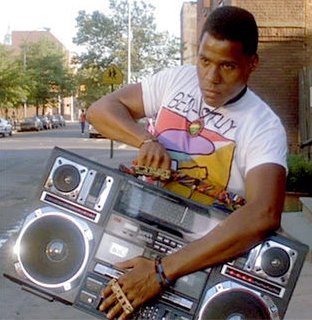
Fight the Power was commissioned by Spike Lee, specifically for the film. The song takes the refrain of a classic Isley Brothers tune and turns up the energy and rhythmic impulse past 10, resulting in an anthem of protest and unity. Fight the Power’s release is a pivotal moment in the development of hip-hop, with Public Enemy injecting political and social values into the nascent genre of hip hop while combining with Spike Lee’s film to create a unified form of social protest for a restless youth population, forever cementing hip-hop as a unique way to combat social institutions.
In the article, “Does music trump politics”, Lamell, an organizer of a community orchestra who hired a controversial political talk show host to conduct a Haydn symphony, states that, “music and politics ‘are two entirely different worlds: Political discourse is one realm, and music is another realm”. While this may be true for some forms of absolute music, the logic behind this statement blatantly ignores the composer and (more importantly), human behind the piece, not to mention the performers who bring that piece to life. Political ideologies perpetually affect every decision humans make, even if this filter occurs unconsciously. Not only that, but this statement also appears to be made under the assumption that only Western classical music is worth acknowledging as “music” because anyone who has been living in America within the past half a century has witnessed politics as a hotbed for music, not just in hip hop but the entire punk movement (notables such as Bad Brains, Dead Kennedys) as well as folk music with Crosby Stills and Nash, Neil young, and Bob Dylan just to name a few. Both Spike Lee and Public Enemy resoundingly reject this idea of fine arts simply being an escape from everyday life, with astute portrayals of urban cultural conflict and unified protest respectively, specifically revolving around power and its’ abuse. In the words of prominent African-American author, Ta-Nehisi Coates, “All the world’s boomboxes were transformed into pulpits for Public Enemy. Before now, the music was escapist and fun– some beats and the dozens, fat chains and gilded belt-buckles. But Chuck D pulled us back into the real….. Here in Baltimore, brothers would put on the Enemy and recoil. We had never heard anything so grating–drums crashed into whistles, sirens blared off-beat. But the cacophony was addictive and everywhere”.
To understand Fight the Power, first one must understand what the hook, “Fight the power, We’ve to fight the powers that be” actually means. It’s easy to take the line at face value and assume that Public Enemy is simply calling for retaliation against any and all authority but instead the line is referencing the systematic abuse of power by those in positions of authority, and how these systems keep the poor and rich (many times along racial lines) disparate. Off of the second verse the lines, “People, people we are the same, No we’re not the same cause we don’t know the game, What we need is awareness, we can’t get careless…” reinforce this concept. Even groups such as NWA (who formed slightly after public enemy but had songs like Fuck the Police that were released before Fight the Power) who had traces of socio-political message hadn’t fully capitalized on how unique of a position hip-hop was in to educate and unite African-Americans, and this mentality coincides with Mike D’s belief mentioned earlier in the second verse, “What counts is that the rhymes, Designed to fill your mind”.
So what exactly is it about Fight the Power that made it so anthemic for millions of people? Firstly, is the song’s (as well as much of early hip hop’s) roots in African American culture, specifically through the use of samples as well as shout outs like, “Sound of the funky drummer” in reference to the James Brown song (a break beat responsible for an unfathomable number of hip hop beats). A cursory glance at the song’s WhoSampled page (a site that breaks down both what samples are used in hip hop songs as well as the ability to look at the various ways in which a single song has been sampled throughout history), brings up names such as James Brown, Isley Brothers, Sly & the Family Stone, the J.B.s, Bob Marley (I know, technically not African American), and Syl Johnson, a who’s who of progressive black artists. Pair these reworked cultural touchstones with scathing lyrics such as,
“Cause I’m Black and I’m proud
I’m ready and hyped plus I’m amped
Most of my heroes don’t appear on no stamps”
and,
“Elvis was a hero to most
But he never meant shit to me you see
Straight up racist that sucker was
Simple and plain
Mother fuck him and John Wayne”
and it becomes easier to understand why this resonated with millions of young black people in the 1980’s, especially after epidemics such as AIDS and the war on drugs that destroyed urban areas had been mishandled by the powers that were. While the Elvis line is a bit of hyperbole considering Elvis himself was respectful to his African-American inspirations (admitted to here by Chuck D), the line is supposed to convey the frustration that for the majority of America, Elvis was the be all end all of rock music, blocking out any recognition of all of the African-American musicians that preceded and inspired him. John Wayne on the other hand had this to say in a Playboy interview back in 1971, “I believe in white supremacy until the blacks are educated to a point of responsibility. I don’t believe in giving authority and positions of leadership and judgment to irresponsible people”, so the bitterness is understandable.
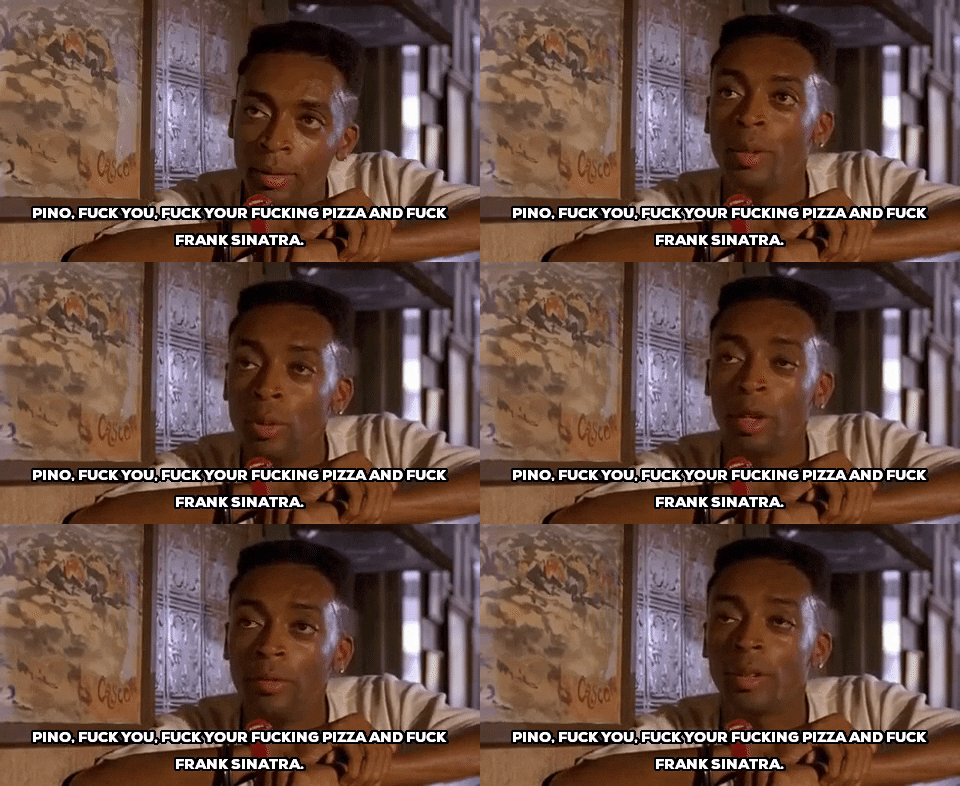
(Spoiler alert for Do the Right Thing ahead)
The culmination of all the events in Do the Right Thing leads to a showdown in the only pizza joint in the neighborhood owned by a white Italian family, with a riot catalyzed by the shop owner breaking Radio Raheem’s box with a baseball bat due to his refusal to turn the hip-hop off. This is a mightily simplified version of a very complicated film, yet serves as potent foreshadowing by Spike Lee of both the power of hip-hop as a social statement as well as the apprehension and fear it caused when it first started becoming popular. While the summer of 1989 was maybe not the first moment that politics and hip hop intertwined, it served as a visceral introduction for mainstream America to a very frustrated and very vocal group named Public Enemy.
Further Exploration:
-Do the Right Thing (film)
-http://www.npr.org/event/music/560379652/the-roots-feat-bilal-tiny-desk-concert (very current example of hip-hop and politics)
-Fear of a Black Planet (album by Public Enemy)