Ennio Morricone’s Masterpiece

I’ll never forget the first time I watched the movie Cinema Paradiso. I was a naive 7th grader who knew nothing about film or film music. I was in awe of the gorgeous soundtrack and the heartwarming story line.  It is by far one of the most beautiful works of art ever created, and my favorite movie. Cinema Paradiso changed my life forever by sparking my obsessive interest in movies, and the music that makes each one such a unique work of art. My life was changed once again by the music of this movie when I was in high school. A few summers ago I had the amazing opportunity to perform a Cinema Paradiso medley on tour in Italy with The Philadelphia All City Orchestra. I was overwhelmed with happiness and am still so honored that I got to play one of the most inspirational pieces from my favorite movie.
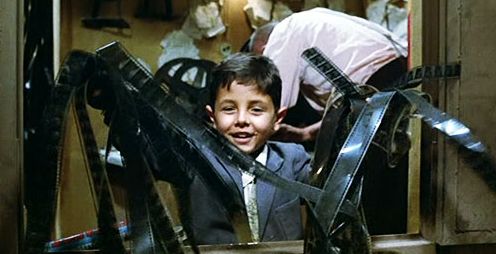
*WARNING: This post does contain spoilers* 

Cinema Paradiso is an Italian film directed by Giuseppe Tornatore. It follows the nostalgic journey of the main character Toto (Salvatore), a young boy who experiences friendship, love, and appreciation for film. The majority of the movie is told as flashback, from the memories of older Toto.

In my opinion, the ending scene sums up the overall beauty of the film. The music of this scene adds to the intensity of it’s visuals!  In this scene, Toto returns to his hometown after being away for 30 years. He is summoned back after hearing that Alfredo, his good friend and mentor had passed away. The ending scene and montage is a collection of all of the kissing footage Alfredo cut from the movies he showed at his theater when Toto was a kid. This footage was Alfredo’s final gift to Toto.

Many of the Youtube comment threads consist of both positive and melancholy reactions, like the ones shown above. I 100% agree with Franco Pozo’s comment that the ending is more of an experience (as is the whole movie)! Mo Rajabally’s comment is also very relevant with my relationship to the movie. I’ve seen it multiple times at different stages in my life, and each time I felt something totally new.

One of the many reasons this movie made cinematic history was because of the outstanding soundtrack. The music was written by the one and only Ennio Morricone, who is a world renowned composer. In the final scene of the movie, both the repetition of Morricone’s music and the kisses work well to create a unique emotional experience for the movie viewer. In my opinion it is the simplicity of both the music and visuals that trigger the most complex feelings. The music throughout the whole movie is phenomenal, and captures the mood of each scene perfectly. Morricone is also quite famous for his other soundtracks such as The Good, The Bad and The Ugly, and Gabriel’s Oboe. I would highly recommend checking out any film or musical score Morricone is associated with because they are all wonderful!

If you’ve never seen Cinema Paradiso or listened to the soundtrack, I would stop what you’re doing RIGHT NOW and let yourself experience it’s world. I can guarantee you won’t regret it.  I’ll leave you with this quote from Michael Patison’s Youtube comment regarding the final scene…

“The best scene from my favorite movie of all time. Unadulterated beauty. Every aspect of the filmmaking makes it wonderful: the careful clip selection embodying old Hollywood at its best, from passion to comedy; the tremendous performance by Perrin (his impact is far, far greater than his screen time would suggest (10minutes, maybe?); the entire, faultless film that precedes it and the stunning score (my favorite ever) by Ennio Morricone that ties it all together, reminding of the film’s past simply by playing the same general theme already played several times throughout. I’m not a cryer. Never have been, never will be. Like I really don’t cry at all. But I bawl like a newborn every single time I watch this movie and this scene. I’m just 22. Imagine how bad I’ll be crying thinking of everything it represents in 50 years.”
Western Revised: Django Unchained

The American wild West on the cinema screen is an iconic and globally influential part of film and popular culture. The rugged cowboy heroism sweats the narrative of manifest destiny and makes every young boy yearn for a Red Ryder BB Gun. But the Western as a cinema genre is inherently intertwined with deeply problematic racial and gendered oppression and violence. Most Western films feature a principal conflict between a white, male hero facing off against a savage group of Native Americans or Mexican bandits. Watch this short clip detailing the consequences of perpetuating the cowboy myth on the Native American population:

This video makes clear that the western genre overtly relies on racial conflict and violence as the central plot device and the genre shamelessly villianizes Native American people for the purpose of glorifying white western conquest.

Since popular opinion on the subject of the genocide of Native American people has generally and slowly shifted to a position of “that was a bad thing” in the past thirty years, the western film enterprise needed to find  a new angle. This article in The Atlantic analyzes the trend of “revisionist” Westerns as American film directors grapple with the contradictions of our nation’s morally dubious history and the optimistic heroism of a cowboy character. Michael Agresta writes in this article:

“For a century plus, we have relied on Westerns to teach us our history and reflect our current politics and our place in the world. We can ill afford to lose that mirror now, especially just because we don’t like what we see staring back at us.”

Enter: Django. A hero that subverts this racialized genre. Quentin Tarantino’s film Django Unchained is about a freed slave who partners with a bounty hunter to kill wanted men, exact revenge, and rescue and free his wife. The artistic splendor of this film relies heavily on the ways Tarantino sets up a traditional Western scene or narrative and subverts it in ways that are political, shocking, comedic, or uncomfortable. The score to this film is one of they key ways the audience can engage with this historical commentary. One clear example of music defining the boundaries of the paradigm and the exception is in the trailer:

https://www.youtube.com/watch?v=eUdM9vrCbow

The first minute of the trailer features the Jonny Cash song “Ain’t No Grave” that fits our expectations about wild west Americana. The mood of the song is enhanced by the added sound effects of a hawk crying overhead, the wind whistling, and a horse whinnying. This use of sound in the score is consistent with Ennio Morricone’s writing for famous spaghetti Westerns. Listen to this clip for a reminder of a tune you’re probably familiar with:

https://www.youtube.com/watch?v=h1PfrmCGFnk

Ennio Morricone, in fact, wrote several original pieces for the score to Django Unchained, which is a detail that creates consistency with the aesthetic paradigms of the Western genre. This sense of consistency breaks about one minute into the trailer for Django, when a funky classic from James Brown, “The Payback” underscores the advertisement for Django’s complicated, free, and heroic character.

In this next clip we can hear the familiar trumpet fanfare of a heroic, Morricone style Western soundtrack. In this scene, the music establishes the connection to the genre traditions while the action subverts the historical narrative as Django whips a white slaver and his bounty hunter friend kills another in an evocative scene in a cotton field.

Content warning: the following clips from Django Unchained gratuitously use the word “n***er”.

https://www.youtube.com/watch?v=45V4fdoeMiE

In contrast with this use of familiar Western style music to ground the action in the context of the genre, the following clip uses distinctly different music by Rick Ross to underline the way Django is walking a complicated line between empowered and constrained. The next scene doesn’t necessarily portray Django as heroic, but rather as grappling with his position in society and the role he is occupying while in the company of white slave owners. The central conflict in this clip is over the social power of the word “n***er”. I think the use of the song “100 Black Coffins”, which Rick Ross wrote for this film, underscores this element of personal racialized conflict and reminds the audience that even though Django is the hero, he must constantly fight for his autonomy among white men.

https://www.youtube.com/watch?v=dFfDPc0JY38

This song by Rick Ross and a few other featured songs by John Legend and the aforementioned James Brown song conspicuously stick out in this film because they are a major anachronism in an otherwise fairly linear and stylistically consistent movie. Therefore, I credit the juxtaposition of familiar Western tropes with racially charged divergences from the genre as a key element that makes this film so successful at reclaiming the American narrative.

As the Atlantic article informed us, Westerns have long been a reflection of American politics and ideals. Django Unchained is an important film because it reflects a mainstream acknowledgement of the deeply flawed racial oppression in American history, culture, and media. And, while including a James Brown song in a movie where black men are eaten by dogs is really not a great victory for the equality of mankind, it is a small victory against the inherently racist whitewashed history and art culture of America.

The Powers That Be

“Let me tell you the story of Right Hand, Left Hand. It’s a tale of good and evil. Hate: it was with this hand that Cain iced his brother. Love: these five fingers, they go straight to the soul of man. The right hand: the hand of love. The story of life is this: static. One hand is always fighting the other hand, and the left hand is kicking much ass. I mean, it looks like the right hand, Love, is finished. But hold on, stop the presses, the right hand is coming back. Yeah, he got the left hand on the ropes, now, that’s right. Ooh, it’s a devastating right and Hate is hurt, he’s down. Left-Hand, Hate, KO-ed by Love.”

(Actual song starts around 2:00, music video by Spike Lee)

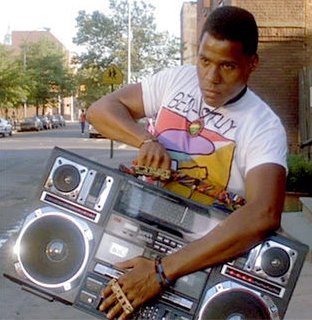
So goes one of the only main monologues attributed to Radio Raheem throughout the film Do the Right Thing. Instead, he spends most of his time cruising the streets of Brooklyn, radio in hand blasting Public Enemy’s “Fight the Power”.

Fight the Power was commissioned by Spike Lee, specifically for the film. The song takes the refrain of a classic Isley Brothers tune and turns up the energy and rhythmic impulse past 10, resulting in an anthem of protest and unity. Fight the Power’s release is a pivotal moment in the development of hip-hop, with Public Enemy injecting political and social values into the nascent genre of hip hop while combining with Spike Lee’s film to create a unified form of social protest for a restless youth population, forever cementing hip-hop as a unique way to combat social institutions.

In the article, “Does music trump politics”, Lamell, an organizer of a community orchestra who hired a controversial political talk show host to conduct a Haydn symphony, states that, “music and politics ‘are two entirely different worlds: Political discourse is one realm, and music is another realm”. While this may be true for some forms of absolute music, the logic behind this statement blatantly ignores the composer and (more importantly), human behind the piece, not to mention the performers who bring that piece to life. Political ideologies perpetually affect every decision humans make, even if this filter occurs unconsciously. Not only that, but this statement also appears to be made under the assumption that only Western classical music is worth acknowledging as “music” because anyone who has been living in America within the past half a century has witnessed politics as a hotbed for music, not just in hip hop but the entire punk movement (notables such as Bad Brains, Dead Kennedys) as well as folk music with Crosby Stills and Nash, Neil young, and Bob Dylan just to name a few. Both Spike Lee and Public Enemy resoundingly reject this idea of fine arts simply being an escape from everyday life, with astute portrayals of urban cultural conflict and unified protest respectively, specifically revolving around power and its’ abuse. In the words of prominent African-American author, Ta-Nehisi Coates, “All the world’s boomboxes were transformed into pulpits for Public Enemy. Before now, the music was escapist and fun– some beats and the dozens, fat chains and gilded belt-buckles. But Chuck D pulled us back into the real….. Here in Baltimore, brothers would put on the Enemy and recoil. We had never heard anything so grating–drums crashed into whistles, sirens blared off-beat. But the cacophony was addictive and everywhere”.

To understand Fight the Power, first one must understand what the hook, “Fight the power, We’ve to fight the powers that be” actually means. It’s easy to take the line at face value and assume that Public Enemy is simply calling for retaliation against any and all authority but instead the line is referencing the systematic abuse of power by those in positions of authority, and how these systems keep the poor and rich (many times along racial lines) disparate. Off of the second verse the lines, “People, people we are the same, No we’re not the same cause we don’t know the game, What we need is awareness, we can’t get careless…” reinforce this concept. Even groups such as NWA (who formed slightly after public enemy but had songs like Fuck the Police that were released before Fight the Power) who had traces of socio-political message hadn’t fully capitalized on how unique of a position hip-hop was in to educate and unite African-Americans, and this mentality coincides with Mike D’s belief mentioned earlier in the second verse, “What counts is that the rhymes, Designed to fill your mind”.

So what exactly is it about Fight the Power that made it so anthemic for millions of people? Firstly, is the song’s (as well as much of early hip hop’s) roots in African American culture, specifically through the use of samples as well as shout outs like, “Sound of the funky drummer” in reference to the James Brown song (a break beat responsible for an unfathomable number of hip hop beats). A cursory glance at the song’s WhoSampled page (a site that breaks down both what samples are used in hip hop songs as well as the ability to look at the various ways in which a single song has been sampled throughout history), brings up names such as James Brown, Isley Brothers, Sly & the Family Stone, the J.B.s, Bob Marley (I know, technically not African American), and Syl Johnson, a who’s who of progressive black artists. Pair these reworked cultural touchstones with scathing lyrics such as,

“Cause I’m Black and I’m proud
I’m ready and hyped plus I’m amped
Most of my heroes don’t appear on no stamps”

and,

“Elvis was a hero to most
But he never meant shit to me you see
Straight up racist that sucker was
Simple and plain
Mother fuck him and John Wayne”

and it becomes easier to understand why this resonated with millions of young black people in the 1980’s, especially after epidemics such as AIDS and the war on drugs that destroyed urban areas had been mishandled by the powers that were. While the Elvis line is a bit of hyperbole considering Elvis himself was respectful to his African-American inspirations (admitted to here by Chuck D), the line is supposed to convey the frustration that for  the majority of America, Elvis was the be all end all of rock music, blocking out any recognition of all of the African-American musicians that preceded and inspired him. John Wayne on the other hand had this to say in a Playboy interview back in 1971, “I believe in white supremacy until the blacks are educated to a point of responsibility. I don’t believe in giving authority and positions of leadership and judgment to irresponsible people”, so the bitterness is understandable.

(Spoiler alert for Do the Right Thing ahead)

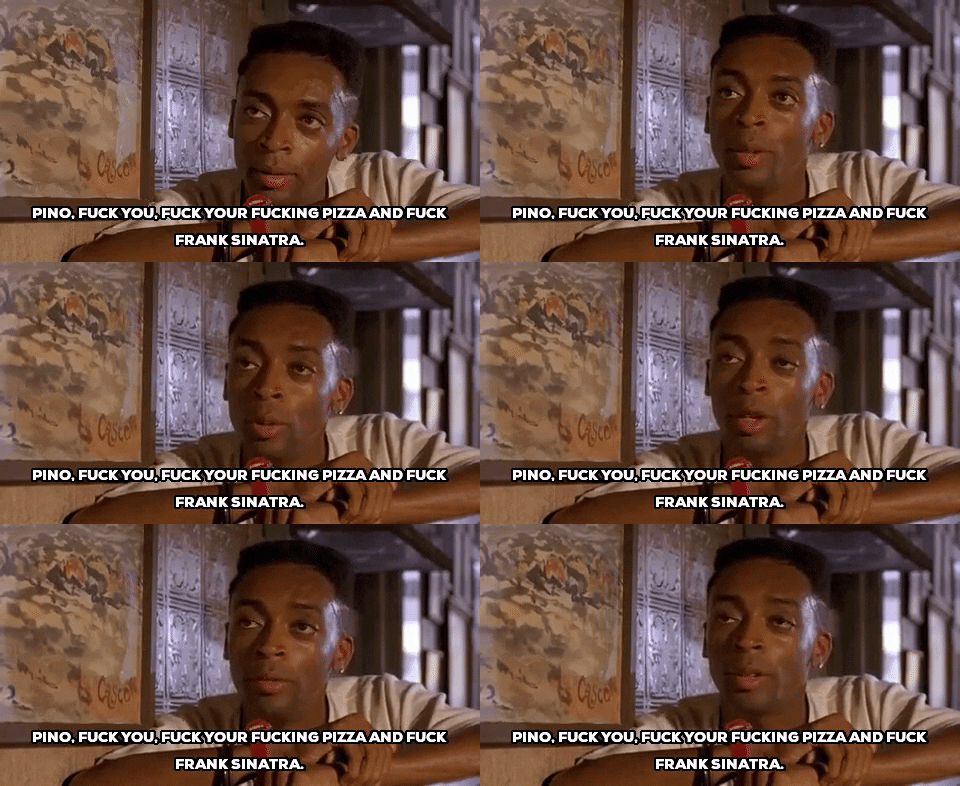
The culmination of all the events in Do the Right Thing leads to a showdown in the only pizza joint in the neighborhood owned by a white Italian family, with a riot catalyzed by the shop owner breaking Radio Raheem’s box with a baseball bat due to his refusal to turn the hip-hop off. This is a mightily simplified version of a very complicated film, yet serves as potent foreshadowing by Spike Lee of both the power of hip-hop as a social statement as well as the apprehension and fear it caused when it first started becoming popular. While the summer of 1989 was maybe not the first moment that politics and hip hop intertwined, it served as a visceral introduction for mainstream America to a very frustrated and very vocal group named Public Enemy.

Further Exploration:
-Do the Right Thing (film)
-http://www.npr.org/event/music/560379652/the-roots-feat-bilal-tiny-desk-concert (very current example of hip-hop and politics)
-Fear of a Black Planet (album by Public Enemy)