The combination of a beautiful sunset and a Mozart string quartet can bring out emotions we feel in the depths of our soul. A sappy love scene combined with a cheesy romantic melody can make us cry. When moving images are connected with meaningful music, the two have an incredibly powerful effect on the listener and leave a deep impact. What happens when video is combined with a song that is almost too painful to listen to?
Andra Day recently covered and recorded Billie Holiday’sStrange Fruit. The song was originally released in 1939 in response to a photo of three black men unfairly lynched in Indiana. The powerful lyrics reached millions of people at the time and played an important role in the development of the Civil Rights Movement. In 1999 the song was named song of the century by Time magazine and has been incorporated in many popular songs.
Strange Fruit has been performed in honor and remembrance of lynched victims, but few music videos have been made. Putting a video to such an emotionally heavy song is not something many decide to take on. The lyrics are as follows:
Southern trees bear a strange fruit,
Blood on the leaves and blood at the root,
Black body swinging in the Southern breeze,
Strange fruit hanging from the poplar trees.
Pastoral scene of the gallant South,
The bulging eyes and the twisted mouth,
Scent of magnolia sweet and fresh,
And the sudden smell of burning flesh!
Here is a fruit for the crows to pluck,
For the rain to gather, for the wind to suck,
For the sun to rot, for a tree to drop,
Here is a strange and bitter crop.
What makes Andra Day’s video special is the the video combined with sound effects and music. The opening scene of the music video gives a brief history of the lynchings in America and includes a sunset with the outdoor sounds of bugs and wind. This creates a chilling atmosphere and is enhanced by the sound of wood cracking due to the swinging of a rope. It’s almost as if the listener is taken to the night of the Indiana lynchings. As the music starts, the swinging rope effect continues and the sound of gasped breathing is added. Before Andra Day even appears or starts singing the dark lyrics, the listener is able to understand that this is not a light song.
As Andra Day starts singing, the sunset turns into a spotlight and the viewer almost feels as if they are in the vocalist’s shoes.
The constant change between the spotlight on Andra and the sun shining through the leaves gives tribute not only to the lynching victims but also to Billie Holiday and the difficulties she faced as an African American throughout the Civil Rights Movement.
As the video continues the listener is able to see that Andra Day is wearing broken handcuffs. This is significant as we see a symbol of the injustice African Americans faced and are reminded that racism in America is still an issue.
Finally, the viewer is able to see images of the camera angle pointed up at branches and Andra Day looking into the air, almost as if she is painfully looking up as she is remembering the victims of the lynching.
This video has the ability to speak to anyone that watches it. The comments listed below show that the filming and performance of this song have an emotional depth that cannot be felt with video or music alone.
When music and video are put together, both create a visual and emotional experience that is essential to the understanding of this song. Because of the heart-wrenching shots combined with Andra Day’s chilling voice, this music video gave “Strange Fruit” the depth and meaning it deserves.
Famous Auschwitz survivor, writer, and activist Elie Wiesel once said, “Without memory, there is no culture. Without memory, there would be no civilization, no society, no future.” The quote by itself seems to be just about memory in a general sense but considering the context of Wiesel’s experiences and activism, there is a very poignant truth: there is no hope for future generations to create a better future unless they remember and understand the past. Culture and art as a whole are very reflective of this sense of collective memory. Our movies, book, shows, and art all reflect the accomplishments we remember the most triumphantly and the losses that we feel most the most acutely as a society, particularly on a national scale. The question I am addressing is where music fits in our cultural memory and how a piece like David T. Little’s Haunt of Last Nightfall can serve as a sort of cultural artifact, expanding the awareness, breadth, and influence of a certain point in time on todays cultural memory.
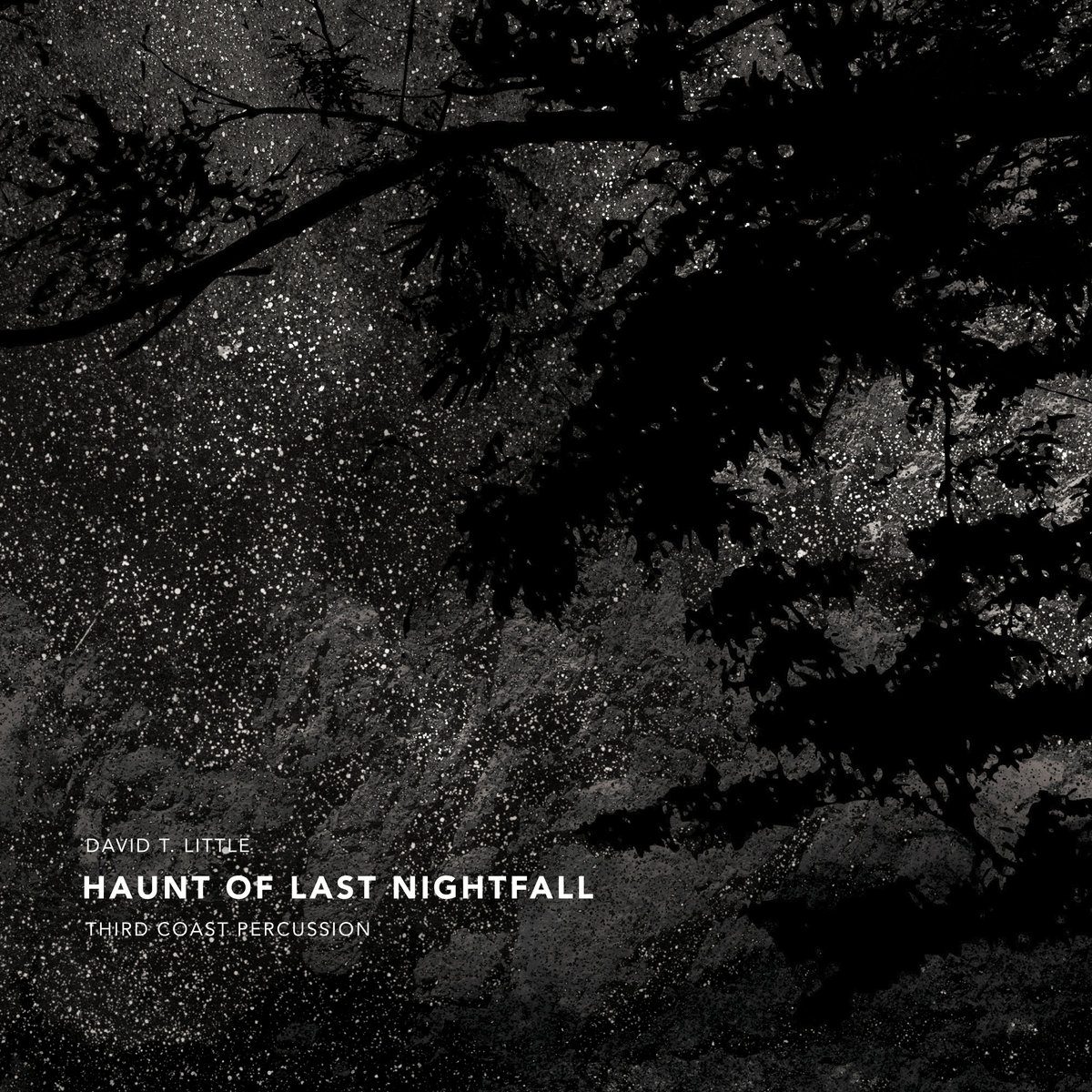
Haunt of Last Nightfallwas premiered and commissioned by Grammy Award winning percussion group Third Coast Percussion. The piece takes influence from experimental metal music, specifically the bands Sunn O))) and One Day as a Lion, and is inspired by the events that took place on December 11th, 1981 in El Mozote, El Salvador where an elite battalion of the Salvadoran government, funded by the United States, slaughtered over 800 innocent civilians. While it is not my intention to be unnecessarily graphic, I believe that this story is important and needs to be told in order to understand what this piece is really about and what it and this history means for us today.
CONTENT WARNING: The accounts of these events involve frequent mention of extreme violence such as murder, decapitation, and rape.
The source material for the account I am about to give comes entirely from Mark Danner’s amazing piece of journalism “The Truth of El Mozote” published in the New Yorker in 1993 which was the first definitive piece written on El Mozote after both the Salvadoran and U.S. governments attempted to deny that the massacre took place. It is a highly fascinating read and delves much more into the details of the Cold War-era politics of the story than I will here.
In the early eighties, El Salvador found itself at the onset of a messy civil war between leftist guerrilla groups and the national government. The right-wing U.S. administration felt responsibility to make sure that fascism crept no further into the western hemisphere and thus had aligned priorities with the Salvadoran government. Avoiding trying to create another Vietnam, the U.S. chose to provide funding and training for the highly inept Salvadoran armies rather than actually send in troops. Early on in the war the guerrilla groups remained ever elusive to the government but with military reform, the government began an operation called “Hammer and Anvil” in the northeast portion of El Salvador called Morazán where they knew guerrillas were hiding. The operation was spear-headed by an elite group of government soldiers called the Atlacatl Battalion lead by the ruthless Domingo Monterrosa. The Atlacatl had a fire in them that the rest of the army didn’t when it came to exterminating the guerrillas or as they called them, “delinquent terrorists”. They proceeded throughout Morozán destroying all villages that could be guerrilla outposts, not matter the cost. Locals in villages in the area knew that the army was headed their way and were actually told by richer villagers that they trusted to stay put and that the relatively small town of El Mozote would be safe since they largely did not deal with guerrilla fighters. El Mozote also had a large population of Protestant Evangelical Christians which helped their case considering Catholic liberation theology had been contributing to guerrilla recruitment in other villages, so guerrillas had learned not to recruit there.
This fact is what made El Mozote special. Most of the towns ravaged by the Atlacatl in Morazán did at least have some guerillas there or civilian guerrilla sympathizers, but El Mozote was known to be largely outside the sphere of influence of the guerrilla fighters. Yet because of great intelligence and mobility the guerillas were able to stay one step ahead of the government and the army grew increasingly frustrated. Then on the evening of Thursday, December 10th, 1981, the Atlacatl arrived in El Mozote and went around through the village banging on doors, forcing the residents from their homes into the street. As night fell, the soldiers lined the entire village up and forced them to lie literally mouth down in the street. Much what actually happened in El Mozote is known from a single eye-witness account, Rufina Amaya, who was the sole survivor of the massacre.
She, along with her husband and four children were among those laying in the dirt that night as the soldiers kicked them and asked where the guerrillas were. After some time the soldiers ordered everyone back into their homes threatening that they would be shot if “even so much as their noses” were poking out of the door.
David T. Little’s piece follows this narrative of events pretty faithfully although it is not completely programmatic. The first movement “Curtain, El Mozote” sets the scene for the piece and story with a sultry marimba voice, clapping, and deep synthesized bass. It is also worth noting that in the video recording of Third Coast playing the piece, the stage is almost completely dark except for a few lights lighting the instruments and performers. This adds to the haunting, night-time feeling the piece capitalizes on. The second movement, “Between the Hammer and the Anvil“, is quicker, full of deep, aggressive drumming, piercing brake drum sounds and introduces electric guitar which plays a prominent role representing violence throughout the rest of the piece. The third and fourth movements then begin to focus on the events of the night that the Atlacatl arrive. The third is called “Last Nightfall” and to me it evokes the feeling of silent dread and uncertainty of that night. The fourth movement “Line Up/ Face Down” returns briefly back to the chaotic drumming and guitar of the second movement before melting into the lush, hammond organ sounds of the fifth movement: “Coda: And there was evening…” This concludes the first half of the piece which David T. Little describes as ” a ghost play in two acts”.
On the morning of Friday December 11th, 1981 the soldiers ordered everyone in El Mozote out of their homes and into the plaza again. From there they were divided into groups of men and then women and children and then sent into separate locations: men in the church and women and children into the home of one of the local residents. An officer involved in the operation later said that the plan was to interrogate the village for information about the guerrillas yet it is unclear how strong this intention was because after roughly an hour of questioning, Rufina and the other women and children could hear the men shouting from the church and see the soldiers marching bound and blind-folded men out of the church and into the plaza and streets. From a small window in the house they were held Rufina and her nine year-old son Cristino saw her husband Domingo Claros in one of the groups try to escape with another man and watched as the Atlacatl soldiers gunned them down on the spot and then walk over to the still breathing men and use their machetes to behead them. After a similarly brief questioning period with the women, the soldiers came in and started picking off young women and girls as young as ten and marching them out of the village and into the nearby hills named El Chingo and La Cruz. The rest of the women soon could hear the screaming coming from the hills of the girls being raped and shot. As the afternoon wore on, the soldiers began taking the mothers from the children and out into the town to be killed as well. Rufina was in one of the last groups, leaving behind a house full of screaming children, to be marched into the streets where the soldiers began burning houses full of corpses. Once the women saw the bodies screaming and chaos broke out. Rufina fell to her knees in despair and managed to crawl out of sight of the guards under a bush near a crab-apple tree. Some of the soldiers came to rest near where Rufina was hiding after they started burning more buildings. She could overhear them discussing whether they should kill all of the children or not. She heard one finally say, “We have orders to finish everyone and we have to complete our orders. That’s it.” After that she could hear the children begin screaming as the soldiers finished them off too.
As evening fell, shrieks could still be heard from the girls left on the hills and the soldiers began to burn the rest of the village. Soon silence began to fall and the Atlacatl eventually marched out of El Mozote, killing even the animals, leaving nothing behind. Rufina eventually escaped far enough to reach the guerrillas and share her story of survival through their underground radio.
The second half of Haunt of Last Nightfall opens up with the sixth movement “… and there was morning- the Second Day”. The beginning starts as softly and innocently as the people of El Mozote woke up that fateful morning, conjuring images of a sunrise with small metallic sounds. The movement drastically shifts towards some of the most aggressive music heard yet on the piece, with large, all-encompassing electric guitar chords that become almost unbearable. The next movement “Smoldering Hymn” still uses the ominous and terrifying guitar sounds but pairs it with Hammond Organ at a much slower pace. The eighth movement of the piece is entitled “Prayer (for No. 59)“. This title has an interesting background though that isn’t immediately obvious. In the beginning of Mark Danner’s article he describes the work of Argentinian Forensic Anthropology Unit that is there to examine some of the remains of the people that died in El Mozote. One young woman is examining the remains of a young child labeled No. 59, and finds in the shreds of clothing left, a bright orange plastic horse. In his program notes David T. Little makes the sad connection that although this child’s family was well off enough to provide them with a nice toy, it was not enough to be able to escape a horrible fate.
The last movement of the piece also has a bizarre backstory. Entitled “Postlude: The Girl on La Cruz“, it refers to a haunting story told by soldiers in the battalion that was also recorded in an official report of the operation. The story is of a girl who instead of screaming while being raped repeatedly on La Cruz, sang strange evangelical hymns. Even after being shot in the chest it was told that she continued to sing. Mark Danner’s article describes it best:
“She had lain there on La Cruz with the blood flowing from her chest, and had kept on singing — a bit weaker than before, but still singing. And the soldiers, stupefied, had watched and pointed. Then they had grown tired of the game and shot her again, and she sang still, and their wonder began to turn to fear — until finally they had unsheathed their machetes and hacked through her neck, and at last the singing had stopped.”
Danner explains that this story is related to a certain supernatural fear the soldiers came to have for the people of El Mozote. Guides with the soldiers at the time told of hearing the soldiers talk about the evangelicals as if they had a strange power about them. Some, like the girl on La Cruz, also sang as they died, while others did not resist the soldiers and delivered themselves over to God as they died. I think that David Little’s description of this piece as a ghost play relates to this idea. Theres a strong sense in his piece of the permanence of memory. To me, this piece doesn’t come across necessarily as a purely programmatic piece that accompanies these events like a film score. Rather, it seems like this piece is almost revisiting the memory of these events or perhaps visiting them for the first time as someone who doesn’t know of these stories.
I think that power of this piece comes from that idea of reflecting on something that has come to light, because I, and I assume most other people, have never heard of this tragedy. I find it absolutely astounding that an event that can be called the largest massacre in modern Latin American history can be something that lives outside of the public eye. And while I can’t speak for many other nations, I believe that it has a lot to do with America’s unwillingness to deal with ugly parts of its past. Even in the decade of civil war El Salvador endured following the massacre at El Mozote the U.S. continued to support and fund the Salvadoran government, in light of these atrocities. The worst part about the immediate aftermath of El Mozote is that while in El Salvador, where Rufina’s story was being blatantly denied or ignored, the story was widely reported in America but failed to garner any real action from Congress, who decided that it better let the atrocities in El Salvador slide because who knows what will happen if the communist guerrillas win, all the while downplaying the extent of the massacre in El Mozote to try to save face and rationalize their decisions.
To me it all seems very relevant in today’s discussion about preservation or removal of Confederate monuments. If we as a nation cannot agree that the actions taken to suppress the humanity of others over 150 years ago were wrong and motivated by hatred, then it begins to make sense why America would rather collectively forget the hundreds of families that were slaughtered by our guns in the hands of troops we trained. Mark Danner’s article was published in 1993 and his book on the subject was released in 1994. Danner has been the only real voice on the subject since then yet the Salvadoran government did not formally apologize for the atrocities until December of 2011.
This is why I think that pieces like Haunt of Last Nightfall are so important. I would never have known about these events had I not heard of this piece and been interested enough to look up what it was about. I really love pieces that suck you in and make you want to learn more about them. Because now I can say that I know something about the United States’ response to the Cold War and how it relates to politics today that I definitely didn’t know about earlier and might not have ever known. Its very similar to what the Santa Monica Symphony was trying to do by inviting Dennis Prager. They wanted to use him as a tool to reach a larger classical music audience. David T. Little essentially does the opposite by using music to reach and connect with a larger audience that may not know about this terrible political tragedy.
This piece and this story are not ones that you are likely to forget and I think thats important especially considering the distance between these events and today’s generation. I think that as a part of this generation we have a responsibility to history that needs to be shared and learned from, and not only to tragedies like this that we are removed from but especially to mistakes and pasts that we may be a little closer to. And I think that art makes encountering those things a little more bearable, or at least a little more humbling. It provides a common ground on which we can meet with others and helps us remember what is most important, individually and as a society. I think that David Little sums it up perfectly in his thoughts about why he wrote the piece:
“What we know shapes us, and whether I like it or not, I now know this.”
K-Pop. What can be said which already hasn’t been said? K-Pop, or Korean Pop, has become a music sensation spanning the entire globe, destroying the cultural barriers separating the West and Eastern hemispheres. With upbeat rhythms, insane choreography,
and overall presentation, it’s no wonder that K-Pop has become the global phenomenon it is currently today. However, it’s all ingrained in a fog of limbo between music and politics. Tiffany Hwang[1], a budding K-Pop artist and member of the popular group “Girls’ Generation”, made a critical mistake due to her lack of knowledge in cross country tensions and almost led to the end of her career.
This caused an immense rift between the two countries, one which still lasts to this day. In this article,[3] Jazeera writes “But they [Japanese] misjudged how deeply ingrained the issue is in South Korean society.” This single quote demonstrates the decades long strained relationship between both Korean and Japan.
Now, why include historical background when discussing K-Pop? It’s due to the fact that something as worldwide and influential as K-Pop cannot escape the grasp of past misdoings and politics. First, let me point out that K-Pop as a medium is extremely successful in East Asian countries, especially in Japan. KARA, a five member girl group, was able to generate a whopping $60 million dollars of revenue in Japanese CD and DVD sales alone on their 2011 tour.
The five members of KARA
On the surface, this seems like a simple transaction of cultural exchange and in way, it is. There was no ill intent both by the members of KARA and the Japanese audience. However, while the same could be said of Tiffany Hwang, the reception was drastically different and demonstrated the lingering political tensions between Korea and Japan. During Girls’ Generation’s tour in Japan during August 2016, Hwang posted several pictures on Snapchat with the Japanese Imperial Flag, serving as a way for her fans to know her current location.
This act in itself poses no political outcry and was just an innocent way of communicating between performer and audience. The problem comes from the fact that she posted these pictures on Korea’s Liberation Day.[4] As the name implies, this was the day when Korea broke free from Japanese occupation, liberated by both United States and Soviet Union forces. Due to the dense history between the two East Asian countries, this act by Hwang was deemed incredibly offensive to the Korean populace, especially on their day of liberation. Hwang was able to delete the pictures in a quick three minutes, but it was far too late: “Her career literally came to a halt,”[5] with sponsorships and television roles being taken from her instantly. In a way, this story correlates with Colin Kaepernick’s refusal to stand during “The Star-Spangled Banner”, albeit with differing connotations. In an article from The New Yorker, Kaepernick says, ““I am not going to stand up to show pride in a flag for a country that oppresses black people and people of color.”[6]This type of mindset is reminiscent of the people of Korea in how the Japanese Imperial Flag represents the same type of oppression Kaepernick himself feels. The Imperial flag is a symbol of inhumane oppression and is shrouded in decades of dark history and in Kaepernick’s mind, the United States shares this trait. It is also important to note that Kaepernick’s own devotion to protest the anthem is different than Hwang’s unknowing mistake; one was purposeful and the other was accidental. However, the theme of oppression is apparent in both and demonstrates the correlation between both stories.
In my mind, both Kaepernick and the people of Korea are justified in their reactions. I believe Blake put it well when he used the phrase “us and them” in his blogpost. In Kaepernick’s position, he was protesting against the history of the United States and the recent events which painted the country’s flag as a symbol of oppression; a fight between minority vs. majority. In Hwang’s position, it was almost as if the people of Korea were asking her the question, “Japan or us”. Hwang’s mistake essentially cements the idea that K-Pop stars are not immune to such scrutiny, especially with their celebrity status in Korea. Politics, those especially concerning Japan, are still touchy subjects and possesses the power to bring down the cultural powerhouse of K-Pop should the opportunity arise.
On July 3, 2017, at 8:30pm, in Montreal, Canada. There was an interesting organ concert played by a well-known organist—Hans-Ola Ericsson—at Church of the Immaculate Conception. That is a huge fantastic church with many historical sculptures and paintings. The recital was an event of the Montreal Organ Festival, and more than 500 audiences (including many organists coming from other places to participate the festival) was waiting for the concert starting since it already had delayed for 30 minutes. The program of the concert is half classical music and half contemporary music. The organ is built by Rudolf von Beckerath which is a German organ company, and it has mechanical touching and action for the keys and the stops. It sounds like the Craighead-Saunders organ at Christ Church in Rochester, NY, and obviously it is one of the ideal organ for playing early music, such as the works of Dietrich Buxtehude and Heinrich Scheidemann.
Von Beckerath, 1961 • 3 manuals, 38 stops, 56 ranks • Mechanical key and stop action
Four years ago, I met Hans-Ola Ericsson in Leipzig, German, and I went to his masterclasses and recitals. Ericsson is one of Olivier Messiaen’s friends, and he performs lots of Messiaen’s music and other modern music. Also, he is a composer as well. I highly admire his talents and musicianships, and I feel his music can inspire people. So, I was very excited to hear his concert again in Montreal.
The concert began with a contemporary piece called Interactions No. 2 for Organ and Tape (1979) by Tamas Ungvary (b. 1936), and the first-half recital ended by Hans-Ola Ericsson’s own music—Melody to the Memory of a Lost Friend XIII (1985, for Organ and Electronics).
Unfortunately, there were over half of the audiences decided to leave during the intermission, probably because that kind of music did not sound right for them or they thought the performer was just crazy. Well, I guess that makes sense… It is difficult for the audiences to accept that the organist was wearing a Sennheiser headset to hear the electronic part and using the Timer on his iPhone to calculate the timing when he was performing in the concert, and letting two speakers to play the electronic accompaniment to the audiences. To be honest, it is even harder to image the picture in your head. It might look like a vanilla sundae with whipped cream and some small pieces of bacons on the top—the tasting is absolutely good with the creation, but people will still feel shocking and ridiculous each time when they see it.
However, did the way of the Ericsson’s playing make the audiences feel uncomfortable, so they left in the middle of the concert? The answer is no. Obviously, if that is the reason, the audiences could close their eyes to keep listening and enjoying the music. Thus, what is the main reason making people decide to leave a famous organist’s concert?
From my point, I do not think that using other technologies (such as electronics and tapes) into the organ music is the most important reason making the audiences leave. But, a special way of using organ as a musical technology to produce a unique sound made the audiences feel uncomfortable.
Listening to the Melody to the Memory of a Lost Friend XIII carefullyagain, you actually cannot hear the absolute pitches from the organ. Sometimes it sounds same as the electronic music with many overtones. This is because Hans-Ola Ericsson uses soundscape on the organ (pulling the stops not fully out, and the players can get different colors by using different stops) to approach the special sound from the organ. Also, this unusual but more colorful sound can give the listeners more imaginations about the music. For example, the Melody to the Memory of a Lost Friend XIII is composed for the three-hundredth anniversary Bach year in 1985, and Ericsson wrote in the album, “(The decision of) a close friend to end his own life was the starting point and the inspiration for this work. His absence of hope and his despair awoke in me a search for meaning.” Therefore, when you are listening, you can deeply understand what is the story behind this piece, even though you cannot hear the certain notes.
But, the soundscape is not the traditional organ’s voice for the audience, and also it is not one of the sound that the audiences usually expect to hear. Many times when the organists perform new music with the technique of the soundscape, many audiences want to leave during the concerts. This situation happened in four years ago in German as well. A very famous Hungarian organist and composer was playing the recital at Nikolaikirche, Leipzig (One of two churches that J.S. Bach worked and played in Leipzig). After his started to use soundscape, a lot of audiences began to leave the church and made the noises to show the dissatisfaction.
Let’s take a guess—what kind of the sound from the organ will not make the audience be too surprised or when the people walk into Nikolaikirche, what kind of the organ music they would like to hear? The imitated voice as a Whistle(soundscape)? The jazz music with a drum accompaniment from a speaker? Or “real music” composed by classical composers, such as J.S. Bach, Franz Liszt and so on. In general, I think the answer possibly would be the third one. Here is the recording of Jesus bleibet mine Freude (nach BWV 147) played by Jurgen Wolf at Nikolaikirche, Leipzig.
Going back to the period before J.S. Bach—during the Medieval Age and the Renaissance (cite from the page 3), the mainly used organs are the portative and the positive (see the pictures below). Normally, they only contained principals stops and the mixtures to accompany with the singers and other instrumentalists. But, it did not have the some special sounds like soundscape. Also, since organ is the core instrument to play in the churches, the major contributions for the organ music (including J.S. Bach) is various types of the chorale settings(reference from the page 96). Some treatises recorded that during the Baroque period, the correct sound from the organ should sounds like a human voice (singing). This tradition lasted for a long time, and it influenced German organ composers and organists, even during the time of Max Reger. For example (reference Preface by Christopher Anderson from An Introduction to the Organ Music of Max Reger), Reger really effected by J.S. Bach’s music, and the people use the term “historicist modernism” to describe him.
portative organpositive organ
In French, the organists and the composers pursued the orchestral sound from the organ, rather than the human voice in German. For instance, the bright reeds’ stops is one of the main elements for the French style’s organ. Especially in 19th century, after Cavillé-Coll organ company founded in France, the French organists have had more characteristic and easier using organs to approach the loud sound as a big symphony. As Charles-Marie Widor mentioned in his Avant-propos (directly cite from Widor’s Avant-propos),“The modern organ is essentially symphonic.” https://www.youtube.com/watch?v=1oR3P3IfGqo (Widor 6th Organ Symphony, the first movement-Allegro, played by Daniel Roth)
Now being an instrument or a musical technology, the organ does not necessarily need to sound like either the human voice or the orchestra in modern music. However, after more than eight centuries’ traditions, how to make the listeners entirely accept a new sound from the organ will be an interesting topic in the future.
I super-duper love my metronome. My metronome is one of the oldest musical friends I have, at least in this leg of my musical journey. I have had it since 8th grade and I’m pretty sure I prepared for one of my first All-state auditions with it. Its been with me since day one. Its also been paramount to my musical success as a percussionist and often its easy to forget the role that metronomes in general have taken as a part of my musical growth.
My metronome and the most popular other metronomes on the market today are a part of a line of metronomes called Doctor Beat that are made by Boss. Now the smallest member of this lineup is the DB-30 which is the cutest little clip on thing you’ve ever seen and it was actually the metronome I had before I bought my current one. Then there’s also the celebrity DB-90 which looks like this:
DB-90 Metronome
The DB-90 is best known for single-handedly keeping every single drumcorp or marching band in the country in time. The mere sound of it has been known to trigger traumatic episodes among former band members, causing them to relive the sights and sounds of getting screamed at by their psychotic band director whilst simultaneously getting roasted by the sun. Its clunky silver plastic casing weighs at least a couple of pounds and it quite literally eats 9 volt batteries. It comes with enough weird, useless grungy beat presets to run an underground Polish nightclub along with probably the most disturbing synthetic counting voice samples in existence that have never once helped anyone play in time better ever. And the worst part, at over $150 on most sites, the DB-90 is probably the stupidest piece of technology available. Yet in spite of the the supreme extra-ness of the DB-90, metronomes have come a long way through history to earn the prominence they enjoy in today’s musical culture.
The history of metronomes is actually not all that fascinating. It pretty much starts out in the same place as clocks, where Galileo observed and the described the properties of a pendulum. As time and discoveries progressed pendulums were able to be made with adjustable weights which affected how fast the period of the swing was. In 1814, a man by the name of Dietrich Nikolaus Winkel invented the metronome while studying pendulums. His design was the first truly successful metronome because it made sound and had a spring acting as as escapement that kept it ticking. Winkel was not successful at patenting his “chronometer” although, and in 1816 another fellow named Johann Maelzel took Winkels design, slapped a scale on it designating certain bpm’s, and called it his own.
Maezel Metronome
This type of metronome is the one we have all come to know and love as the “classic” metronome. With the advent of mass-produced electrical appliances in the 20th century, metronomes like the Franz electric metronome began gaining ground. Nowadays most metronomes are digital, but Maelzel’s classic style metronomes still appear and are even written for in pieces like Casey Cangelosi’s “Slight of And Evil Hand.” Their effect on the way we write, perform and interpret our music today is immense.
My personal metronome in particular has a special place in my heart, unlike the teeny DB-30 and the utterly awful DB-90, I have a DB-60 which is juuuust right. It has all of the basic functions that you actually need in a metronome plus a few other actually useful extra ones. Best of all its extremely durable, I’ve dropped it on hard floors all the time, and I’ve changed the batteries less than ten times in the 6+ years I’ve owned it. I recently misplaced it for a few weeks over the summer and I was pretty surprised by how upset I was, I mean this little guy has been with me this whole time and even though its just a metronome, I really appreciate all it can do for me everyday. Its amazing how much I end up using it and its so easy to take something simple like that for granted every day, so even though my heart doesn’t skip a beat every time I see it, this metronome definitely clicks for me ;D
For experts and amateurs alike, the unique and personal tone colors from the back of the orchestra in the wind section can be among the most memorable and emotionally invigorating aspects of a concert performance. Composers use this palette in very engaging ways – from the lamenting sighs of the bassoon to effervescent bird song on the flute – or vice versa. But what came first – the sounds or the music? What I mean is: have composers always imagined the color palette we associate with wind instruments today? The simple answer is no, and our concept of these sounds keep changing.
The woodwind sound we know and love today began to take shape roughly in 1850 and was fairly well established by the turn of the century (although new and different models continued to be made available until about 1930). This is largely because of the contributions of an instrument maker named Theobald Boehm who led to the implementation of new key systems on oboe, clarinet, flute, and bassoon. His work effectively pushed manufacturers to make instruments that were more even in pitch in all twelve keys and provided easier technical facility by using more automatic key work. His work was one of many efforts to make orchestral instruments that could meet the needs of 19th and 20th century composers and audiences.
Some musicians specialize in the performance of historical woodwind instruments that were used before the widespread reconstruction of woodwind mechanisms. Consider this video published by the Orchestra of the Age of Enlightenment. Oboist Katharina Spreckelsen explains some of the unique characteristics of the baroque oboe and the way in which the material and keys on an instrument impact its sound. Of similar interest is this article by David Brown detailing some of the differences between wooden key-less flutes and Boehm-system metal flutes.
Now consider in contrast this recording of living oboist Eugene Izotov performing the showpiece “La Favorita” by Antonio Pasculli. As Katharina Spreckelsen mentioned, the addition of keys and the use of a more dense wood in the modern oboe drastically changed the sound and it also made virtuosic showmanship on the oboe possible. Also consider the difference in the way the way the instrument sounds when it articulates – it is a very unique and somewhat jarring sound on the baroque oboe, but the sound of articulation does not stand out on the modern instrument. This allows the instrument to blend in with the string and brass sound of a modern orchestra.
So why does changing woodwind instrument technology matter? Because both the music written today, the people playing it, and the people listening to it have new ideas about what woodwinds can and should sound like. Check out this recording of Chris Fisher-Lochhead’s piece for bassoon called grandFather. The performer is Ben Roidl-Ward. This piece uses a great deal of extended technique, produces sounds that are complex harmonics, uses amplification, and even the sound of breath and shouting. This is a marked departure from the standard range of sounds we expect from a bassoon. We can also hear these characteristics in more subtle and standard ways when we hear “flutter tonguing” or “growling” or pitch bending on woodwind instruments in more mainstream repertoire. For further reading about extended techniques consider this article by Matthew Burtner in New Music Box: Making Noise: Extended Techniques after Experimentalism.
As a result of the new sonic demands, can we expect woodwind instruments to expand their ranges or perhaps have optional built-in amplification output technology? I think it is likely that with new aesthetics we will start making an even wider variety of woodwind instruments for different performance purposes and we will consider new conditions under which to play them.
We should also consider the material with which we make our instruments. Oboes and clarinets are both made from a wood called grenadilla, which is an extremely dense wood that only grows in Africa. As is illustrated in this article, the Mpingo tree from which it grows is endangered and, while supplies dwindle, it has been illegally logged which has serious environmental concerns. While this has long been the choice material among instrument makers, they are also already accustomed to building oboes and clarinets in other mediums like rosewood, rubber, resin, and plastic (although this implies other environmental issues such as reliance on fossil fuels). In fact, synthetically made instruments are in particularly high demand already among young musicians because they are a fraction of the cost of grenadilla instruments. And synthetically produced cork for woodwind instruments is available even at WalMart.
Many people have strong opinions about the sanctity and sound quality of particular woodwind instruments. This leads to consumer brand loyalty and also material divides between different styles of playing. But economic and environmental factors will push us into new territory with the manufacturing of instruments. I think that the musical examples provided above prove that there is a historical, sound-based precedent for altering our instruments and that the next few decades will reveal new timbres made possible by different woodwinds.