How Could Holst Write About Planets He’d Never Even Been To?

This is not a blog post about Gustav Holst. It is not about Holst’s “Planets” suite and will not mention anything remotely related to Holst’s music from this point forward. If you are disappointed because you thought this was going to be about Gustav Holst, feel free to walk away now, no judgment.

Still reading? Great! This blog is not about Gustav Holst because Gustav Holst never even went to Saturn. You know who did go to Saturn? Sun Ra went to Saturn. Do you know who Sun Ra is? Most people don’t, so don’t feel bad (or if you do, congratulations on belonging to this educated minority).

Herman Blount (later known as Le Sony’r Ra or, more commonly, Sun Ra, named for the Egyptian solar god) was born – or awoke or arrived, depending on who you ask – on May 22, 1914 in Birmingham Alabama. This was, according to him, the least important of all his births, though it still seems to be the one that we Earthlings gravitate toward. This essay from Sun Ra’s official site gives some insight as to how he conceived of his arrival. To give a radically condensed history of Sun Ra’s early life, he was a skilled pianist who gravitated toward jazz (strong traces of Duke Ellington, and later on Charles Mingus and Thelonious Monk can be found in his playing and his composition) and briefly attended college until an unexpected trip to Saturn changed his perspective. As he describes the experience:
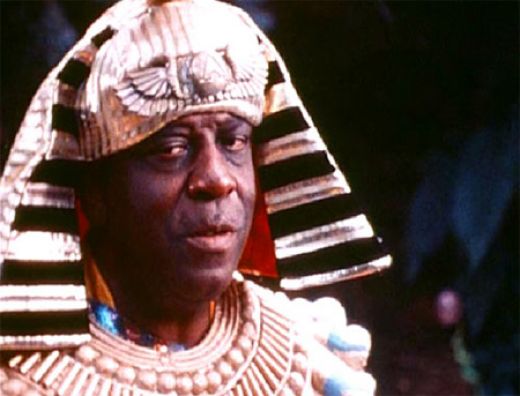
“My whole body changed into something else. I could see through myself. And I went up…I wasn’t in human form…I landed on a planet that I identified as Saturn…they teleported me and I was down on a stage with them. They wanted to talk with me. They had one little antenna on each ear. A little antenna over each eye. They talked to me. They told me to stop attending college because there was going to be great trouble in schools…the world was going into complete chaos…I would speak (through music) and the world would listen. That’s what they told me”.

And thus Sun Ra embarked on a decades-long musical career with his Arkestra (named for ‘Ra’ the Egyptian sun god and ‘kist’ coming from a Sansrit word meaning ‘sun gleam’, though Sun Ra also remarked that the name was simply “the way black people say ‘orchestra'”). This and loads of other biographical info on Sun Ra can be found in John F. Szwed’s Space is the Place: The Life and Times of Sun Ra. You can also check out Szwed’s personal site for more writings on African American studies and jazz biographies.

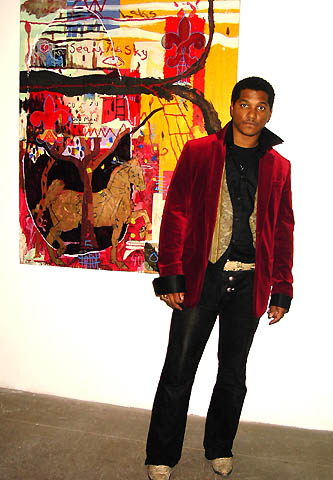
Sun Ra’s work falls into a movement known as Afro-Futurism – an artistic and cultural movement that uses ‘futuristic’ (think science-fiction) and cosmic influences to represent black culture and grapple with the experiences of the African Diaspora, or African-descendant communities throughout the world. This 43-second video can give you a snapshot idea of what this movement stands for, but for an in-depth study would benefit from the writings of Octavia Butler or the art of Angelbert Metoyer (pictured below).

Themes of the great cosmic unknown, furiously advancing technologies, confusion and peace permeate Afro-Futurist art, and Sun Ra is no exception to these themes. His music often deals with space and the cosmos, with performances by his Arkestra often referred to as ‘space jazz’. Long, open-ended groove sections, various combinations of keyboards and synthesizers and confusing dissonances all contribute to this label and combine to create one of the most distinctive sounds in jazz music. Sun Ra also often included other arts or media in his performances, including dance, poetry and electronic visuals. Perhaps most famous of these other media is the Outer-Space Visual Communicator invented by Bill Sebastian in a collaboration with Sun Ra in the late 1970’s. In a nutshell, this device is a giant keyboard controlled by one’s hands and feet that manipulates a light display, to be played in real time (as opposed to being pre-programmed) and projected onto a large screen. This collaboration, including the hopelessly complicated and futuristic OVC device, seems to strike the heart of what Afro-Futurism is for Sun Ra – a seamless musical and visual presentation that cannot possibly be considered from this world, that seems to take the audience on a journey toward some sort of unattainable enlightenment, defying you all along the way to categorize it. This piece is called “Calling Planet Earth” and features the OVC and the Arkestra. It lasts 15 minutes, but its effect is not lost if you jump around in the video – in fact, in light of the piece depicting a surreal, other-worldly experience mostly disconnected from this reality, I’m sure Sun Ra would even welcome this. Enjoy!
https://www.youtube.com/watch?v=CPuK7hfWCfA


Will Musicians ever learn to Breathe?

https://www.youtube.com/watch?v=k1dbb5x7PSQ

Breathe Dammit!

rants by Livio Fasullo 9/17/17

Every morning hundreds of tired Eastman Students get out of bed and walk across Main St. to begin their morning practice sessions in the Eastman School of Music Annex. Some of these students play string and percussion instruments while others sing and wind instruments. Most of these young and ambitious Eastmanites are completely unaware that they are constantly filtering oxygen through their lungs in a process known as breathing (too focused on the next seating audition, or concerto competition). Those who are aware and conscious of their breathing and how it can create greater ease in their playing will likely see much improvement in their studies, regardless of instrument (yes, even string players).

Ironically, many of us take deep and shallow breathes from our chest, keeping us nervous and un-focused (with the additional aid of Java`s Coffee) and then spend hours in the practice room trying to get better. In the weeks leading up to juries Eastman feels like an Urgent Care with countless students in casts due to practicing injuries. Many of us forget that we can incorporate much more ease into our practice and life by simply breathing, and it`s free! (Unlike PT).  Our breathing system is an essential technology for us humans that when used naturally allows for enhanced quality of life by relaxing our mind and focusing our muscles.

Breathing as a Technology

According the Merriam-Webster online dictionary a technology consists of “the practical application of knowledge especially in a particular area”. (https://www.merriam-webster.com/dictionary/technology) We are all unconsciously applying our breathing apparatus (diaphragm, lungs, brain, veins/arteries) every day (if you didn`t you would die), but many of us have allowed our minds to turn our breathing apparatus on auto pilot. To understand this better let`s take a look at how breathing works.

  The Science of Breathing

The actual scientific process of breathing is quite complicated, but luckily for us, we can breathe instinctively without thought. Breathing generally consists of  two large phases, inspiration and exhalation. As we inhale our diaphragms move downward increasing the volume of the upper body (thorax), which lowers the existing air pressure in the lungs allowing air to enter from the atmosphere. As we exhale the diaphragm relaxes and the volume of the upper thorax decreases forcing existing air to leave the lungs. (https://www.unm.edu/~lkravitz/Article%20folder/Breathing.html).

When we go into our Sympathetic Nervous System (Fight or Flight) which involves heightened senses and quick shallow breathing when our mind believes that we are in a dangerous situation.(https://www.sciencedaily.com/terms/sympathetic_nervous_system.htm) Eastman students regularly experience their Sympathetic Nervous System when trying to find a practice room one hour before their lesson or when being “vibed” by other students. Unfortunately, many students also experience their sympathetic nervous system when practicing and performing.

The Parasympathetic Nervous System takes hold when we our minds are at ease. (http://www.medicinenet.com/script/main/art.asp?articlekey=4770)  The Parasympathetic Nervous System can always be reached through deep breathing.

History of Deep Breathing

Most Eastern cultures and nearly all martial arts consider deep breathing to be fundamental skill that all should have. Deep breathing helps relax muscle and focus the mind. It is a essential part of Tai Chi, Karate, Qi Qong, and Yoga. The Pranayama is a series of deep breathing techniques used throughout the practice of Yoga. Pranayama roughly translates to extend the life force/breath that is sustaining the body (https://www.yogajournal.com/practice/healing-breath). Yoga has been in existence for thousands of years, while common practice classical music was (arguably) first written in the 17th-18th century. But proper breathing can actually be traced back to the beginning of mankind. We all have the innate programming to breathe properly. If you watch a baby sleep, you will notice that it sleeps on its back and its stomach moves through the deep breathing process. We can lose that process as we get older due to an overabundance in stimulus in the digital age. As musicians we can find ourselves taking shallow breathes while worrying about our careers and upcoming performances. In the book Effortless Mastery, Kenny Werner refers to these dominating powers over  our lives as fear and ego (pg. 21). For a video on deep breathing check out his link:

https://www.youtube.com/watch?v=k1dbb5x7PSQ

Musical Benefits

As previously stated, deep breathing helps relax muscle and focus the mind. So how does this help us as musicians? Kenny Werner talks about the “Space”, a meditative state of being achieved through deep breathing and the release of ego. In the “Space”, a musician performs music effortlessly and thoughtlessly. (pg. 77) From a less philosophical standpoint breathing helps you to clear your mind of distracting thoughts and release unnecessary tension during practice and performance. Here is a video describing deep breathing for wind players:

https://www.youtube.com/watch?time_continue=34&v=sCEj3R_26wY

Some musicians who have mastered deep breathing do not need to move dramatically when they perform or play. In his book Effortless Mastery, Kenny Werner describes the excessive movement and shallow breathing of musicians as an attempt to coax out unmastered music (pg. 59). If you watch the first minute of this video of Ralph Bowen improvising on the saxophone, you will notice how he plays from the “Space” that Kenny Werner writes about. Take note of his deep breathing. You can see his chest and stomach move as he inhales. Also note that his mastery of  breath allows him to be still, almost at rest as he plays complicated music effortlessly.

https://www.youtube.com/watch?v=6IoUnl_1fgc&t=58s

Ralph Bowen has said that all playing the saxophone really involves is “air and fingers” (http://jazzprofiles.blogspot.com/2017/05/ralph-bowen.html). By practicing his deep breathing in conjunction with his instrument he becomes more relaxed and focused every time that he plays his instrument- as can all of us if we make deep breathing a regular part of out practice routine.

What does this mean for me?

Regardless of your profession, by understanding the technology of deep breathing you can become more relaxed and focused, allowing you to complete tasks at a higher level of efficiency. As musicians, deep breathing helps us to play and learn more efficiently, gain confidence in practice and performance and save time and money avoiding physical therapy. I hope that all Eastman students will take time to develop their breathing and become the best stress-free musicians that they can possibly be.

  Sources:

https://www.unm.edu/~lkravitz/Article%20folder/Breathing.html

https://www.merriam-webster.com/dictionary/technology

https://www.drdavidwilliams.com/proper-breathing-improves-health

https://www.bluedragonkungfu.com/breathing-exercises-martial-arts/

http://jazzprofiles.blogspot.com/2017/05/ralph-bowen.html

Effortless Mastery by Kenny Werner

History of the Saxophone

The History of the Saxophone


The saxophone is one of the most ubiquitous instruments in America and Europe today. From the jazz clubs to the concert hall to the band room, it seems as though the saxophone is and always has been a common fixture of the musical landscape in America. To the average american, the saxophone is much more familiar to their eyes and ears than say the oboe or viola. This certainly seemed to be the case for me growing up in New Jersey. In New Jersey most people have heard of Clarence Clemons of the East Street Band while almost no one has heard of Juilliard and Curtis educated Principal oboist of the Philadelphia Orchestra John Mack. This is despite the fact the John Mack is a New Jersey Native while The Big Man (Clemmons) is actually from Virginia. Yet, this has not always been the case. The saxophone is a relatively new addition to the woodwind family and did not find its way into american popular music until approximately 1915.


Most instruments in evolve over long periods of time from one more primitive version to a successively more refined version. One may point to C. H. Denner1 who modernized the Chalumeau in the 1740’s as an example of someone “inventing” an instrument. While he did radically improve the instrument by adding the second upper register and addressing intonation issues, he was still building upon centuries of previous designs and methods in order to create his clarinetto. In contrast, the saxophone was invented by Adolphe Sax in 1841 and officially patented in 19462. Sax was a born in Belgium in 1814 to master instrument maker Charles Joseph Sax. By the age of 16, Adolphe was an accomplished instrument maker in his own right3. He had made improvements on the clarinet and cornet and created high quality flutes and clarinets 3. He was also an accomplished musician and had studied at the Brussels conservatory. When Adolphe Sax was creating the saxophone, he was looking to create an instrument which would have the timbre of woodwind instrument but the power and volume of brass instrument. He originally intended for his creation to find its way into the orchestra. With elements from both brass and woodwind instrument families he envisioned it bridging the sonic gap between the two families. However this vision would never be realised.


The saxophone was largely rejected by most “serious” musicians and composers of the day with many regarding it as “unacceptable”. However, the Bb Tenor and Eb alto saxophones were officially adopted into the French military band and thus began the history of popular saxophone music. This is not to say the saxophone was totally out of the classical establishment. Sax himself was instructor of saxophone at the Paris Conservatory and romantic composers such as Jean-Baptiste Singelée5 wrote for the saxophone in the mid to late 1800’s. But most of the music played on the saxophone in the late 19th and early 20th century was military band music. However, around 1915 the saxophone was starting to show up in early recordings of jazz music6. In early jazz music the clarinet was the main woodwind instrument being utilized. However, with its superior projection and volume, the saxophone was a good replacement for the clarinet as jazz band began to play in loud dance halls. Given the saxophones gradual takeover of roles traditionally left to the clarinet, it isn’t surprising that the first jazz saxophone soloist was Sidney Bechet, originally a clarinetist. In the 1930’s the standard big bands grew to have five saxophones, two altos (Eb), two tenors (Bb) and a Baritone (Eb). As big band music matured, the role of the saxophonist as soloist did as well. These early luminaries include Johnny Hodges, Lester Young, Coleman Hawkins, Ben Webster and Don Byas just to name a few.  These early swing players really set the stage for the explosion of jazz saxophonists who revolutionised jazz and american music in the following decades. They inspired the likes of Charlie Parker, Dexter Gordon, John Coltrane, Ornette Coleman and many others who further explored the technical and expressive range of the saxophone.


The saxophone maybe be as important an instrument as the violin when it comes to western (particularly american) music. However, it had its beginnings in unusual circumstances and was nearly doomed to obscurity. Yet through chance and circumstance was propelled to the forefront of musical exploration in the 20th century.


  1. http://www.the-clarinets.net/english/clarinet-history.html
  2. https://www.thoughtco.com/history-of-the-saxophone-2456519
  3. http://www.madehow.com/Volume-6/Saxophone.html
  4. https://www.britannica.com/art/saxophone#ref138721
  5. http://www.dolmetsch.com/cdefss.htm
  6. http://teenjazz.com/the-development-of-the-saxophone/#sthash.HBgXPwhJ.dpbs

Just Play Along!

Every living jazz musician has had to contend at some point or another with the idea of using a play-along track. For those who aren’t familiar, this is an audio track consisting of rhythm section instruments (most commonly drum set, string bass and either piano or guitar) playing behind an imaginary soloist. Jazz musicians use them to practice when they have no live rhythm section of their own to play with. The musicians who record the track (except in cases where the track is computer-generated) simply play the chord progression of a familiar tune together for anywhere from two to ten minutes, and the consumer at home can use it to pretend they’re playing with real people while they practice this tune. Here is what one of these tracks sounds like:

Perhaps to the untrained ear this just sounds like normal jazz music, but to a jazz musician it sounds like something is missing – what’s missing is you, the soloist who needs to practice Giant Steps. So how did this strange, anonymous musical collaboration come to be? How did this sort of virtual reality become the norm for aspiring students of jazz music?

50 years ago (roughly half the amount of time jazz as we know it has existed) a young saxophonist named Jamey Aebersold stumbled into one of the most prominent tools in jazz education (an educational field virtually nonexistent at this time). Seemingly without realizing it, he launched the Jamey Aebersold Play-Along Series after students at a summer camp requested that he make them a recording of piano accompaniment for a few standard jazz tunes. You can read about how this series took off unexpectedly and became one of the most recognizable volumes in jazz music here.  For more from Aebersold himself on jazz education, which itself as a technology has only been around for half a century, you can check out his article “Music is for Life“.

Fast forward to today: Learn Jazz Standards is a free online resource with literally hundreds of videos including backing tracks and podcasts about common jazz education topics like tune-learning and improvisation techniques. This page gives you a good idea of the sheer volume of content they have available.  Apps like iReal and Drumgenius offer a seemingly endless array of customizable backing tracks for anyone with a mobile device.  This is a remarkable difference from Aebersold’s earliest tracks, which were recorded in his basement studio and sold in an LP format with an attached book of lead sheets. (For reference, this is a lead sheet, or simple statement of the main theme of a tune with the basic underlying harmony, to be expanded upon by improvising jazz musicians. This is the sheet music the players from the above video would be looking at. Giant Steps) 

Of course, there is disagreement among jazz players and educators over the merit of playing with pre-recorded tracks. Some say this detracts from the spontaneous and improvisational spirit of the music, training the student to treat rhythm section players like a static background drone instead of living, constantly improvising musicians. Kelly Rossum, professor of trumpet and jazz studies and Christopher Newport University insists that his students play with real jazz recordings with interacting musicians instead of backing tracks, even if it means the student plays over John Coltrane’s saxophone solo. On the other hand, many insist that playing with tracks is the only way to develop one’s aural skills as an improviser, as practicing alone or with a metronome doesn’t give one a sense of the form and harmony of a jazz standard, and playing over another soloist is not indicative of real playing situations. Others see the tracks as a sort of unique challenge: Bill Dobbins, professor of jazz composition and arranging at Eastman says of the tracks’ repetitive nature: “Some people complain that when they’ve played with a track a few times, they know exactly what’s coming. Well, you should use that to your advantage. Get creative with it!”

Play-along tracks have undoubtedly made great strides since they first came about in the 1960’s. As a technology they have clearly made a seamless transition into the digital age through the internet and mobile technology, and as a tool of jazz education they have at the very least become ubiquitous enough to warrant specific opinions from jazz pedagogues. In any case, backing tracks are out their for students of all ages to use, for better or for worse…