Tyler, the Creator

Tyler, the Creator is a leading figure in rap music as a rapper and producer. One of his most famous songs is called Yonkers, apparently based on the town Yonkers, NY. What is so interesting about this song is that everything contradicts itself, and the music video doesn’t seem to connect much to the lyrics. Many try to read between the lines to find deeper meanings, but Tyler always denies that there is a deeper meaning in any of his music. It is very easy to believe that something is more special than it is meant to be, and it seems to be very important to the listener that there is predetermined intent in the music.
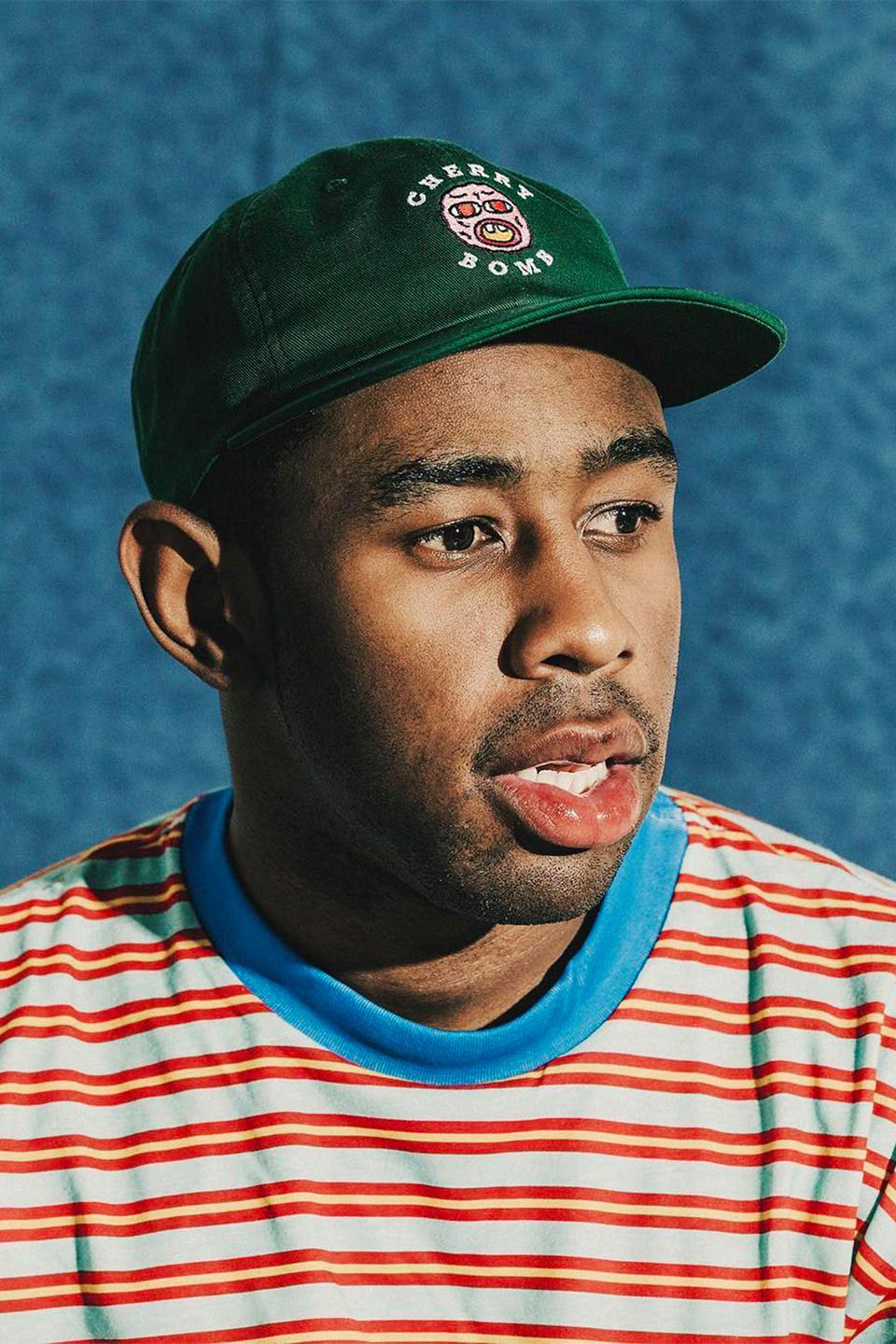
Tyler, the Creator uses many techniques in his rapping that reminds me of some other artists we know in the classical world like Schumann. I find this because he uses characters in his pieces, the most important one being his alter-ego Wolf Haley, as well as a fictional therapist named Dr. TC. Much of his rapping uses extremely offensive slurs and plots, including rape and violence against women, and homophobic slurs. Yet Tyler always says none of it means anything, and it is all “simply…an admittedly absurd story that was never meant to be taken seriously”. He was one of the first to publicly support Frank Ocean when he came out, and has never been known to use violence. After knowing this about Tyler, the Creator, does it make sense to treat his music seriously or try to look deeper into his music to find hidden meanings?
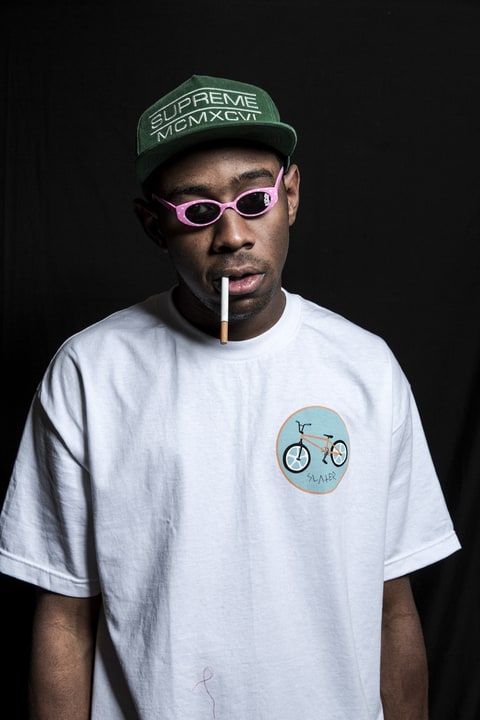
Yonkers uses lyrics that contradict themselves at every turn. Starting at the beginning, “I’m a f***in’ walkin’ paradox – No I’m not”. These lyrics make no sense, but many in comments on sites used to describe what the song means, say that one of the sides is Tyler and the other side is Wolf Haley. All the contradictions are really happening in his own mind, at least that’s what the song is about. Many of the youtube comments however are very different, I found dozens that commented on the line “I’m not gay, I just want to boogie to some Marvin” suggesting that Tyler is gay (many of these comments came out because in Tyler’s new album he comes out as gay). “”I’m not gay, I just wanna boogie to some Marvin.” yah okay” – AKFORTYKAVIN.  Some comment on the contradictions between the lyrics: “the reason he did this is because wolf haley (the kid with button ups and shorts) is his evil self. if you look closely at the lyrics he is constantly contradicting himself, like him fighting against his other self. its pretty cool.” -DirtWormGames. But most just comment on how crazy they think Tyler is or how bad they think the song is: “Well f*** me, this was seriously bad all the way through. I came to this YouTube-account to understand what even makes this guy a thing to begin with, and I did not get any wiser. This was just terrible along with the rest of the things he made.” -IcaJerry and “This n**** still freaks me out to this day.”. 

The music video is quite simple. It is black and white picture, of Tyler sitting on a stool rapping with a cockroach that he eventually eats and throws up. His eyes then turn completely black before he hangs himself (shown by him knocking down the stool). It is interesting because it doesn’t really have anything to do with the lyrics, agreeing with what he said in his interviews about there not being any meaning behind the lyrics. A connection I do find between the video and the lyrics, is this conflict between Tyler and his alter-ego. You can see this when the video blurs back and forth between sides of him, and with the suicide at the end of the video.


Whether or not Tyler, the Creator really meant for any of these lyrics or this video to have meaning behind it, it is still natural for the listener to find some human connection. When something is random, we try to find a pattern even if there is none. If a piece is atonal, we will hear some bits of tonality just naturally. Is it wrong to try to find meaning in something that didn’t mean to have meaning? Is it wrong to write a song that has no meaning behind it? Whether it is or isn’t, listeners have a natural magnetic pull to connecting dots and finding meaning in the random.

Symphonies and Cyphers: Exploring the Relationship between Power and Presentation

In this New York Times article, music critic Anthony Tommasini discusses the political implications behind Trump’s recent remark that “we write symphonies” as an indicator of cultural superiority. Tommasini further laments this comment, making the point that, “Nothing impedes the appreciation of classical music — and keeps potential listeners away — more than the perception that it is an elitist art form.” The troubling political implication behind this comment, of course, is that Trump is using an art form that he probably in reality knows very little about in order to prove a point of western superiority over other (particularly Islamic) cultures. Trump is, after all, not the first person to exploit Western classical music as a symbol of cultural superiority, and symphonies certainly weren’t written with the intention of being used to showcase this assertion. But it also touches on a concept that’s interesting from a societal standpoint: who (or what) really holds the power within a piece of art? Is it in the art itself, the so-called “experts,” those who hold political power, or with the artist?

Regarding this question, I am reminded of another article I read a while ago on NPR featuring an interview with Sophia Chang — you may have never heard of her, but she’s the total badass management genius behind a lot of early hip-hop stars including A Tribe Called Quest, Q-Tip, RZA, GZA, D’Angelo, and Joey Bada$$, among others. Chang is a powerhouse, a fact made clear from her resume and her no-nonsense tone throughout the article. At the same time, though, she makes it clear that hip-hop is an art form that she loves but is aware does not belong to her or her heritage. She states, “I was welcomed into hip-hop. This was not my house. I didn’t build this house. This wasn’t my culture. I was brought in, and I was welcomed. And that’s an honor.” Hip-hop provides a voice and an outlet for a group of people who are generally marginalized by larger Western culture, which is part of the reason it’s such a powerful art form. Hip-hop and rap are also genres often viewed negatively, for both lyrical content and musicality — Keith Richards says it’s music for “tone deaf people,” and Bob Boilen, host of NPR’s All Songs Considered, can’t relate to it because he feels “the crux of the music is focused on the words and if the words don’t relate to the listener then it’s all is a big disconnect.” Chang, on the other hand, says the following about what drew her to hip-hop in the first place:

It was certainly before social media, so the way that we experienced it was together and in person, right? So I wouldn’t go on and I wouldn’t live stream what’s going on at the club tonight. I actually have to be there. And you wanted to be there because you knew you were gonna see your friends, and you would talk about the music and you would experience it together. It was — it was truly remarkable. It was really a privilege. It was fantastic to be in there and be part of it.Sophia Chang, on the club scene in NYC during the rise of hip-hop and rap in the early ‘80s

So for Chang, this music is powerful to her because, among other things, she holds an emotional tie to it. It’s vibrant, alive, and something she was able to see evolve right from its start. In this interview, as well as in the aforementioned one, even her tone of voice reflects her love of everything involved with what makes hip-hop culture its own. She also treats it with great reverence and respect, and recognizes that her job as a manager is to facilitate the artists, not to be the creator herself. In her own words, “I’m a manager. I am in the service industry. The service industry. I’m Midas f****** Muffler. You come to me. You pay me to fix your muffler. I’ll do it, and you’re gone. I’m not — I’m not the car. I’m not the star. That’s not what it is.” Hip-hop is something that helped shape her identity and something she ties to experience, as opposed to the naysayers cited above, who don’t have any emotional attachment to it or a means of contextualizing the music as something they understand. 

Later in the Times piece, Tommasini (himself an avid classical music fan and critic) clarifies that even though he believes classical music is not elitist, “the art form is certainly ambitious and demanding. It asks for your time and attention. Even a 20-minute Haydn string quartet requires you to focus in order to grasp the structure, content and character.” To me, this provides us with somewhat of a contradiction — though Tommasini has specified that he does not believe classical music to be inherently better or worse than any other genre of music, this comment separates classical music as more complicated music, something difficult to digest and hard to listen to, which is an element not specified explicitly in the context of other music: he briefly mentions Eleanor Rigby, but only speaks about classical music in-depth. Even though he has to go back and clarify he doesn’t actually find it superior, it comes through in his writing all the time that he genuinely loves classical music and likely prefers that genre over most others, which makes sense considering his background. And I think the reason for this likely has more to do with the fact that Tommasini is a classical music aficionado as opposed to a hip-hop mogul, and less to do with the idea that he believes other music to be inferior — after all, he asserts an explicit stance throughout the article refuting that assumption.

The parallel I see between Chang and Tommasini is that both of them are incredibly passionate about a specific genre of music and have significant power in their respective positions regarding those genres, but at the same time their influence is not necessarily directly inherent to the creative process but instead in influencing how an artist’s product is perceived by their audiences. People turn to classical music critics like Tommasini to help guide them in what to listen to. Tommasini’s power as a critic lies not in the creation of classical music but the re-contextualization of it as well as his accessibility through a popular large scale publication. Similarly, Chang’s power lies in a behind-the-scenes service role, recognizing talent and helping that talent become its most successful possible realization in a final artistic product. The difference is Tommasini deals mostly with works of dead people being reimagined by living people and facilitating a conversation about these time honored works, while Chang’s whole career was based on her having a knack for managerial skills an ear for talent, and a drive for success in an entirely new genre of music from its inception in the early 1980s. Though the artist is certainly the reason we have what we have accessible to us to hear, just as important and arguably just as powerful are those working behind the scenes who get the word out and tell us what’s out there and what of that is important to actually sit down and listen to. The power in art often lies just as much in the piece itself as the manner in which it is presented.