
On June 12th 2016, the deadliest mass shooting seen yet in the United States occurred in Orlando, Florida at ‘Pulse,’ a gay nightclub. This horrific event caused uproar on various political topics, including hate crime, gun violence and laws, terrorism, and immigration, as articulated in this New York Times Article. The perpetrator, Omar Mateen, was a Muslim American, who felt strongly against the American government for the conflicts in Iraq and Syria. Mateen also openly stated his hate for gays, and latinos. Mateen’s motives were very clear in making a statement of hate. This event broke the hearts of people not only in Florida but to the entire country. In so many aspects, the United States seemed to be progressing with gay rights and many other political stances, but also falls so far behind with issues of terrorism and gun violence.
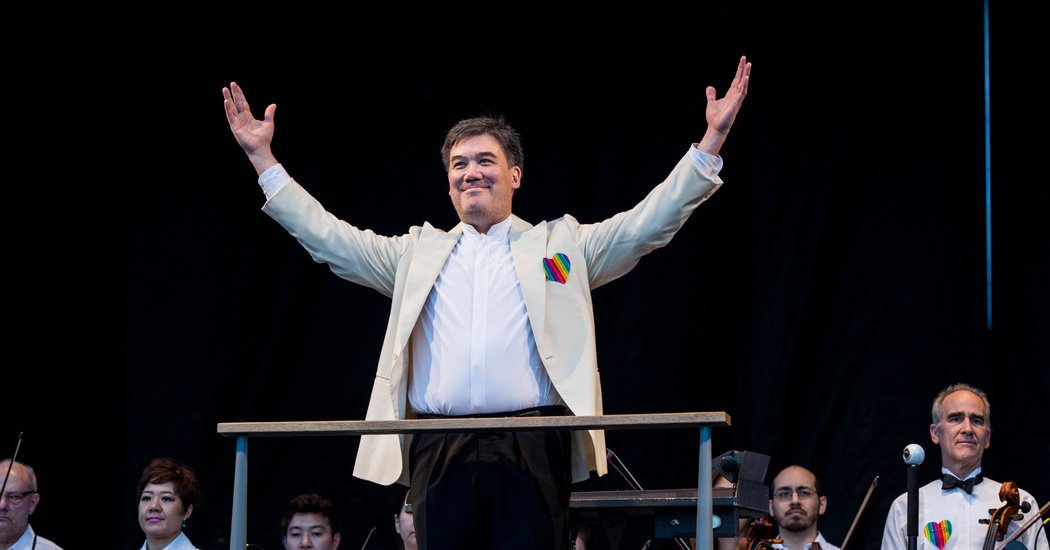
Soon after, on June 15th 2016, the New York Philharmonic had their annual Concert in the Parks Series in Central Park. Originally on the program was a Rossini Overture, but was changed to Barber’s Adagio for Strings as a tribute to the victims of the Orlando shooting. Alan Gilbert said a few words before the performance, showing the effects this event had on the community. While attending this event, I was moved by the sentiment and truly heartwarming performance. A few days after attending this event, a New York Times Article was published, reviewing the concert. This article mentioned that Barber was an openly gay composer, making the performance that much more meaningful.
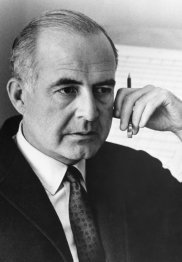
Although this piece was not necessarily written as a memorial, it is often used in memorials and as a tribute to events like this. Barber’s Adagio for Strings was broadcasted over radio and television for major events such as the death of Franklin D. Roosevelt, John F. Kennedy, Princess Diana and played at the funeral of Albert Einstein.
Music and politics inevitably coincide, as each affects lives on a daily basis. Whether a piece’s original intent had political meaning behind it or not, music can act as a voice in politics as well. Music brings people together, and as Alan Gilbert said, “we are all part of a shared humanity,” especially after heartbreaking events like this one.
Hi Alyssa! Well done!! I really like your blogpost and all the links you put, and thanks for sharing this wonderful recording and music! I totally agree with you that “whether a piece’s original intent had political meaning behind it or not, music can act as a voice in politics”, because somehow I feel music is a type of languages but without the words (excerpt for the lyrics and the texts of the vocal music). At the beginning, I was thinking why the New York Philharmonic chose Barber’s Adagio, besides he was gay composer. After I read through your article and watched the video, I learned that this piece is often played in ceremonious funerals.
Furthermore, I’m very impressed by Alan Gilbert’s speaking before the performance, he said “we are all part of a shared humanity.” This is because the music and the performance actually supports people and warms people’s hearts, rather than just playing a lament to express the sadness and the memorials. But, I’m also curious about the audiences’ reactions after they heard the performance.