Sia’s Controversial Music Video

Music videos can serve as one of the many platforms where artists can further express their passion. They can give music more meaning and depth and create a more clear image for their listeners.

One perfect example of this would be Sia’s “Elastic Heart” Music Video.

This music video features dancer, Maddie Ziegler, and actor Shia Labeouf, interpretive dancing throughout the music video, as opposing characters. These two characters represent the fight between past and present personalities and maturity. The past represented by Maddie Ziegler and the present by Shia Labeouf.


This is also not the first time Sia fans have seen Maddie Ziegler. The reason the image of Maddie fighting Shia Labeouf was so strong was because prior to “Elastic Heart,” Maddie was in the music video for “Chandelier,” another Sia song. Again, she represented a part of Sia’s personality or alter ego in that she was messy, and out of control.

In “Elastic Heart,” Sia faced controversy, where many people felt a sense of pedophilia from the music video.


Sia promptly answers these feelings in a tweet, where her art was mistaken and that her intentions were not to offend anyone.

Sia even gets negative responses from websites where she is questioned for ignoring the pedophiliac nuances in the video and is seen as having disturbing music videos.

Because Sia added interpretive dance in her music video, a different form of art was in use while also expressing her own. She was able to capture us with our ears, eyes and emotions. Aurally, “Elastic Heart” embraces an electropop beat with an impressive vocal line. Visually, Shia Labeouf and Maddie Ziegler’s dirty, disheveled look with nude leotards is striking to the eye as unique and bold, not to mention the animalistic interpretive dancing that adds to the intensity. At first listen, one would not think of such a vulgar interpretive dance to go with this electropop song, but in conjunction with the lyrics, it makes perfect sense. Emotionally, the music video tugs at your heartstrings because of the contrast of child to adult. The difference in age difference shows a clear difference in maturity. Maddie represents a naive, young self while Shia represents thicker skin, and a stronger self.

While browsing through the comment section, I was able to find a few very interesting comments.

First, Elaine Walton says, “There is nothing wrong with the video, however, there is something very much wrong with the world. Because pedophilia is so ramped, a 28-year-old man and a 12-year-old girl can’t do an interpretive dance together without eyebrows being raised. That’s pretty sad. There is nothing sexual about this.”

In general, many of the commenters were having a hard time seeing the art when all they saw was pedophilia, simply because a man danced with a young girl. This seemed to create an uproar among the music video, creating less conversation about the music video itself.

Another interesting comment would be by Jolie Hoffield. “This video never fails to bring tears to my eyes. I symbolise the cage as alcoholism and Maddie and Shia are daughter and father. Their relationship began rocky, but slowly mended itself. She managed to escape the addiction, he didn’t.
As a daughter of a recovering alcoholic, this video hits me hard. Might be silly to some, but meaningful to others.” Although many comments joked about Labeouf’s muscles, other commenters talked about how they were personally touched by this video. Because of how open ended this video was, the audience was able to take it in whatever way they wanted, making it personal for many different people.

Lastly, Colourishous MSP, commented, “good song, weird video <3.” It often enhanced the music for people who understood the artistry in the video while it distracted from the people who did not.

Bibliography:

http://www.elle.com/culture/celebrities/interviews/a25311/maddie-ziegler-shia-labeouf-warned-me/
https://vigilantcitizen.com/musicbusiness/disturbing-message-behind-sias-videos-chandelier-elastic-heart-big-girls-cry/

http://www.rollingstone.com/music/news/sia-apologizes-for-controversial-elastic-heart-video-with-shia-labeouf-20150108


The Politics in Barber’s ‘Adagio for Strings’

On June 12th 2016, the deadliest mass shooting seen yet in the United States occurred in Orlando, Florida at ‘Pulse,’ a gay nightclub. This horrific event caused uproar on various political topics, including hate crime, gun violence and laws, terrorism, and immigration, as articulated in this New York Times Article. The perpetrator, Omar Mateen, was a Muslim American, who felt strongly against the American government for the conflicts in Iraq and Syria. Mateen also openly stated his hate for gays, and latinos. Mateen’s motives were very clear in making a statement of hate. This event broke the hearts of people not only in Florida but to the entire country. In so many aspects, the United States seemed to be progressing with gay rights and many other political stances, but also falls so far behind with issues of terrorism and gun violence.

https://www.youtube.com/watch?v=6uRS8O3nT4U&feature=youtu.be

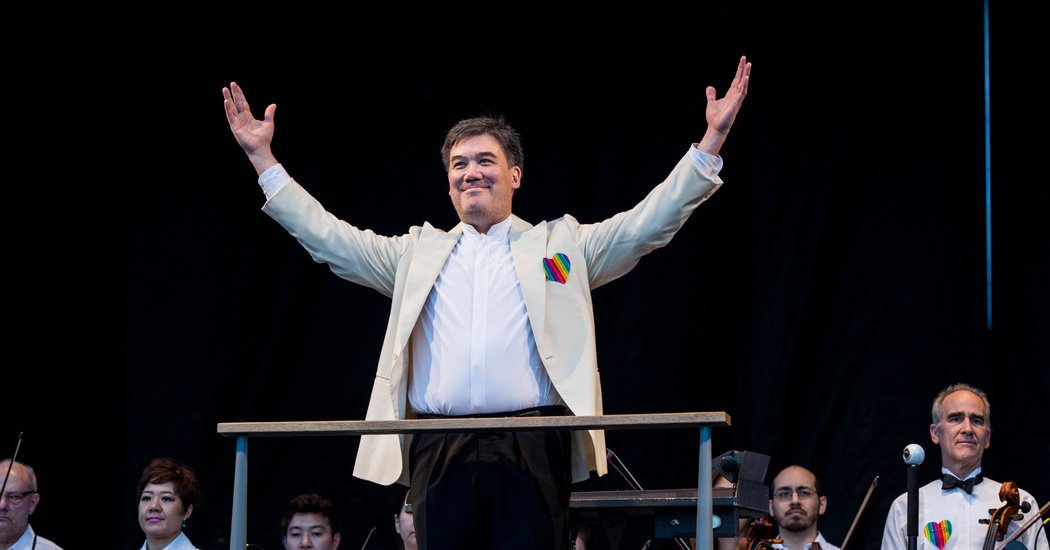
Soon after, on June 15th 2016, the New York Philharmonic had their annual Concert in the Parks Series in Central Park. Originally on the program was a Rossini Overture, but was changed to Barber’s Adagio for Strings as a tribute to the victims of the Orlando shooting. Alan Gilbert said a few words before the performance, showing the effects this event had on the community. While attending this event, I was moved by the sentiment and truly heartwarming performance. A few days after attending this event, a New York Times Article was published, reviewing the concert. This article mentioned that Barber was an openly gay composer, making the performance that much more meaningful.

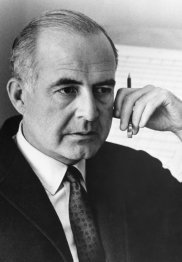
Samuel Barber

Although this piece was not necessarily written as a memorial, it is often used in memorials and as a tribute to events like this. Barber’s Adagio for Strings was broadcasted over radio and television for major events such as the death of Franklin D. Roosevelt, John F. Kennedy, Princess Diana and played at the funeral of Albert Einstein.

Music and politics inevitably coincide, as each affects lives on a daily basis. Whether a piece’s original intent had political meaning behind it or not, music can act as a voice in politics as well. Music brings people together, and as Alan Gilbert said, “we are all part of a shared humanity,” especially after heartbreaking events like this one.

Alan Gilbert at Concerts in the Parks


Why do we ‘mute’ our instruments?

In one of Prokofiev’s most famous pieces, Romeo and Juliet, the horns begin Montagues and Capulets with sustained notes, becoming more and more dissonant as voices are added, leading up to a fortissimo chord with the entire orchestra. The one exception and peculiarity to this chord, is the pianissimo ‘con sordino’ (with mute) string section. Once the blaring brass and woodwinds’ chord dissipates, the strings continue their sustained pianissimo, which is made even quieter because of Prokofiev’s usage of mutes. Prokofiev’s Romeo and Juliet is famously known for the beginning and its muted string section which not only dampens the sound, but also adds a unique timbre to the string section.


Mutes were first notated in music as early as 1607 in The Toccata from Claudio Monteverdi’s opera L’Orfeo in the trumpets and were first notated in the string section of Jean-Baptiste Lully’s Act II of Armide in 1686. However, mutes did not become as commonly used until the 19th century and by the 20th century, mutes were used very often.

There are a few different kinds of mutes for the string family. The most commonly used and referred to in music is a simple rubber device that is attached to the top of the bridge. There is also a practice mute which is usually used to practice in the late hours of the night when one is procrastinating for a lesson. This mute is more dense and dampens the sound even more and is not usually used in performance. When the mute is used, it dampens the vibrations of the instrument and also suppresses certain harmonics of the instrument and creates higher harmonic sounds. This shows that not only does it ‘mute’ the sound in volume but also changes the timbre and tone color of the instrument.

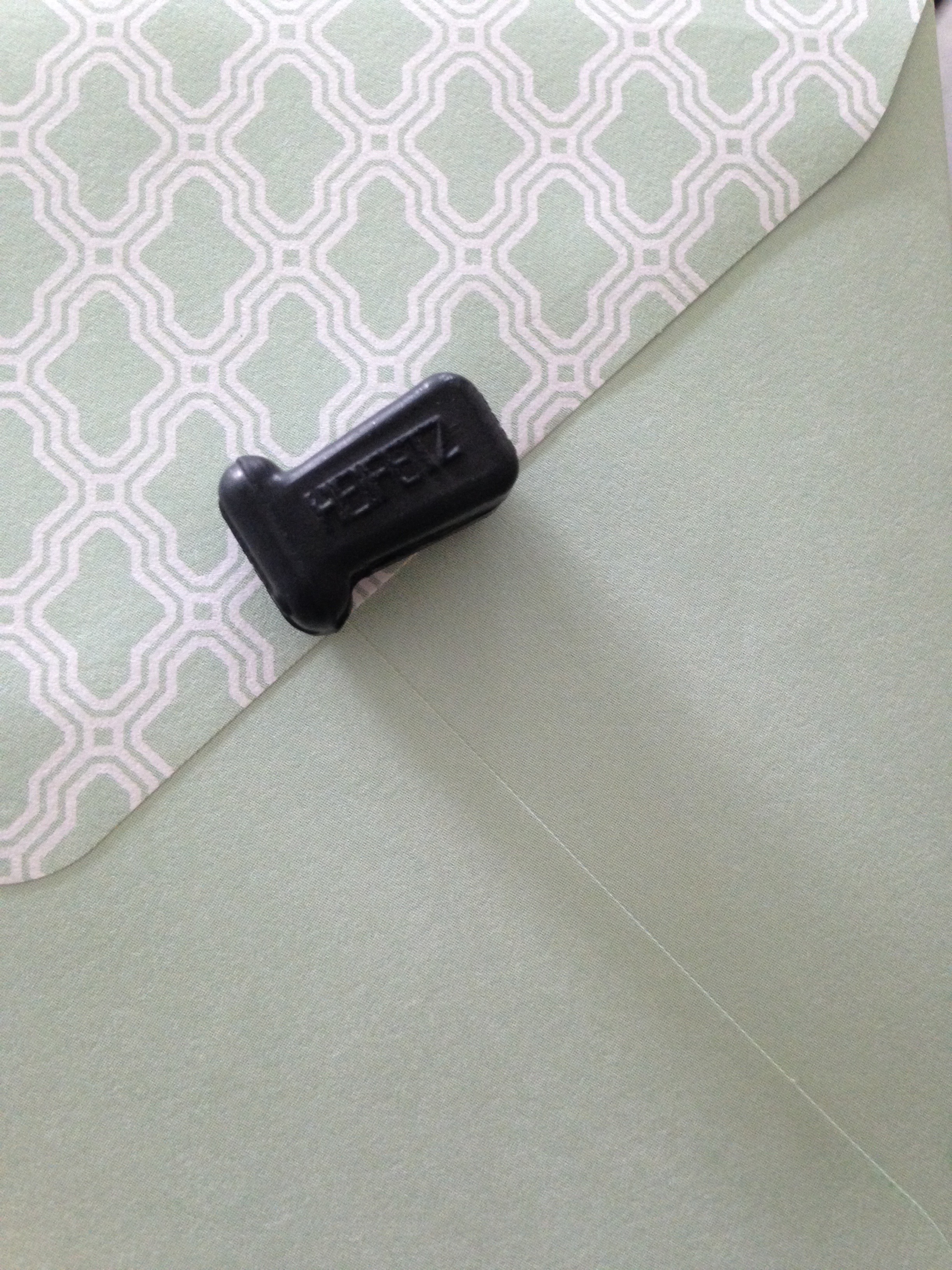
Originally, string mutes were wooden and could not be left on the instrument during ‘senza sordino’ passages. In 1947, Jascha Heifetz and Henryk Kaston created a new model of the mute which was carefully designed with a metal clamp inside the rubber casing which let the musician decide how ‘muted’ to make his/her sound. The farther down the bridge you pushed the mute, the more muted it became. It was also designed to allow the musician to choose what strings to mute. One could put them between the two higher strings to dampen the higher register, between the lower for the lower register, or in the middle for a balanced sound. This ‘Heifetz mute’ became extremely popular especially because of its name, under the great violinist Jascha Heifetz. This model is no longer manufactured but a different, less expensive and modified version is still sold. The original Heifetz mutes now sell for $500 and are extremely limited. You can buy the original model or buy a Heifetz mute that he used himself for $25,000 here!

I do not mean to brag, but this is a picture I took of an original model Heifetz mute that my previous professor (Toby Appel) let me use for my senior recital two years ago. He had purchased this when the original models first came out and were not $500.

In the Romantic era, composers were searching for a new sound in the orchestra and started to implement the mute. The mute is often seen simply as a tool to make a softer sound. If this were the case, composers could have easily reduced the orchestra or notated a softer dynamic. Instead, the mute creates a darker tone that creates a very particular somber sound. This ‘new technique’ for Romantic composers was, what it seems to be, the beginning of extended technique. Using tools and different technologies to produce different sounds and playing instruments even beyond what it was originally intended to, was and is still currently intriguing musicians and pushing heir creative capabilities. 

Sources:

https://www.sweetwater.com/insync/mute-musical-instrument/

http://www.theheifetzmute.com

https://books.google.com/books?id=_tkPAAAAYAAJ&pg=PA190&lpg=PA190&dq=mute+timbre&source=bl&ots=jjv4nbaS9Y&sig=V62CNNqmMsiWeH2Cg3SZ5WXlVH4&hl=en&sa=X&ved=0ahUKEwiA7seE9K_WAhUG5iYKHT8KDQU4ChDoAQg3MAM#v=onepage&q=mute%20timbre&f=false