
In one of Prokofiev’s most famous pieces, Romeo and Juliet, the horns begin Montagues and Capulets with sustained notes, becoming more and more dissonant as voices are added, leading up to a fortissimo chord with the entire orchestra. The one exception and peculiarity to this chord, is the pianissimo ‘con sordino’ (with mute) string section. Once the blaring brass and woodwinds’ chord dissipates, the strings continue their sustained pianissimo, which is made even quieter because of Prokofiev’s usage of mutes. Prokofiev’s Romeo and Juliet is famously known for the beginning and its muted string section which not only dampens the sound, but also adds a unique timbre to the string section.

Mutes were first notated in music as early as 1607 in The Toccata from Claudio Monteverdi’s opera L’Orfeo in the trumpets and were first notated in the string section of Jean-Baptiste Lully’s Act II of Armide in 1686. However, mutes did not become as commonly used until the 19th century and by the 20th century, mutes were used very often.
There are a few different kinds of mutes for the string family. The most commonly used and referred to in music is a simple rubber device that is attached to the top of the bridge. There is also a practice mute which is usually used to practice in the late hours of the night when one is procrastinating for a lesson. This mute is more dense and dampens the sound even more and is not usually used in performance. When the mute is used, it dampens the vibrations of the instrument and also suppresses certain harmonics of the instrument and creates higher harmonic sounds. This shows that not only does it ‘mute’ the sound in volume but also changes the timbre and tone color of the instrument.
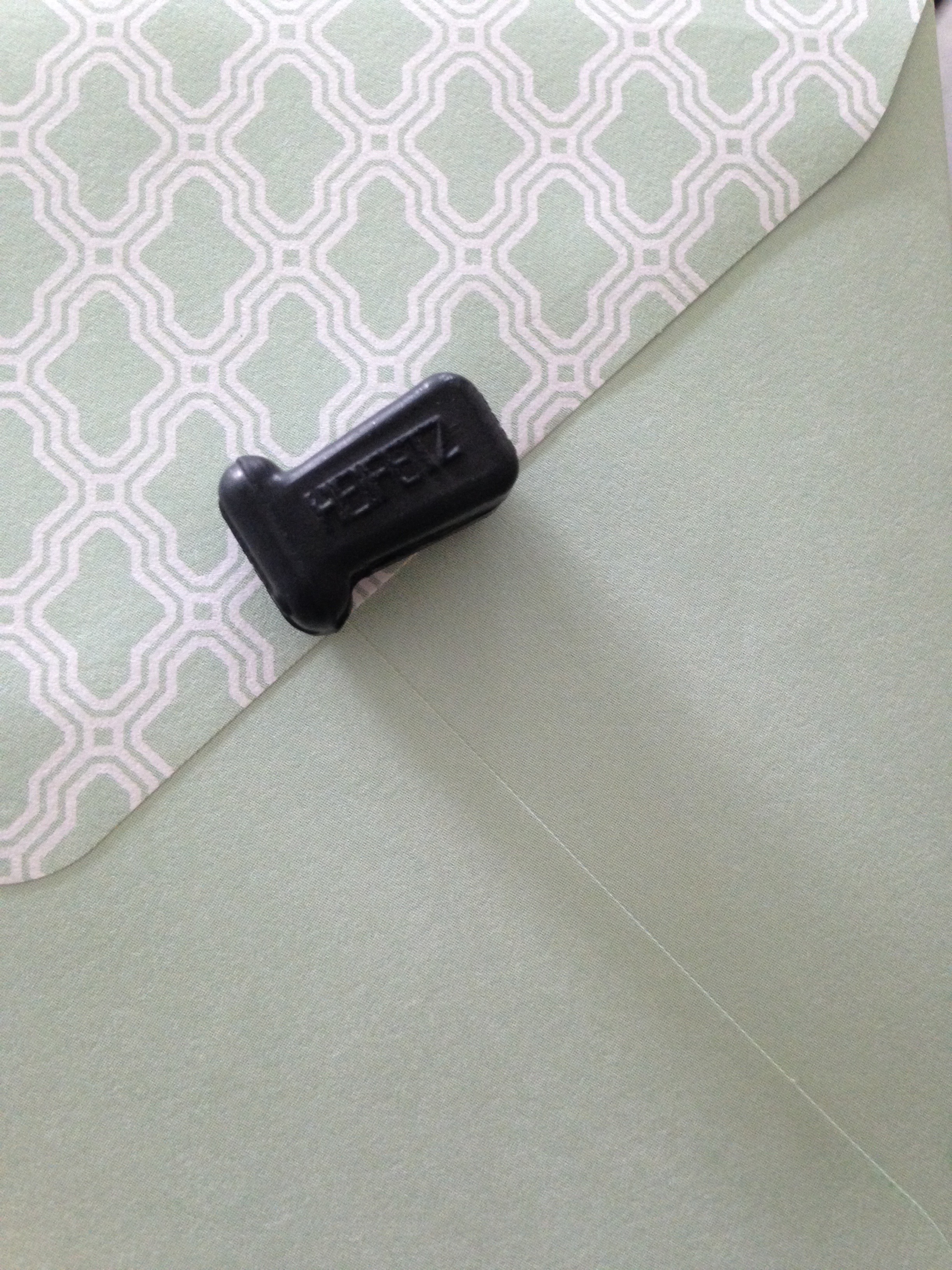
Originally, string mutes were wooden and could not be left on the instrument during ‘senza sordino’ passages. In 1947, Jascha Heifetz and Henryk Kaston created a new model of the mute which was carefully designed with a metal clamp inside the rubber casing which let the musician decide how ‘muted’ to make his/her sound. The farther down the bridge you pushed the mute, the more muted it became. It was also designed to allow the musician to choose what strings to mute. One could put them between the two higher strings to dampen the higher register, between the lower for the lower register, or in the middle for a balanced sound. This ‘Heifetz mute’ became extremely popular especially because of its name, under the great violinist Jascha Heifetz. This model is no longer manufactured but a different, less expensive and modified version is still sold. The original Heifetz mutes now sell for $500 and are extremely limited. You can buy the original model or buy a Heifetz mute that he used himself for $25,000 here!
I do not mean to brag, but this is a picture I took of an original model Heifetz mute that my previous professor (Toby Appel) let me use for my senior recital two years ago. He had purchased this when the original models first came out and were not $500.
In the Romantic era, composers were searching for a new sound in the orchestra and started to implement the mute. The mute is often seen simply as a tool to make a softer sound. If this were the case, composers could have easily reduced the orchestra or notated a softer dynamic. Instead, the mute creates a darker tone that creates a very particular somber sound. This ‘new technique’ for Romantic composers was, what it seems to be, the beginning of extended technique. Using tools and different technologies to produce different sounds and playing instruments even beyond what it was originally intended to, was and is still currently intriguing musicians and pushing heir creative capabilities.
Sources:
Alyssa, this article was very interesting and informative! As a brass player, I have a totally different perception of mutes and their usage. I honestly did not know that there were actual mutes used on the strings of a violin.. Beyond my uninformed brass perspective, I thought that this article was organized very well, as the succession of information presented was clear and effective. One thing I think that could’ve helped this blog post would be to include video or audio of the difference in timbre between unmuted and muted strings outside of the context of a piece, perhaps just a demonstration video, to explicitly inform the reader of the difference in sound quality. Although, I really did appreciate how you discussed the difference of using mutes to dampen the actual volume of the strings versus using mutes to vary the sound quality/color. I definitely believe that the integration of mutes for all instruments has truly helped push music in new directions, just as you stated. The context given about the first mutes made for string players was very interesting to me as well; the price of the mute was shocking! Some brass mutes are expensive, but nowhere near $500. The history and development of string players and muted strings is an entirely different world than brass playing with mutes. While these mutes technically serve the same general purpose, their actual utilization seems to be much different. This blog was great, Alyssa! I’m glad I got to read it.