Ennio Morricone’s Masterpiece

I’ll never forget the first time I watched the movie Cinema Paradiso. I was a naive 7th grader who knew nothing about film or film music. I was in awe of the gorgeous soundtrack and the heartwarming story line.  It is by far one of the most beautiful works of art ever created, and my favorite movie. Cinema Paradiso changed my life forever by sparking my obsessive interest in movies, and the music that makes each one such a unique work of art. My life was changed once again by the music of this movie when I was in high school. A few summers ago I had the amazing opportunity to perform a Cinema Paradiso medley on tour in Italy with The Philadelphia All City Orchestra. I was overwhelmed with happiness and am still so honored that I got to play one of the most inspirational pieces from my favorite movie.
*WARNING: This post does contain spoilers* 

Cinema Paradiso is an Italian film directed by Giuseppe Tornatore. It follows the nostalgic journey of the main character Toto (Salvatore), a young boy who experiences friendship, love, and appreciation for film. The majority of the movie is told as flashback, from the memories of older Toto.

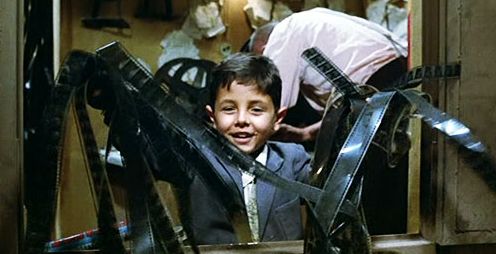
In my opinion, the ending scene sums up the overall beauty of the film. The music of this scene adds to the intensity of it’s visuals!  In this scene, Toto returns to his hometown after being away for 30 years. He is summoned back after hearing that Alfredo, his good friend and mentor had passed away. The ending scene and montage is a collection of all of the kissing footage Alfredo cut from the movies he showed at his theater when Toto was a kid. This footage was Alfredo’s final gift to Toto.

Many of the Youtube comment threads consist of both positive and melancholy reactions, like the ones shown above. I 100% agree with Franco Pozo’s comment that the ending is more of an experience (as is the whole movie)! Mo Rajabally’s comment is also very relevant with my relationship to the movie. I’ve seen it multiple times at different stages in my life, and each time I felt something totally new.

One of the many reasons this movie made cinematic history was because of the outstanding soundtrack. The music was written by the one and only Ennio Morricone, who is a world renowned composer. In the final scene of the movie, both the repetition of Morricone’s music and the kisses work well to create a unique emotional experience for the movie viewer. In my opinion it is the simplicity of both the music and visuals that trigger the most complex feelings. The music throughout the whole movie is phenomenal, and captures the mood of each scene perfectly. Morricone is also quite famous for his other soundtracks such as The Good, The Bad and The Ugly, and Gabriel’s Oboe. I would highly recommend checking out any film or musical score Morricone is associated with because they are all wonderful!

If you’ve never seen Cinema Paradiso or listened to the soundtrack, I would stop what you’re doing RIGHT NOW and let yourself experience it’s world. I can guarantee you won’t regret it.  I’ll leave you with this quote from Michael Patison’s Youtube comment regarding the final scene…

“The best scene from my favorite movie of all time. Unadulterated beauty. Every aspect of the filmmaking makes it wonderful: the careful clip selection embodying old Hollywood at its best, from passion to comedy; the tremendous performance by Perrin (his impact is far, far greater than his screen time would suggest (10minutes, maybe?); the entire, faultless film that precedes it and the stunning score (my favorite ever) by Ennio Morricone that ties it all together, reminding of the film’s past simply by playing the same general theme already played several times throughout. I’m not a cryer. Never have been, never will be. Like I really don’t cry at all. But I bawl like a newborn every single time I watch this movie and this scene. I’m just 22. Imagine how bad I’ll be crying thinking of everything it represents in 50 years.”

Victor Jara

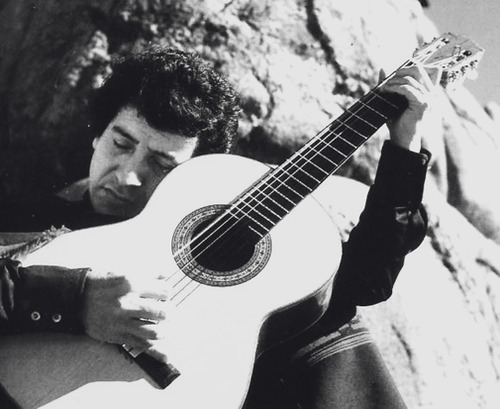
As musicians, sometimes we get to experience our art, but other times we sacrifice ourselves for it. Victor Jara, a Chilean musician, teacher, and strong political activist “used to play guitar and write folk songs. But a soldier chopped his hands with an axe and machine gunned him to death so he couldn’t play guitar anymore. When I first read this sentence from Andrew Tyler’s article I was in shock. It’s heartbreaking when politics get violent, and innocent people lose their lives. Victor Jara’s death stands for democratic social change in Chile. Even though he died for what he believed in, his music and spirit both still live on today. 


Victor Jara started out singing in the neighborhoods of Chile as a 1960’s protest folk singer for human rights. He was a member of the New Chilean Song Movement, and was a supporter of the socialist Salvador Allende. Salvador Allende was the president elected in 1970 who initiated many social programs. During the election season, Jara wrote a song for Allende’s movement titled Venceremos, which translates to We Shall Triumph.

Prior to the election in 1970 the United States CIA ran propaganda campaigns to discredit Allende, showing the United States dissatisfaction with his new government.  According to interviews with Amy Goodman of Democracy Now, Allende planned to nationalize private United States corporations. The Allende government of Chile wanted to negotiate how

to compensate the United States corporations so they would finally leave Chile. In particular, the main telephone company of Chile, and the owner of Sheraton Hotels ,  ITT Corporation.  Henry Kissinger and Nixon refused these negotiations and planned a violent “coup” in 1973.  Bill Clinton declassified the CIA documents showing that the CIA trained DINA (secret police) invaded a helicopter, and murdered the Commander in chief of the Chilean armed forces. Allende eventually committed suicide and the brutal dictator Augusto Pinochet, took control of Chile.  

Chile was not in great shape during this time in history. More interviews with Democracy Now tell the story of Victor Jara’s death. He was arrested along with thousands.  (30,000 had been referred to as “the disappeared”) He was singing to the people in the Santiago soccer stadium where the executions were taking place. According to Democracy Now, as his wife described what happened, he was well  recognized and one soldiers said “that one is for me. He was tortured, in particular his hands smashed so he couldn’t play guitar. He was shot and his body was recognized after being dragged on the streets and claimed by his wife when a friend informed her a week after the coup that his body was at the morgue. He wrote one last poem that night in the stadium to document what happened.  It was somehow smuggled out of the stadium and eventually put to music by Pete Seeger

Victor Jara, saw what was happening politically in Chile and decided to take action by sharing his art. He incorporated his beliefs through his musical creations to promote peace, but the government silenced him. If I’ve learned anything from Victor Jara’s story, it’s that he has inspired many other artists to stand up for what they believe in. Politics always try to control what we do, but in the end music continued to fight back with creativity and truth.

http://www.vjvive.com/?page_id=14

https://www.theguardian.com/music/2013/sep/18/victor-jara-pinochet-chile- rocks-backpages

https://www.democracynow.org/2016/6/29/former_chilean_army_officer_found_liable

https://www.democracynow.org/1999/10/8/documentary_on_legendary_chilean_protest_singer

http://www.angelfire.com/ca3/jphuck/BOOK3Ch3Part5.html


Boing Boing Boing!

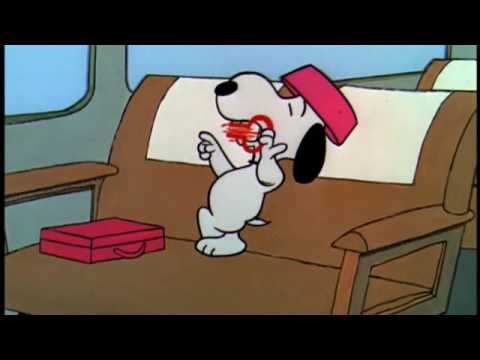
Have you ever wondered what that mysterious “boinging” sound is that randomly pops up in songs? Or what instrument is being played when a character stumbles and falls in a cartoon? Well stop your worrying today folks because Danielle has all of the answers to your questions! BEHOLD…the jaw harp, also commonly known as the jew harp. I first discovered this quirky instrument during the summer of 2017 when I was browsing through Bernunzio’s, located right here in Rochester! I made an impulsive purchase and VOILA, a jaw harpist was born. Grab a seat and enjoy this short video of snoopy playing a spectacular little tune!        

 https://www.youtube.com/watch?v=QkldkfoeVQc

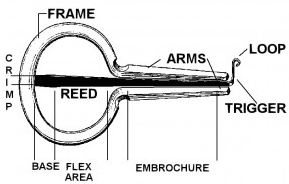
The jaw harp is small metal instrument that is played by using one’s mouth and right hand index finger. To get started simply rest the instrument between your lips, while holding the left side of the instrument with your left hand. There are many different models of a jaw harp, and some may require you to press the frame onto your lips against your teeth. The right hand is used for plucking the loop of the instrument, which then vibrates the reed. The “boing” sound is created by simultaneously plucking the loop, and moving your tongue. The faster you move your tongue, the more vibrant the “boing” sound will be. The lower your tongue sits in your mouth, the lower the pitch will be. If you move your tongue to the roof of your mouth, the pitch will sound higher. You can also change the pitch by making  “oo-ee” shapes with your mouth. This sounds like a relatively simple concept, but I struggled a lot with understanding how the instrument works. I guess since I’m so used to focusing on my breath because of singing, I thought in order to play the jaw harp I would need to blow air through the reed. I quickly learned that no air is required to produce a sound on the instrument. However, the process of breathing into a jaw harp is a common practice used for some genres of music. It’s surprisingly a pretty popular skill in the techno music world. In this video, Mirko Muni shows off his techno jaw harp skills by experimenting with breathing in and out while playing the jaw harp. 

A little known fact, is that the jaw harp is also associated with the invention of other well-known instruments. In this TED talk, guest speaker Valentinas tells his audience that the invention of the harmonica “is based on several little jaw harps connected together.” He also mentions that the accordion was made in a similar way. This explains why the jaw harp blends so well with these two instruments. You’ll often hear the jaw harp being played with harmonica, accordion, or banjo in bluegrass! It’s interesting to think that two well-known instruments were made possible by one simple instrument few people have heard of. It makes me wonder if other instruments were originated in a similar way. If so what are they?

TED talk speaker Valentinas also touches on the origin of it’s name. “It has nothing in common with Jews, Jewish, or Judaism. Very simple, this name ‘jews’ came from English word ‘jaws’, mouth, so sometimes it’s called jaw harp or mouth guard.” He mentions that it has around 900 different names, and is known as one of the oldest instruments in the world. Michael Wright, author of  The Search for the Origins of the Jew’s Harp states that “the beginnings of the instrument suggests an Asian origin…Bamboo examples are played throughout Asia and Polynesia, but because of the basic structure of the single reed concept, it is possible that the instruments evolved in various ways independently rather than from one single source.” The picture to the right shows four jaw harps carved out of bamboo instead of metal. 

Jaw harps also make fun cameos in cinema. They’re most popular in western movies, and actors often actually learn how to play them! Here is a little montage of the jaw harp in cinema!

Sources:

http://www.silkroadfoundation.org/newsletter/vol2num2/Harp.htm

https://www.youtube.com/watch?v=4SpWuseQGys

https://www.youtube.com/watch?v=RKHgIERB5rQ

https://www.youtube.com/watch?v=CkPlk4BSSMY

https://www.youtube.com/watch?v=QkldkfoeVQc

http://www.jewsharpguild.org/history.html

https://bernunzio.com/