Andra Day’s “Strange Fruit”

The combination of a beautiful sunset and a Mozart string quartet can bring out emotions we feel in the depths of our soul. A sappy love scene combined with a cheesy romantic melody can make us cry. When moving images are connected with meaningful music, the two have an incredibly powerful effect on the listener and leave a deep impact. What happens when video is combined with a song that is almost too painful to listen to?

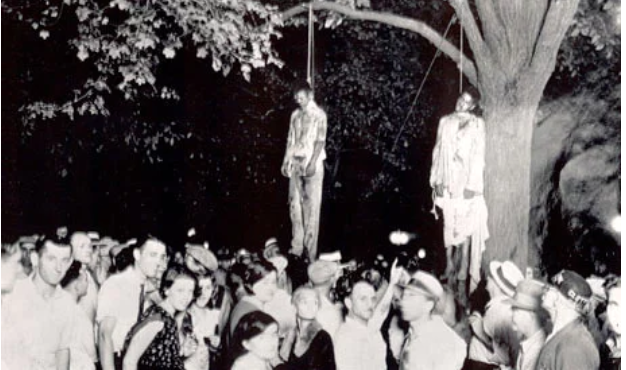
Andra Day recently covered and recorded Billie Holiday’s Strange Fruit. The song was originally released in 1939 in response to a photo of three black men unfairly lynched in Indiana. The powerful lyrics reached millions of people at the time and played an important role in the development of the Civil Rights Movement. In 1999 the song was named song of the century by Time magazine and has been incorporated in many popular songs.

Strange Fruit has been performed in honor and remembrance of lynched victims, but few music videos have been made. Putting a video to such an emotionally heavy song is not something many decide to take on. The lyrics are as follows: 

Southern trees bear a strange fruit,
Blood on the leaves and blood at the root,
Black body swinging in the Southern breeze,
Strange fruit hanging from the poplar trees.

Pastoral scene of the gallant South,
The bulging eyes and the twisted mouth,
Scent of magnolia sweet and fresh,
And the sudden smell of burning flesh!

Here is a fruit for the crows to pluck,
For the rain to gather, for the wind to suck,
For the sun to rot, for a tree to drop,
Here is a strange and bitter crop.

What makes Andra Day’s video special is the the video combined with sound effects and music. The opening scene of the music video gives a brief history of the lynchings in America and includes a sunset with the outdoor sounds of bugs and wind. This creates a chilling atmosphere and is enhanced by the sound of wood cracking due to the swinging of a rope. It’s almost as if the listener is taken to the night of the Indiana lynchings. As the music starts, the swinging rope effect continues and the sound of gasped breathing is added. Before Andra Day even appears or starts singing the dark lyrics, the listener is able to understand that this is not a light song.

As Andra Day starts singing, the sunset turns into a spotlight and the viewer almost feels as if they are in the vocalist’s shoes.
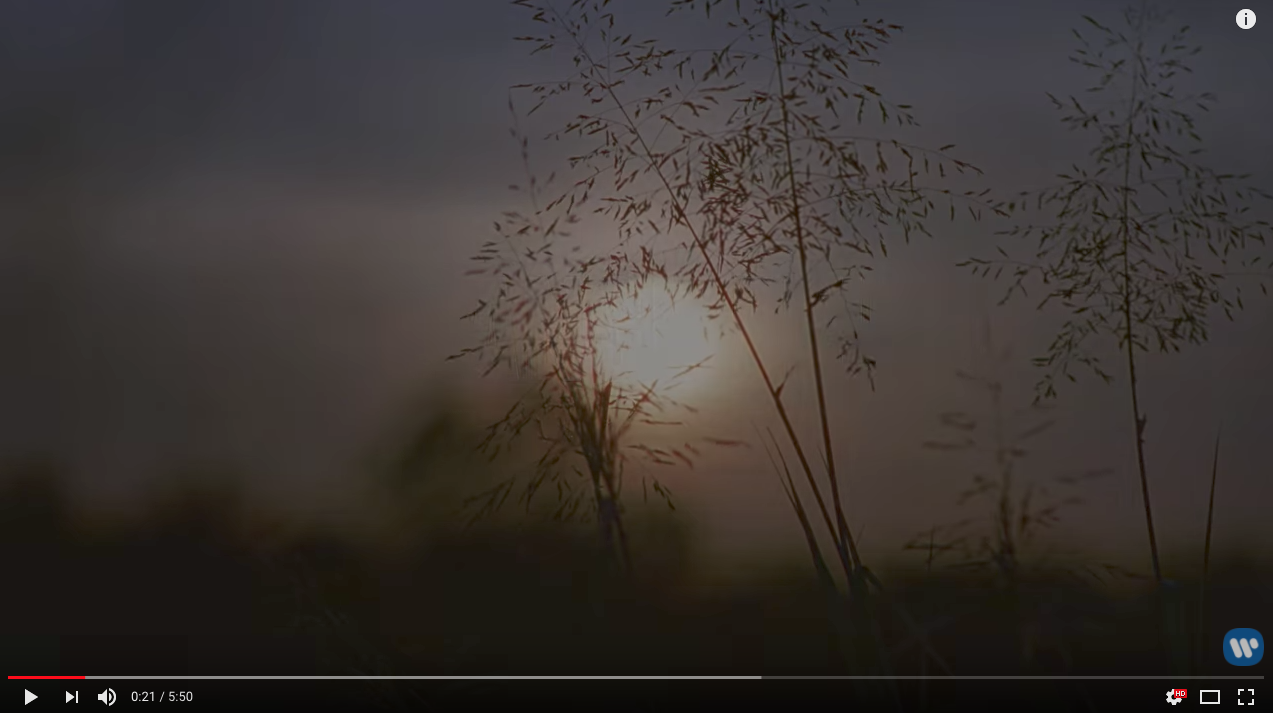
 

This spotlight may reference Billie Holiday’s performances of this song in the 1940s, as a single spotlight always shown or her face throughout each performance of Strange Fruit. One source stated the following, Because of the poignancy of the song, Josephson drew up some rules: Holiday would close with it; the waiters would stop all service in advance; the room would be in darkness except for a spotlight on Holiday’s face; and there would be no encore. During the musical introduction, Holiday would stand with her eyes closed, as if she were evoking a prayer.” 

The constant change between the spotlight on Andra and the sun shining through the leaves gives tribute not only to the lynching victims but also to Billie Holiday and the difficulties she faced as an African American throughout the Civil Rights Movement. 

As the video continues the listener is able to see that Andra Day is wearing broken handcuffs. This is significant as we see a symbol of the injustice African Americans faced and are reminded that racism in America is still an issue.

Finally, the viewer is able to see images of the camera angle pointed up at branches and Andra Day looking into the air, almost as if she is painfully looking up as she is remembering the victims of the lynching.

This video has the ability to speak to anyone that watches it. The comments listed below show that the filming and performance of this song have an emotional depth that cannot be felt with video or music alone.

When music and video are put together, both create a visual and emotional experience that is essential to the understanding of this song. Because of the heart-wrenching shots combined with Andra Day’s chilling voice, this music video gave “Strange Fruit” the depth and meaning it deserves.

https://www.npr.org/2012/09/05/158933012/the-strange-story-of-the-man-behind-strange-fruit

http://www.billieholiday.com/portfolio/strange-fruit/

Strange Fruit

Music has always been a powerful emotive force that is able to explain events that words alone cannot. Because of this, it has the ability to shed light on some of the darkest and most feared issues in the world. “Strange Fruit,” sung by Billie Holiday in 1939, brought attention to one of the most horrendous moments of American history: racism and the unfair discrimination towards African Americans.  

As an African American artist in the 1930s, Holiday had experienced racism throughout her career. She had performed in mostly “high-society,” white venues but wasn’t allowed to even enter the front of the house. She had to take a freight elevator up to the stage because she was not allowed to share the elevator with white patrons. Although she was one of the best jazz vocalists of all time, she truly understood and experienced the heartbreaking reality of racism in America.

The birth of “Strange Fruit” occurred after a Jewish white school teacher, Abel Meeropol, saw a horrific photograph of a lynching of two black men in Indiana.

Outraged and upset, he wrote a protest poem that was later used as lyrics for Holiday’s song. The lyrics depict the lynched black men as “strange fruit” hanging from trees as they rot in the sun for birds to eat. The song uses physical imagery and strong metaphors, making the scene come to life in the listener’s mind.  

Southern trees bear a strange fruit

Blood on the leaves and blood at the root

Black bodies swinging in the southern breeze

Strange fruit hanging from the poplar trees

[Verse 2]

Pastoral scene of the gallant south

The bulging eyes and the twisted mouth

Scent of magnolias, sweet and fresh

Then the sudden smell of burning flesh

[Verse 3]

Here is fruit for the crows to pluck

For the rain to gather, for the wind to suck

For the sun to rot, for the trees to drop

Here is a strange and bitter crop

The song debuted in New York’s first integrated club. Holiday’s manager knew it was extremely heavy and programmed it at the very end of her performance. Waiters stopped serving before the performance of the song, and no encore was performed. Holiday’s dramatic and heart wrenching interpretation continuously left all of her audiences stunned, and most responses included silence followed by a tremendous applause of approval. 

The song was extremely controversial, and Holiday’s regular recording label refused to record it.  She was released from her contract and forced to find an alternative record company to complete her recording. It was eventually produced and sold over 1 million copies, making it Holiday’s most sold record.

The recording of “Strange Fruit” was the first time a black artist had ever released something so controversial, and some consider it a contributing factor to the beginning of the Civil Rights Movement.  Artists such as Nina Simone and John Martin went on to record it, and Time Magazine named it the Song of the Century in 1999. It has continued to impact people today and has been inspiration for a novel by Lillian Smith, an opera  by Chandler Carter, and a song released in 2014 by Kanye West, “Blood on the Leaves (Strange Fruit)

https://www.youtube.com/watch?v=SPhsSzfAoBA

Every musical creation has a history and story behind it, and it is an integral piece that must not be forgotten. Even if a work has a strong political message, it should not be overlooked or hidden from its audience. If no one had paid attention to the political issues in “Strange Fruit,” the Civil Rights Movement may not have developed as soon as it did. Billie Holiday’s song changed history, and all artists should have the desire to change the world the way she did. 


https://en.wikipedia.org/wiki/Strange_Fruit_(novel 

Violin and Technology

Last week I sat in Kodak Hall as one of my childhood violin heroes played on stage. I couldn’t understand how he was able to produce such a large and beautiful sound that seemed to rip the heart out of my chest. I began to think about how this violinist produced such a large sound and the reason for it. What kind of violin did he have, and what was particularly special about his violin? What went into making it? How did a piece of wood from a tree became a small box that creates beautiful sounds?

There is a belief that orchestral musical instruments are far from any type of technology, but instruments and the process of making them requires more technology than one may think. For example, a tree must be cut down, the wood dried, and then imported to whichever part of the world the violin maker is in. If not already aged, the wood must then be seasoned before luthiers begin their work. Some violin makers require their wood to be seasoned for a minimum of fifteen years. Below is a violin maker with a piece of wood he has been naturally drying and aging for many years.

Once the wood is aged, luthiers are able to begin their work. The first step is the bending of the ribs or outer frame. This requires a bending iron and water in order to bend the wood efficiently. The bending iron temperature should range between 200 and 250 degrees Celsius but other factors apply. These include the type of wood being used and the exact temperature it needs in order to be bent correctly.

http://https://www.google.com/search?q=bending+iron+and+water+violin+making&rlz=1C5CHFA_enUS728US729&source=lnms&tbm=isch&sa=X&ved=0ahUKEwjm46DQgbDWAhXG6iYKHcX3CwgQ_AUIDCgD&biw=1082&bih=638#imgrc=3aZYxrBWJiQSEM:

The top and back of the violin must be carved next in a process called arching. Modern violin makers still copy Strad and Guarneri models while doing this, as an improved combination of dimensions has still not been discovered. This process is the removing of wood using gouges. Luthiers start with a large gouge and work their way down to smaller gouges in order to achieve desired thickness. When finished, the top must be scraped rather than sanded to provide a crisp and beautiful appearance of the wood. At the end of this process, only twenty percent of the actual wood block ends up being used.

Following gouging, the F-holes are cut in order for air to enter and escape. F-holes give the violin character and can even make the violin look happy, sad, or interesting. One technology that aids in the cutting process is an electric saw shown below.

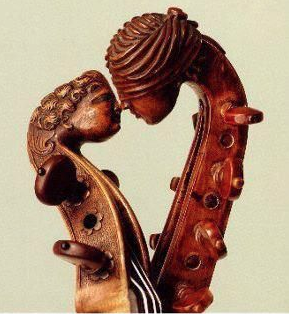
One of the final steps in violin making is creating the scroll and neck. The scroll is cut out using a saw and hand carved by the maker. This is often when the luthier is able to express his or her individuality and creativity. Scroll carving is usually the only time in the violin making process that a maker can carve freely.  

Once the instrument is glued and put together, the final step of varnishing must be completed. Varnish has been known to enhance the tone of the violin while also protecting and giving the wood a beautiful finish. When completed, the varnish must be aged and exposed to sunlight before it can be put into the hands of a performer.

When considering all of the technology and time that goes into making a violin, it’s easy to see why fine handmade instruments are so admired and prized. Even instruments that were made in the last twenty years have had to come from a tree that started growing at least 100 years ago. How did that tree get there and what technologies may have gone into getting it there? Did it grow naturally or did someone plant it? The time it takes to cut, dry, season, and varnish a violin’s wood means that most violins are a lot older than one may think.

One violin maker said that “the violin does not have its beginnings with a musician, but rather with its maker. It can only be used by skillful hands to bring a person into the very presence of God.” With that being said, a violin is a technology musicians can use to communicate whatever they want to be said, using the gift of music which is beyond this world.