Banking on Taboo

Content Warning: Blackface, explicit language and images


Die Antwoord is a South African rap-rave group that has garnered fame for their provocative, aggressive style and unique vocal sound. In 2012, their music video “Fatty Boom Boom” inspired controversy because of their use of blackface bodypaint and shocking content. The reception of the video, and of the group in general, has been bitterly divided.
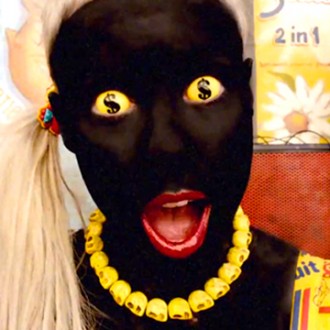
This article by Aisha Harris directly condemns Die Antwoord’s use of blackface in their music video and raises other concerns about their video. Since blackface minstrelsy is a cultural vestige of slavery in both America and South Africa, this video’s flippant use of blackface imagery is totally unjustified. On the other hand, Harris also mentions that minstrelsy has become a cultural symbol of progress for black people in South Africa after Apartheid. Annually there is a giant festival called “Tweede nuwe jaar” where a multitude of minstrel troupes celebrate together in a colorful display of costumes, body paint, and music.

An article on South African History Online says that: “as one of the longest surviving traditions it has become very evident that the minstrel festival is an important aspect of South Africa’s history and cultural heritage… It is therefore important to maintain the tradition, which has become so deeply entrenched within the popular culture of Cape Town.”

This almost seems like a cogent argument as to why it’s normal that Yo-landi Vi$$er donned a full-body outfit of black paint, until we remember that a group of black South Africans wearing pink and purple, etc, from head to toe and celebrating overcoming slavery and Apartheid is a lot different than a white person dressing in blackface in a music video.

What you-tuber Mayfinder might not realize is that “African” is not homogeneous. In contrast, Adam Haupt argues that Die Antwoord is doing nothing short of culturally appropriating black South African culture. In this article he says: “It is ironic that Jones, the crew’s founding member, is neither coloured nor white Afrikaans working class; rather, he is a well-resourced white, English-speaking South African.” To clarify, the Afrikaans language is associated with poor, uneducated people, while English is the more official and elite language in South Africa. So, we can conclude that their performing persona is not genuine and it is built off an existing culture that they will never be part of.

Okay, now that you’re primed on the racially exploitive elements of the video, let’s take a look and see what you think! Are these artists just being sensationalist and intentionally treading on open wounds? or is there a compelling artistic vision or critique that makes these images powerful and meaningful?

The first minute of the video actually strikes me as a commentary against the mainstream stereotypes and voyeuristic attitudes towards Africa. The tour guide’s monologue and the inclusion of docile safari animals presents an absurd image of an unrealistic place, which is perhaps part of their attack against Lady Gaga, who also embraces sensationalism.

The next three minutes is a fast-paced visual spectacle that enhances the intensity of the music with its quick camera cuts that change the size of the frame and its high energy dance moves. These scenes also rapidly move between color blocks – basically alternating between high contrast bright colors and white body paint to the “voo-doo room” (as they call it in an interview) that is all black and features semi-reflective costumes made of human hair.

Their diss of Gaga in this video – both with the prawn in her vagina and her tragic encounter with the king of the concrete jungle – seems to be a major media-grab. And it bolsters their position as “radically unique” and as a more niche and interesting music than most pop, which they continually drag through the mud in the lyrics of this song.

This video shows a different side of the creative process and explains how they got to the finished product.

While this video succeeds in making the members of Die Antwoord seem more human, engaged, and less sensationalist, I am still skeptical about whether or not this is a continued marketing ploy. Elements of satire in their videos make me question to what extent they are playing an artificial persona or wether their goal is just to embrace the child-like absurdity and freedom that their irregular dancing and graffiti suggests. Whatever cultural impact Die Antwoord’s complicated, racialized, sensational music videos have on the US and South Africa, they’re a hit and here to stay. 

Everlong-The Timeless Music Video to a Foo-Fighters Classic

The music video for the Foo Fighters’ “Everlong” is a long-time favorite of mine. The song itself has always been dear to me, as it has to millions of other young people who grew up on alternative/2000s rock, and the music video is a perfect match for the song’s grungy, melancholy, nostalgic tone. Watching the music video was always a cathartic kind of experience for me during my adolescence, simultaneously invigorating and calming. I recently rewatched the video after having not seen it for a long while, and I was once again struck by the perfect marriage between the tone of the video and the song’s tone. My slightly older eyes and ears now realize that the video is so encapturing because it puts you in the protagonist’s role, and thus you feel a sense of victory when the protagonist overcomes his challenges and opponents.

I will explain, but first you should see the video for yourself; The Music Video to “Everlong”.

For those of you who haven’t seen the video and don’t want to see it but for some reason want to read my analysis of it, here’s a synopsis: The first 25 seconds of the video is a roaming, black and white view of a quiet suburban night. The song’s hushed instrumental intro plays as the camera goes into a house where our protagonist, Foo-Fighters frontman Dave Grohl, is asleep. The camera zooms in on his head, and the screen fades into color as we enter his dream. At this point we as a viewer unconsciously understand that we are are viewing things from Dave’s perspective. During the first verse Dave, and thus the viewer, saves a girl from some thugs at a house party by slapping them with his oversized hands. In the second verse he does the same thing in a log cabin. A cabin which, by the way, is a homage to the setting from the Evil Dead (http://www.imdb.com/title/tt5688654/). In the songs triumphant final chorus we return to Dave’s bedroom where he and his bandmates shed the costumes they’ve been wearing in the video, instruments appear and they jam to the end of the song.

Dave Grohl’s hand grows to a size fit for slapping his foes

The video is directed by Michel Gondry, who would later go on to direct Eternal Sunshine of the Spotless Mind, and his surreal style is pervasive throughout the video (http://teamrock.com/feature/2016-10-05/foo-fighters-videography). From the cartoonish costumes, to the scene in a which there is a massive telephone that Dave climbs on, to the wonderful moment where Dave’s bed collapses to reveal that there was a drumset underneath it the whole time, the video takes you to another reality where the normal laws of our world don’t necessarily apply. This otherworldly style is befitting of a “pensive ode to a blossoming romance”, because isn’t the beginning of love rather like being on another planet (https://pitchfork.com/reviews/albums/10473-the-colour-and-the-shape-10th-anniversary-special-edition/)?

Anyway, what makes the video so satisfying is the connection established between the viewer and the protagonist. Because we feel like we’re right there with Dave, we feel the victories that he has against the cartoonish bad guys all the more. The peaks and valleys of the video also follow the song’s contours to a tee. The quiet, tense B-minor verses accompany Dave’s struggles and his girlfriend’s peril, while the jubilant D-major choruses play as he defeats the bad do-ers and jams with his bandmates.

However I know what you, dear reader, have been thinking the whole time you’ve been reading this blog. You’ve been thinking “what did the YouTube commenters have to say about the video”? Well dear reader it is the YouTube comment section so most of the comments were rather pointless, like Leanne Mutis’s all-caps masterpiece; “WHOS WATCHING IN 2017” with no question mark. There were some comments, though, that demonstrate that the music video resonates with other people in the same empowering, if not goofy way it resonates with me. For example unnamed715 says “my favorite part is when he starts b**ch-slapping people with that big a** hand”. User marsh marlou says “I imagine myself driving in a a car with my dog with the windows open and this song blasting” (the double a is their typo not mine). While both of these comments are lighthearted I believe they attest to the energizing experience that watching Everlong’s music video provides.

Aaaaaaaaaaaaangsty goodness

By some combination of corniness, surrealism, and genuine emotion, the music video to “Everlong” is a perfect match for the song. The campy visual style and sets that don’t look even remotely realistic balance perfectly with the adolescent sincerity of the song and Dave Grohl’s genuine emotion at the end of the video. In short, I believe it is a timeless video, and I hope angsty teenagers of many future generations will find some solace in it.


For further reading on Michel Gondry’s music videos: https://bluechat.io/list/top-ten-music-videos-directed-by-michel-gondry 

For More on “Everlong” https://www.youtube.com/watch?v=E9qB2aVamjM

KENZO World- The Ultimate Collaboration

“The eye is both feminine and powerful”


When creating a fragrance, many marketers will brand it with a certain celebrity or word, so the person buying it can feel associated with that in order to empower themselves to feel like they are one in the same as their new and powerful scent. A combination of a single word with a gorgeous celebrity and the scent of sandalwood lilac can cause mass amounts of people to flock to their nearest mall and go crazy. The smell of David Beckham is one thing, but what happens when you add the talents of fashion (Carol Lim and Humberto Leon), choreography (Ryan Huffington– choreographer of the Chandelier music video & Margaret Qualley), Spike Jones, and the song ‘Mutant Brain (ft Assassin)’?  All while referencing the earlier posted video by Fatboy Slim?????

You get KENZO World- The New Fragrance.

https://www.youtube.com/watch?v=ABz2m0olmPg

This video itself is a modern day musical text painting that reflects the description of the perfume itself.

“KENZO WORLD reveals a new definition of femininity with its new perfume. This intense eau de parfum reveals the essence of a strong, bold, determined woman. In her image, Francis Kurkdjian and Maïa Lernout revisit the KENZO WORLD floral bouquet with addictively velvety black plum, sparkling peony and jasmine, and indulgent vanilla. A gourmet fragrance for any woman who dares to be herself. KENZO WORLD, an intense eau de parfum, reveals your power.”

This entire video is a redefinition of femininity. It begins with a woman leaving a fancy social event to grab a breath of fresh air, only to be able to let herself go from her mental societal constructs of who she is supposed to be and allow herself to have an explosion of expression in an unconventional way. This immediate change in mentality is shown in the introduction of the music, which itself has intense beat from the music of Ape Drums (an American DJ known for combining electro-dance music with Caribbean sounds/music). As she begins to let go, you see a sense of freedom on her face that shows her beginning to define herself. The idea of a constructed society is then shown with her interaction with the statue head. As she is moving around, she goes to the statue head and yells at it, which would have been considered absolutely improper of a scene like the one she was in a little while ago.

Spike Jones continues to show this idea of releasing your inner self beautifully throughout the rest of the video, showing the woman go between trying to keep herself bound to what she believes to be the “proper way” (for instance when she is trying to control her arm from moving about spastically) and allowing her to feel the freedom of breaking away from it (when she jumps through the eye and beats her chest while shouting).


This whole work of art greatly relates to the discussion of music and politics in the 20th C. The work is showing the breaking away from typical society in a setting that is totally unexpected, and does so so beautifully that it leaves a lasting impression on the viewer.

“I love this publicity cause it shows the woman by a really different way than the others publicities of fragrance. It shows the liberty and the power of women”

-Saku123 (youtube user)

In class we have talked a lot about collaborations of works, and works that are related to/make us think of real world experiences (like music for airports), but present them in a way in which they force the observer/listener to question the meaning of the work itself and the motives behind that. KENZO World does that above and beyond any other modern collaboration I have seen, and I believe works like this set a huge influence on the future of art and politics.


The Last of Us: Blend between Music and Screen

When I was younger, I remember the thrill of playing video games with my brother to see who would get the highest score, who could get the farthest, or who was just overall better at the game. Today, while these elements of competitive drive still resides within the medium, the evolution of the video game is astounding. Just a decade or more ago, video games used to be viewed through a very specific lens by the general public as being a type of “nerd culture” that possessed no grounded place in the entertainment market. However, much like the Marvel Cinematic Universe, video games have become accepted by the public and has transformed into a mainstream form of entertainment. Now, why is this?

The evolution and growing success of video games can be attributed to the sense of immersion one can receive. Image, sound, and most importantly music, come together to create a multisensory experience not easily attainable in other forms of entertainment. In 2013, American video game company Naughty Dog released the PlayStation 4 exclusive title, The Last of Us, which has been regarded by critics to be a masterpiece in the medium. The title’s intense action and survival horror elements created a beautifully executed atmosphere not seen in other titles but what elevated it further was the incredible compositional works by Gustavo Santaolalla.

One of the most incredible aspects of Santaolalla’s compositions is that even though they are categorized as “minimalist”, there’s an incredible amount of meaning put into each texture and note. During the production of the soundtrack, Santaolalla experimented with an incredible amount of different instruments to see which ones captured the atmosphere of the game and then recorded them to see how they blended with one another. Also by collaborating with Neil Druckmann, the game’s creative director, Santaolalla was able to create music with a great deal of creative freedom, allowing for a soundtrack that helped to further strengthen the connection between the player and game.

Santaolalla’s compositional style not only reflects the atmosphere present within the game, but is also able to invoke an incredible amount of emotion without any context but with it, a whole new level of immersion is introduced. In a documentary with Santaolalla concerning the game’s soundtrack he says,

“The most important thing that makes The Last of Us what it is, is that it’s a very different project than other projects with more emotional content, with more emotional connection between the players and the characters.”(3:22)


One scene to further strengthen Santaolalla’s point is the reaction of Druckmann, during a very particular moment in the prologue (47:26 in this documentary). In the scene, linked here, the player narrowly avoids the chaos of a viral outbreak all the while protecting the protagonist’s daughter from danger throughout the entire prologue. The player’s actions are for naught however and the daughter is shot, resulting in her death. It is important to note that the first connection the player receives in the game is the father-daughter bond that is established within the first few minutes of the prologue. Due to the authentic relationship between the two, the player has the desire to make sure that not only the protagonist survives but the daughter as well.  These string of events culminated an extremely powerful and effective emotional impact and with the soundtrack at the forefront, not even Druckmann himself was able to leave unscathed from the balance between scene and music. During the father’s lament at his daughter’s passing, the use of strings and solo cello was an excellent way for Santaolalla to convey the despair to the player and the transition to the main theme was a fantastic way to dense the texture to reflect the chaotic nature of the plot.

The Last of Us is a masterpiece of a game, telling a story through visceral gameplay and immersive soundtrack. The passion Naughty Dog placed into the game can be wholeheartedly felt and the care Gustavo Santaolalla placed into the music is astounding, even more so after learning his history in music. The combined efforts of creating an unforgettable piece of entertainment are certainly present and showcases just how far video games have come since the late 1900’s. To end, here are the words of Bruce Straley, the game’s director:

“We feel that the interactive medium has an untapped potential to touch the feelings of the player. You have that connectivity, the fact that I am actually in the world and participating in what’s happening on the screen in front of me gives us some sort of advantage to make you feel connected with what’s actually happening.”

                                             –Grounded: The making of The Last of Us (6:34)


[1] https://en.wikipedia.org/wiki/Marvel_Cinematic_Universe

[2] https://www.naughtydog.com/company

[3] https://en.wikipedia.org/wiki/Gustavo_Santaolalla

[4] https://www.youtube.com/watch?v=Ejdjcun2Jo4

[5] https://youtu.be/R0l7LzC_h8I?t=2846

[6] https://youtu.be/s3_cP_jJ-9w?t=725

The Power of Sight and Sound

Music has always been something that we, as humans, have listened to. Unless we were watching a live performance, music has solely been aural however within the past 40 years, artist have begun adding video performances to add a different artistic perspective to the song. Often, these videos have been used to show live performances of the band, or create an artistic vision of the song, however in recent years, these music videos also create a story for the song and expand on the lyrics even more which can evoke a large range of emotions in people.

Music videos began growing in popularity in 1981 after the opening of MTV which aired new and popular videos on a weekly TV show. Although MTV was not super successful to start out, it grew in fame after many of Michael Jackson’s songs were aired on the show. One of the first music videos that really stood out to producers and fans and helped propel the music video business forward was Michael Jackson’s “Thriller” video. The actual song starts about 4 and a half minutes into the video, and everything before then paints a small scene to make almost a miniature movie out of this hit song. After this video came it, it began to change the way artists viewed their own songs and how they wished to portray the thoughts and emotions they were feeling while performing. Other artists began using MTV as a way to increase their recognition as an artist, which worked for many of them. Madonna took this approach as well as Duran Duran and Peter Gabriel, all of which are big household names to this day.

This remained a way for artists to both release their music to a wider audience while also adding a new artistic outlook to their songs for a while, however as MTV began to decline, the internet began to grow and a little thing called YouTube emerged, which became a new medium for artists to create and share music videos on.

YouTube ironically began as a website where the creators had hoped people could post videos of themselves and meet others, almost as a dating website. However, this was not favored by many people so the three creators took their idea and decided to keep the foundation, but change the videos from ones of a dating profile to funny TV or news clips people were always searching for: the idea was a hit and the website took off. Although YouTube began as a platform for people to post dumb videos, artists began to use it as a way to post their music videos in hopes that if enough people saw it, their career could take off. Other artists posted their videos there so that it could reach a broader range of people. No matter their reasoning however, YouTube became a very prominent place to succeed as an artist and has only grown as such in recent years.

One of the newer musicians these days who uses YouTube as a means to spread their music and music videos is the rapper Lil’ Dicky. He is known for his songs “$ave Dat Money” and “Lemme Freak,” however his song “Molly” which features Brendon Urie (the lead singer of the band Panic! At the Disco) is emotionally haunting and these emotions are highlighted in his music video.

Born David Andrew Burd, this rapper claims he was extremely awkward in high school (weren’t we all though?) and didn’t even get into rap until his later years. He gained popularity because he chooses not to rap about the typical “rap topics,” but instead about his own life, even going as far to make fun of himself on a regular basis. This is why is song “Molly” is so hauntingly depressing.

After listening to the song, yeah, it’s upsetting, but once you watch the music video, the tears will start flowing. The song is about how Lil’ Dicky was dating a girl named Molly, but she became fed up with his constant need to put rap above her, so they broke up and now, years later, he’s at her wedding watching her marry a different man even though he still loves her. In the song, he basically says he regrets everything he ever did to her but knows that she deserves someone better.

Obviously, anyone with a heart will sob watching it. Although the song itself is sad, the music video adds a second layer of emotions and deepens the understanding we have of the situation. The video is similar to Jackson’s “Thriller” as it begins with an opening scene which then leads to the music and creates a small movie out of this one song. The trick to this video however is that in the opening scene, the viewers expect that Lil’ Dicky is the one getting married, and it isn’t until the chorus of the song enters for the first time that we are all sorely disappointed. Had the chorus and the images not lined up at that exact time, the video may not have had the same effect. Everything in this song lines up with a scene in the video that helps portray the lyrics in a more expressive manner. This allows the true emotions of the song to emerge in a way where it is very obvious to viewers and affects them in a strong way.

Now, without looking at the comments, I could assume that I am the only person who had such a strong reaction to this video, however many people did comment and it is very obvious everyone had a similar, heartbreaking reaction. One person commented “Didn’t expect such emotional music from Dicky.” Another person commented “God damn this got me good…” and someone else said “Damn Dave… This shit is deep, has me all up in the feels. Much respect homie.” Although not all of the comments have to do about the emotions of the music, those that don’t are really only talking about the featured artists in the video. Virtually everyone who commented on here said something about how deep this song is and how the video is very misleading, which only makes it more emotional in the end. One reactor made note of how they felt fine watching the video until 1:50 into it, and thats when they were dumbfounded and began to cry.

Although the song on its own is fantastic, the music video for “Molly” just adds many extra layers to it helping portray the emotions Lil’ Dicky hoped to express. The video with this music creates a story and a powerful image for viewers which evokes a lot of strong reactions out of people. The addition of this music video allows viewers to not only experience Lil’ Dicky’s emotions aurally, but also visually, and usually people are more keen to grow attached to something while both viewing and listening. The video for this song, and many others, adds another dimension and allows the artists to be creative and even more expressive than if they were to just record audio which is why music videos have stuck around and are still spreading artist’s songs across the world to a large base of people.

Fell in Love with a Stupid, Ridiculous, Painstakingly Difficult and Time-Consuming Medium

Unless you’ve been inhabiting the space under a rock for the last half-century or so, you’re probably familiar with a certain wildly successful Dutch company known as Lego. Lego has captured the imaginations of millions of children (and adults) worldwide with their system of stackable colored bricks, offering endless possibilities for creation and even more endless opportunities for toe-stubbing. If you actually are unfamiliar with Legos, their website might give you some idea as to what I’m talking about. In any case, you can understand the ubiquity of this toy, its iconic status in popular culture. This status makes it all the more impressive that an artist could take this toy and use it in ways not previously conceived of, could re-appropriate it for artistic purposes in a totally novel way.

At first view, one might be tempted to believe that the “Fell in Love with a Girl” video is the product of some kind of pixelation filter applied to an otherwise-normal music video. However, in a style similar to claymation (a la Wallace and Gromit created by Nick Park – watch this video if you’re unfamiliar, it is well worth your time) the video was in fact created frame-by-frame with real Lego sets, shown in rapid montage to give the illusion of movement. Why this artistically bold-yet-inherently childish style for the video? The lyrics to the song suggest a kind of paradoxical struggle between love and lust, with the narrator trying (and failing) to distinguish between the two. Perhaps this duality is meant to be expressed by the silly-yet-complex Lego animation. Perhaps the depiction of people with small plastic bricks is meant to convey the humanizing force of love versus the more animal force of lust. Indeed, the people depicted in the video (often Jack and Meg White) are often stark white – is this a sign of ghastliness or purity? (It should be noted that they are rather pale in real life as well, though…) Or perhaps, and in all  honesty this is where I would put my money, this song was chosen for the Lego video because it is incredibly short.

The collective hive-mind of YouTube users tends to agree with this assessment. TheAndrewj96 writes: “THIS SONG IS TOO DAMN SHORT. You can’t put this much kickass in a song and just make it less than two minutes in length. I mean, this should be at least three minutes long.” Andrew J raises an interesting point about artistic compromise here – is it okay for an artist to limit their output due to a labor-intensive medium? Andrew isn’t forthcoming about whether or not he has ever constructed an elaborate stop-motion Lego video synchronized to music, but in case he has, he makes a valid point. The song is relatively short, for better or worse.

Other viewers seem less perturbed by the song’s length, instead focusing on its status as something of an anthem within its genre. Nugie simply writes “Timeless punk jam.” This seems to say it all, in three simple words nailing down the White Stripes’ origins in punk as well as their rise to iconic status over the last 20 years, thanks in large part to bold and recognizable songs like this one. For some interesting accounts on how the band (Jack White in particular) developed this sound, check out this series of brief interviews with some of the band’s early associates and friends.

However popular the band has become, though, there is evidently some question about their place in history, as evidenced by comments like this one, from Memedkemal Aksoy roughly one year ago: “The white stripes was a legend in the 2000’s” While on the surface this appears to be a compliment to the band, it can be read as a thinly-veiled jab at the importance of the White Stripes’ music. Were they really only at this legendary status for one decade? Has the musical culture that once welcomed them since forgotten about innovations like “Fell in Love with a Girl”? In fact, often the White Stripes are excluded from discussions of their own genre, as in this article detailing the shape of punk music over the last half-century.

Indeed, the White Stripes have only made their way into the limelight of popular music a handful of times in their existence. But does this prove the assertions of nonbelievers like Memedkemal Aksoy? Or do legends come from beyond the realm of popularity, ascending by their art alone?

Ennio Morricone’s Masterpiece

I’ll never forget the first time I watched the movie Cinema Paradiso. I was a naive 7th grader who knew nothing about film or film music. I was in awe of the gorgeous soundtrack and the heartwarming story line.  It is by far one of the most beautiful works of art ever created, and my favorite movie. Cinema Paradiso changed my life forever by sparking my obsessive interest in movies, and the music that makes each one such a unique work of art. My life was changed once again by the music of this movie when I was in high school. A few summers ago I had the amazing opportunity to perform a Cinema Paradiso medley on tour in Italy with The Philadelphia All City Orchestra. I was overwhelmed with happiness and am still so honored that I got to play one of the most inspirational pieces from my favorite movie.

*WARNING: This post does contain spoilers* 

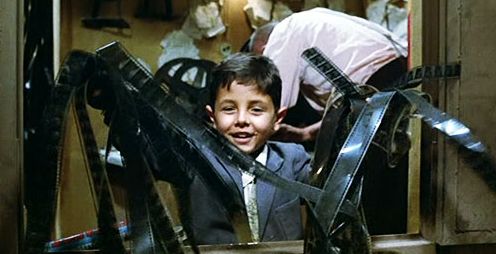
Cinema Paradiso is an Italian film directed by Giuseppe Tornatore. It follows the nostalgic journey of the main character Toto (Salvatore), a young boy who experiences friendship, love, and appreciation for film. The majority of the movie is told as flashback, from the memories of older Toto.

In my opinion, the ending scene sums up the overall beauty of the film. The music of this scene adds to the intensity of it’s visuals!  In this scene, Toto returns to his hometown after being away for 30 years. He is summoned back after hearing that Alfredo, his good friend and mentor had passed away. The ending scene and montage is a collection of all of the kissing footage Alfredo cut from the movies he showed at his theater when Toto was a kid. This footage was Alfredo’s final gift to Toto.

Many of the Youtube comment threads consist of both positive and melancholy reactions, like the ones shown above. I 100% agree with Franco Pozo’s comment that the ending is more of an experience (as is the whole movie)! Mo Rajabally’s comment is also very relevant with my relationship to the movie. I’ve seen it multiple times at different stages in my life, and each time I felt something totally new.

One of the many reasons this movie made cinematic history was because of the outstanding soundtrack. The music was written by the one and only Ennio Morricone, who is a world renowned composer. In the final scene of the movie, both the repetition of Morricone’s music and the kisses work well to create a unique emotional experience for the movie viewer. In my opinion it is the simplicity of both the music and visuals that trigger the most complex feelings. The music throughout the whole movie is phenomenal, and captures the mood of each scene perfectly. Morricone is also quite famous for his other soundtracks such as The Good, The Bad and The Ugly, and Gabriel’s Oboe. I would highly recommend checking out any film or musical score Morricone is associated with because they are all wonderful!

If you’ve never seen Cinema Paradiso or listened to the soundtrack, I would stop what you’re doing RIGHT NOW and let yourself experience it’s world. I can guarantee you won’t regret it.  I’ll leave you with this quote from Michael Patison’s Youtube comment regarding the final scene…

“The best scene from my favorite movie of all time. Unadulterated beauty. Every aspect of the filmmaking makes it wonderful: the careful clip selection embodying old Hollywood at its best, from passion to comedy; the tremendous performance by Perrin (his impact is far, far greater than his screen time would suggest (10minutes, maybe?); the entire, faultless film that precedes it and the stunning score (my favorite ever) by Ennio Morricone that ties it all together, reminding of the film’s past simply by playing the same general theme already played several times throughout. I’m not a cryer. Never have been, never will be. Like I really don’t cry at all. But I bawl like a newborn every single time I watch this movie and this scene. I’m just 22. Imagine how bad I’ll be crying thinking of everything it represents in 50 years.”

Blogpost #3

BLACKSTAR


David Bowie’s “Blackstar” (video) was released on November 19th, 2015. It is a harrowing and visceral piece of audio-visual art. It is dense, dark and packed with allusion to earlier works, art, religion and the occult. Furthermore it is a swansong. Bowie died of liver cancer on January 10th, two days after the full album release1. Like all great music video’s it was engaging from the beginning. However , I can’t remember another video which has haunted me throughout the course of a week like this one has. I want see how Bowie created a video this thought provoking and disturbing.


First one must know about David Bowie’s early life and career before they can understand his last and most experimental album. Born David Jones in London, England in 1947, David had showed an early interest in music. He learned to play the saxophone at 13 and was influenced by his older brother’s record collection. In his teen years he did not enjoy much professional success and even spent time in a scottish buddhist monastery 2. It wasn’t until the release of Space Oddity in 1969 did he enjoy commercial success. After that the rest is more or less history. He continued and matured as an artist. He developed an alter ego on stage named Ziggy Stardust. He and the rest of his ilk signaled the end of the Woodstock era and most famously he was deeply involved with narcotics 2.

https://www.youtube.com/watch?v=D67kmFzSh_o


The music of Blackstar is experimental and utilises the sum total of David Bowies creative ability while not replicating or summarising his past works. It opens with an atmospheric trio of 2 flute and guitar. Then drums enter with a syncopated ECM beat, signaling a departure from Bowie cannon. The melody itself is comprised mostly of one repeated note, followed by a closing gesture on “ahh”. One may say that it is reminiscent of medieval chant. To further darken the atmosphere, Bowie dubbed the melody at the octave. This all continues in more or less the same way until 1:45 where we hear something uncommon to most contemporary popular music, a Saxophone. Bowie had recruited Donny McCaslin, a Jazz musician from NYC, and his band to play on his final album. The story goes that Maria Schneider (ESM alum and good friend of Bowie) had recommended McCaslin to Bowie. The usage of saxophone itself isn’t what is interesting, it’s the context in which it is used. In most rock and roll the saxophone solo is a brief interlude and is really not used to the further the song as a whole. On Blackstar McCaslin plays and embellishes the melody and improvises throughout the track. I think that Bowie wanted the living breathing feel of jazz and improvised music to be central to this piece.


Another musical feature which distinguishes this piece from the bulk of popular music is its form. It is comprised of a distinct A section marked by the chanting melody and syncopated drum beat. This is followed by an equally distinct B. The B section is reminiscent of a rock ballad  and features a lighter mood. It has a simple drum beat and even features a James Brown-esque saxophone line. The interesting part is how the B section slowly melts into the A1. First the harmonic minor-ish theme from the beginning is reintroduced. Its then repeated and passed around the ensemble until suddenly we are back at the beginning. To he honest the first few times I listened to this video I didn’t even notice the transition. I think that Bowie, intentionally or otherwise, was imitating classical form. First you introduce a theme, then you develop it and then finally you return to the theme


The Video itself is perhaps the most unsettling and controversial part of this artwork. It is also the most dense and allusion filled part so I must admit that there is no way I could cover the many references and themes in the video, so I will pick a few to expand upon. The first theme is death. This theme presents itself in subtle and overt ways. The overt ways are easy to tell, like the raggedy monster at the end which cuts down the men at the end, this is clearly the personification of death. Less overt manifestations appear in the lyrics such as “In the Villa of Ormen stands a solitary candle”. Here we see the candle be used as a metaphor, where we all have a candle burning in ourselves which will eventually cease to burn. These themes are uneasy.  Skriptin commented  


“i think i only disliked when it came out because it scared the living shit out of me o_0”.

But in a way that is the point. The song is about death and it’s his experience dying which inspired this song.


Another theme which presents itself is religion and the occult. Once again we have overt references such as the three men being crucified in a field and the women performing an occult ritual with Major Tom’s head. The more obscure reference lies in the lyric “In the center of it all”. This is derived from an occultist teaching by Aleister Crowley, with whom bowie was obsessed 3. Furthermore, the “Villa of Ormen” is an occult reference 5. Ormen in Norwegian means snake, a popular subject of the occult. Once again these themes of religion and especially of the occult conjure emotional reactions from many. The Youtuber “Hamza Khan” had the following reaction to this music video.


“(W)hat the fuck is this shit this is some devil worshipping ritual shit wtf who actually considers this to be music”


While this comment may be written off at trolling, I think this is a discomfort we all feel. Religion is often considered an untouchable topic in popular art. For example Madonna was ostracised for using catholic imagery in her “Like a Prayer” video 4. I think Bowie was contemplating his own beliefs, or at least his own morality.


Finally, I’d like to conclude with a comment from Tom Brearley-Smith’s comment.


“Fuck Rolling Stone magazine for putting Beyoncé’s Lemonade as #1 on its Best Albums of 2016 list instead of Blackstar.”


This comment was clearly made to be inflammatory but it does beg the question; What makes a music video good? Tom here is insinuating that Beyonce’s ‘’Lemonade” is not artistic or of equal merit and I must wholeheartedly disagree. Lemonade is a vignette of the experience of Women of Color in America. It is a masterpiece, it pushes boundaries and addresses cultural issues at the heart of American life. Lemonade deserved to win.  But something about Blackstar is different. It’s much more personal and it feels more like an expression of the artist’s consciousness. While Beyoncé is addressing systemic issues she and many people of color have experienced Bowie is addressing his own personal apocalypse, a rapture which is coming for every single one of us. It is this unfiltered impression of Bowies last years which stick poignantly with the viewer for days. And the subtle, uneasy realization of our own mortality is what impacts us.


  1. https://www.theguardian.com/music/2016/oct/04/donny-mccaslin-david-bowie-blackstar-interview
  2. https://www.biography.com/people/david-bowie-9222045
  3. https://www.theguardian.com/music/2016/jan/21/final-mysteries-david-bowie-blackstar-elvis-crowley-villa-of-ormen
  4. https://www.axs.com/5-artists-who-have-used-religious-imagery-in-their-videos-79496
  5. https://www.newyorker.com/culture/culture-desk/the-beautiful-meaninglessness-of-david-bowie


The wonderfully bizarre world of Yiddish Metal

A few summers ago, I and some friends were browsing YouTube for music to listen to.  One of my friends came up with the brilliant idea of searching for “Yiddish Metal.”  Without even hearing the music, the name of genre alone suggests something highly out of the ordinary – which the video I will discuss delivers upon in droves.  Apparently, the genre of Yiddish Metal is not a highly competitive one, as only one band – Gevolt is actually involved in it.

For this Blog, I will be looking at the official lyrics video for Gevolt’s Kokhotshet (I highly recommend watching the whole thing – it’s quite a unique experience):

In this video, and in many of their other works, Gevolt creates a unique flavor by combining traditional Klezmer melodies and instruments with the sounds of modern metal music.  What makes this video stand out to me it the way in which the lyrics are presented (and the random butterflies).  Note how throughout the video, the font and styling of the text changes – which may or may not relate to the meaning of the text.  However, as I am not a speaker of Yiddish, I cannot know for certain.

Note as well that there appears to be some general plot-line to the images presented along with the texts – from the introductory fields (and butterflies):

To the rush of crowds in the city (still butterflies):

And finally, to what appears to be an alien invasion (no butterflies):

While again, I do not speak Yiddish, and my attempts to translate the lyrics using Google Translate yielded mostly gibberish (predictable), I did gather the feeling that none of these images related to the text in any meaningful way!

So, the already rather surreal blending of klezmer and metal is only amplified by the weirdness of the accompanying imagery.  The combination of trombone glissandi and sudden synthesized beeps, or klezmer violin with amplified electric guitar is definitely not a combination that is often heard anywhere else, which is a shame.  This mixture of styles and forms creates a genre which is yet to be explored to its fullest potential.  When there is only one ensemble creating a musical style, it is hard for that style to expand and grow at rates that other genres are.  I assume that the reason that Yiddish Metal has not been expanded to a larger audience is that the initial audience is small, as there are not many Yiddish speakers in Israel (Gevolt’s home country).  Though, in a positive turn of events, Gevolt did perform in the MIDI music festival in china a few years back.  [check out their live vids on YouTube – they are quite bizarre]

Upon turning to the comment section in search of a few laughs (after all, it is YouTube) and maybe some further insight into this video, I instantly found that as expected, most comments were fairly useless.  About half the comments were either comparing the band to Rammstein or trying to comprehend Yiddish (an infrequently spoken language these days).  Then, there were some others which held no interest either.  Of the comments which I found interesting, the first one, from a “Noam Perlman” matched somewhat my initial reaction upon listening to Gevolt the first time:

Though, without quite as colorful language 🙂

My eventual feelings about Gevolt are now most matched by “Bubba Chunk,” who remarks:

However, in terms of actual analysis, I found most useful the thoughts of “Matthew Simpson”, who writes:

“Matthew” is probably correct in associating Gevolt to what he terms the “Yiddish Renaissance.”  While I would not call it just that, it is indeed true that Yiddish as a spoken language is beginning to make somewhat of a comeback.  It is then not so surprising that it would return to the realm of music as well.


Sources:

https://www.economist.com/blogs/prospero/2017/02/pr-ven

http://www.gevolt.com/

https://www.musixmatch.com/lyrics/Gevolt/Khokhotshet

https://www.haaretz.com/israel-news/.premium-1.813370

http://www.jpost.com/Opinion/Op-Ed-Contributors/When-Zionism-feared-Yiddish-351939

Blue Mountains – Sam Amidon

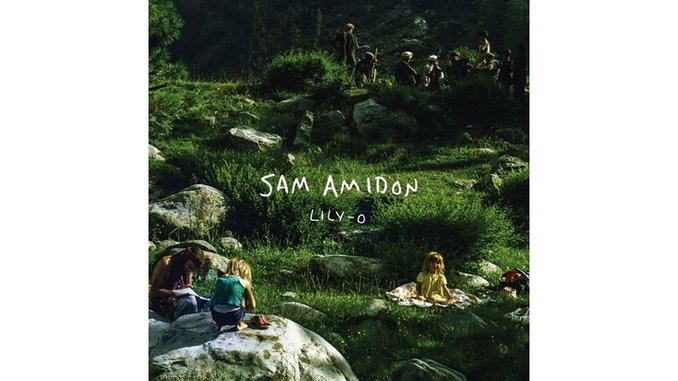
Sam Amidon is an extremely creative American Folk singer, and is currently producing music. He is a beautiful storyteller through his words, melodies, and music videos. Let’s look at the song “Blue Mountain” from his 2014 album entitled Lily-O. This album is a very beautiful work in its own and has top notch musicians on it consisting of Bill Frisell, a legendary jazz/folk guitarist.

The lyrics to Amidon’s Blue Mountains come from a traditional folk song called “Across the blue mountains,” although he leaves out quite a bit of the middle part. The song tells the story of a married man who asks a younger girl, Katie, to run away with him and cross the blue mountains. I think the music video to this song is an excellent representation and addition to the feelings conveyed in the song. In the music video, there is an almost slow motion and nostalgic effect happening. The video mostly consists of a girl (Katie) lying on the ground and going through some sort of conflict. This conflict is in herself, as she has to choose between being safe at home or running away with the love of her life. Her expressions and motions broadcasts the innocence of being a younger woman running away with an older man. In the original lyrics of this folk song, there is a part that Amidon left out that shows how Katie’s mother is desperately trying to talk her out of it. Although Katie’s mother is never mentioned in Amidon’s version, I believe her mother can be seen in the video. At around 3:58 in the video, we can see Katie on the ground with two pairs of arms reaching out to her. She crawls into one pair of arms that belong to the man she is running away with. However, I believe that the other pair of arms is meant to be her Mother’s, as she does not want Katie to go. This video beautifully illustrates the conflict that Katie must face between the love of her life and home. This video adds to the story of the song in a positive way.

“In spite of subject matter that’s often dark, the music on Lily-O somehow feels deeply reassuring (NPR). The music video to Blue Mountain also contains a sense of reassurance, especially with the focus on Katie and the objects around her. Specifically, hands bring by miniature horses and houses that go along with the story being told. The expression of Katie’s face reflects wonder and reassurance that she’s making the right decision by running away with him.

I believe the sign of good art (music or visual) is when it brings a feeling of nostalgia even when it’s the first time you’ve been exposed to it. In an interview, Joni Mitchell said something along the lines of “If you hear my music and you see me in it, you’re missing the point. If you hear my music and see yourself, now you’re getting something out of it.” With Sam Amidon’s Blue Mountain, I definitely see myself in it, and others do too. A YouTuber named Pikasde commented “I don’t know why but it reminds me of my first love. TY Sam for bringing back those emotions. Just thank you.” I think it is beautiful that a piece of art and film can stir up such emotions. Others commented “thank you sam, magic piece of film here (Brendan Timmons)” and “wat an amazing expression of feelings..man this video just rocks..(Vishal Nagabhushan)” and more. It seems that the reception of this video has been generally positive and people describe it as magical. I would describe it as magical too.

I believe this music video adds to Sam Amidon’s musical experience in a positive way. The film plays an important role in the storytelling, as it goes beyond what the words say.