
Tyler, the Creator is a leading figure in rap music as a rapper and producer. One of his most famous songs is called Yonkers, apparently based on the town Yonkers, NY. What is so interesting about this song is that everything contradicts itself, and the music video doesn’t seem to connect much to the lyrics. Many try to read between the lines to find deeper meanings, but Tyler always denies that there is a deeper meaning in any of his music. It is very easy to believe that something is more special than it is meant to be, and it seems to be very important to the listener that there is predetermined intent in the music.
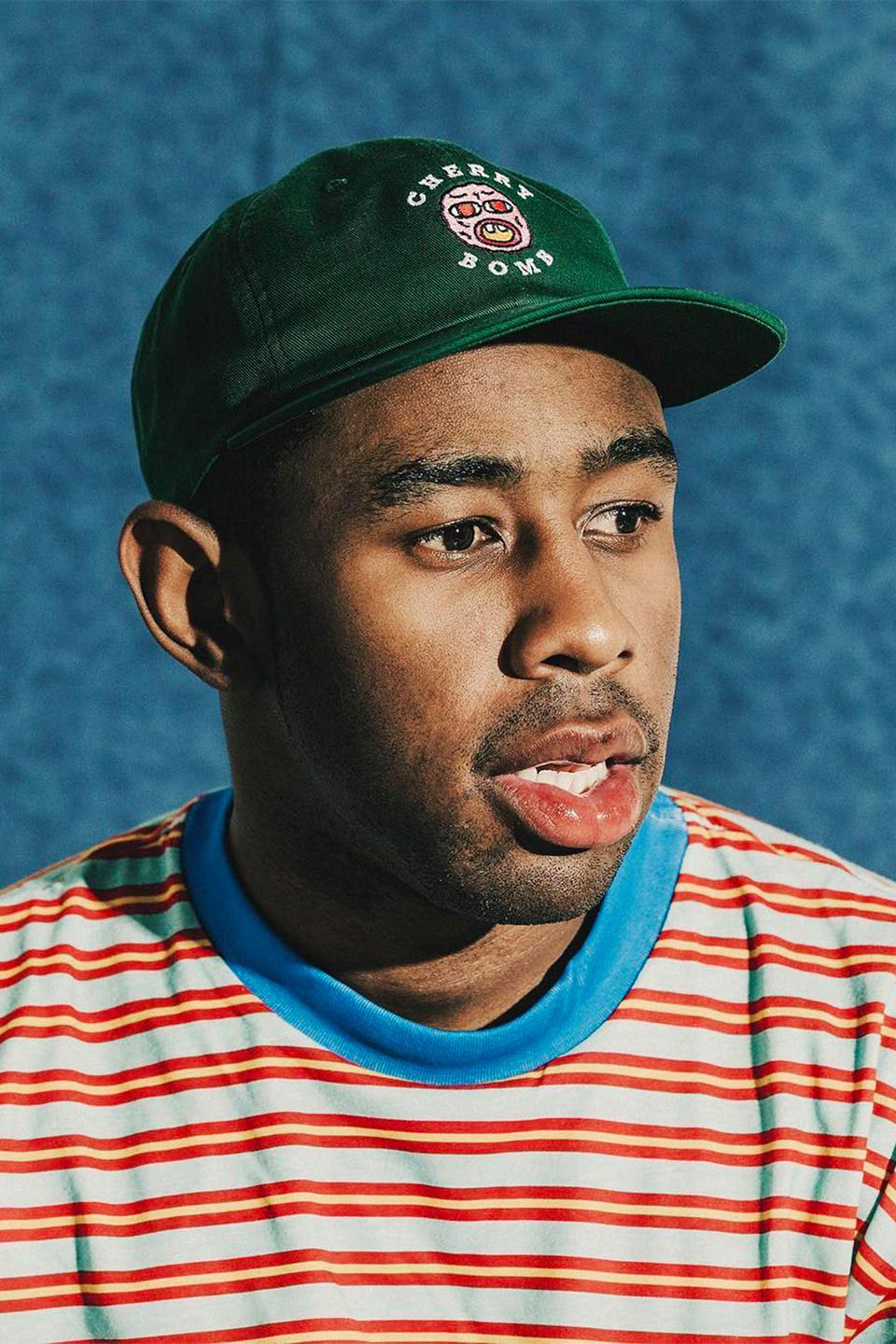
Tyler, the Creator uses many techniques in his rapping that reminds me of some other artists we know in the classical world like Schumann. I find this because he uses characters in his pieces, the most important one being his alter-ego Wolf Haley, as well as a fictional therapist named Dr. TC. Much of his rapping uses extremely offensive slurs and plots, including rape and violence against women, and homophobic slurs. Yet Tyler always says none of it means anything, and it is all “simply…an admittedly absurd story that was never meant to be taken seriously”. He was one of the first to publicly support Frank Ocean when he came out, and has never been known to use violence. After knowing this about Tyler, the Creator, does it make sense to treat his music seriously or try to look deeper into his music to find hidden meanings?
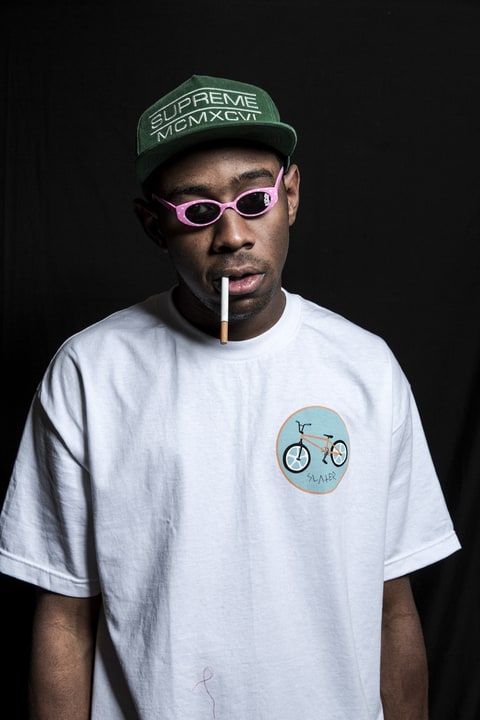
Yonkers uses lyrics that contradict themselves at every turn. Starting at the beginning, “I’m a f***in’ walkin’ paradox – No I’m not”. These lyrics make no sense, but many in comments on sites used to describe what the song means, say that one of the sides is Tyler and the other side is Wolf Haley. All the contradictions are really happening in his own mind, at least that’s what the song is about. Many of the youtube comments however are very different, I found dozens that commented on the line “I’m not gay, I just want to boogie to some Marvin” suggesting that Tyler is gay (many of these comments came out because in Tyler’s new album he comes out as gay). “”I’m not gay, I just wanna boogie to some Marvin.” yah okay” – AKFORTYKAVIN. Some comment on the contradictions between the lyrics: “the reason he did this is because wolf haley (the kid with button ups and shorts) is his evil self. if you look closely at the lyrics he is constantly contradicting himself, like him fighting against his other self. its pretty cool.” -DirtWormGames. But most just comment on how crazy they think Tyler is or how bad they think the song is: “Well f*** me, this was seriously bad all the way through. I came to this YouTube-account to understand what even makes this guy a thing to begin with, and I did not get any wiser. This was just terrible along with the rest of the things he made.” -IcaJerry and “This n**** still freaks me out to this day.”.
The music video is quite simple. It is black and white picture, of Tyler sitting on a stool rapping with a cockroach that he eventually eats and throws up. His eyes then turn completely black before he hangs himself (shown by him knocking down the stool). It is interesting because it doesn’t really have anything to do with the lyrics, agreeing with what he said in his interviews about there not being any meaning behind the lyrics. A connection I do find between the video and the lyrics, is this conflict between Tyler and his alter-ego. You can see this when the video blurs back and forth between sides of him, and with the suicide at the end of the video.
Whether or not Tyler, the Creator really meant for any of these lyrics or this video to have meaning behind it, it is still natural for the listener to find some human connection. When something is random, we try to find a pattern even if there is none. If a piece is atonal, we will hear some bits of tonality just naturally. Is it wrong to try to find meaning in something that didn’t mean to have meaning? Is it wrong to write a song that has no meaning behind it? Whether it is or isn’t, listeners have a natural magnetic pull to connecting dots and finding meaning in the random.
“I’m not Gay I just want to boogie to some Marvin”- This is good wordplay. Tyler is very creative with this. Him being gay here is not the point, it is that listening to Marvin Gaye implies that you would be gay. However the way he phrases it as a statement makes gay have a double entendre of sorts. We hear gay in the context of the sentence, but also in being the last name of Marvin Gaye.
Tyler does stuff like this all the time. One of my favorite wordplays is setting an expectation of a rap so clearly that we would fill in the word and then not saying the rhyme. Colossus of Wolf does this.
“They bandwagon-jumped me from a pogo, I’m going fucking loco
“Hey Tyler can I” no, bitch, don’t you see me tryna buy a fucking churro?
The beginning of the third line implies the person speaking would say “hey tyler can I get a photo” Photo of course rhyming with pogo, loco and churro.
Hi Jordan! Your blog post was super interesting, especially the end where you’re left hanging with a bunch of philosophical questions, as well as hungry to look up Tyler, the Creator and dig further. I thought a lot of other artists while reading such as, for example, Andy Warhol, who always rejected peoples’ opinions on what they thought the meaning behind his art was. For instance, his famous “Campbell Soup Cans” have often been said to be a negative response to capitalism and consumerism in America, and when asked about it, he said he just liked the soup and ate it a lot, and that was it. What we think is the meaning behind a lot of his work, the (“Marilyn Dyptich,” “Sixteen Jackies,” “Mao,” etc.), is what people have ascribed to them over the years and not what Andy actually said about them.
Personally, I have never entirely believed artists who say that there is absolutely no meaning behind their creations. First of all, all there is in this world is affected by external forces and there is always a reason for everything; there’s definitely no denying that. When an artist makes a decision to create something in that certain way, there is always an external force—we can definitely go as far as call it a meaning—behind it. To bring up one variable of this huge argument, let’s say they are just randomly picking what to include in their creation—I’m thinking of John Cage’s “Music of Changes” and how he used the I Ching for that work, for example—it’s that randomness and chance that ends up being the meaning behind the work. There’s definitely way more I can say on this issue and this is really interesting stuff to think about, but for the purposes of this peer-review, I will stop ranting now.
I also found super interesting when you mentioned Schumann’s similarities to Tyler, the Creator and his alter-egos, and it seems like you just quickly mentioned it and moved on. I do wish you would have spent a little bit more time on that connection between the two very different, but also (surprisingly!) very similar artists. I personally don’t know much about Schumann’s alter-egos and would have liked to have a bit more about him in that paragraph, for a better contrast to all you’re saying about Tyler. Thinking of readers who aren’t even musicians, I think they would appreciate it as well. Maybe including a permalink that takes us to an article about Schumann’s alter-egos, or something like that, would have worked perfectly. Otherwise, thanks for a great reading and lots to think about!