Kendrick Lamar Expands the Musical Experience with ELEMENT.

Kendrick Lamar is known around the world as one of the best hip-hop artists out today. His searing, culturally relevant lyrics and carefully crafted production have pushed hip-hop as a genre to new heights. His talent and creativity have been recognized across the board, even by critics and institutions that have often dismissed the value of rap and other African-American art forms.

One can get a good feel for how much depth an artist has by looking at the kinds of discussions that listeners have surrounding their work. If you look up Kendrick’s lyrics on Genius, a lyric aggregate website that allows users to annotate lyrics, it is not uncommon to find songs where every single line is annotated and where most of them look more like essays than annotations. Not many artists deliver verses with that much content consistently enough to warrant that kind of discussion.

As the fantastic Youtuber Nerdwriter points out, one thing that makes Kendrick’s music so creative and work so well in a genre with so many different producers and people needed to make the product is because he is a master collaborator. He knows how to take people’s diverse talents and use them in the right way to better the project. One way he does this well is with music videos.

In all honesty music videos can be pretty crappy most of the time. They usually are promotional money-grabs involving a sickening number of jump-cuts showing the band playing in a warehouse or a beach or what have you. But Kendrick Lamar approaches music videos as more of a visual component created specifically to complement each song. In this way, each video sort of takes a new life of its own. Instead of just merely going along with the song, each video augments the material in a new way that provides a different experience than what you would get on the album. Often, Kendrick’s videos are longer than the actual tracks and might contain different beginnings, endings, and transitions.

The music video I wanted to look at in particular is the video for the song ELEMENT. of his 2017 album DAMN. This video, directed by Kendrick Lamar in collaboration with Jonas Lindstroem, is a breath of fresh air from most music videos: The shots are long, most are even in slow motion. Each image is very well composed and the style conveys a sense of close, yet detached observation. Lindstroem began his career as a fashion photographer in Berlin so it makes sense that he composes these shots to be more like images that breath, each one drawing the viewer in closer to the stories contained in each. Most of Lindstroem’s other film work uses the medium in this way, almost as a means of portraiture and I think that Kendrick and his team were very purposeful in choosing him to bring that style to this project.

Opening shot of ELEMENT.


The song ELEMENT. is a very personal one. It revolves around Kendrick’s struggles as a Compton native suddenly living in the spotlight and how he still retains his roots despite how different his life is now. The songs lyrics are a sort of aggressive assertion of Kendrick’s identity amidst an industry with a lot of “whack artists” as he mentions in the third verse. In the video, a lot of this lyrical reflection is manifested through the treatment of violence. Violence is a very prevalent theme in the images of the video and its a part of life in places like Compton where Kendrick grew up. Essentially its a part of his element. In the video these images are strung together in a way that obscures any direct narrative between them. Instead each individual cell acts as a threshold into a story that we are not given the context of, just a single moment. This gives violence a sense of ubiquity and emphasizes the cyclical nature of it in communities like the one Kendrick grew up in. One of the most striking shots to me is the one of the father trying to teach his son how to fight. That is something that my dad has never had to do with me but had I grown up somewhere else, its a big possibility that that would be a part of my life, an aspect I would have to address and be ready for.

One hugely important aspect to this video is the many references it contains to the work of photographer Gordon Parks. Parks was a humanitarian who worked as a photographer primarily documenting urban and African-American life from the 1940’s up until his death in 2006. His work exposed truths about the everyday lives and struggles of impoverished communities to audiences in America that had never been exposed to them before. There are several images from the music video that are direct references to photographs taken by Parks. The provocative opening shot of the video is a hand rising out of the water which is the same subject as an untitled photograph Parks took. Another striking example is a recreation of a photograph by Parks called Boy with June Bug.

Side by side comparison of the shot from ELEMENT. and the photograph by Gordon Parks

Its fitting that Kendrick would choose Parks’ work to pair with his music because both are essentially doing the same thing with different mediums. These references are littered throughout the video which adds a unique dimension of depth and experience that one would not have been able to have from the song alone. Kendrick Lamar has already taken over the rap world with his music alone, but its really cool to see an artist that can navigate other mediums so deftly and still manage to pack a lot of meaning into something as trivial and media-driven as a music video.

Modern Maximalism

Jacob Collier is a European artist that gained fame within the jazz community through his incredibly innovative harmonies,  charismatic personality, and most notably the dynamic videography that accompanies his music. Jacob Collier achieved internet popularity by creating arrangements and covers of popular songs while adding exotic re-harmonizations and playing every single part in the video. His most popular video is a cover of Stevie Wonder’s “Don’t you worry ’bout a thing”, and it currently has 2.5 million views.  To me this video embodies the maximalist ideologies and utilizes them in a modern context. The most impressive aspect is that his arrangement is packed chock full of crazy harmonies and written for a very dynamic instrumentation. Within the video he utilizes 6 different types of drums, 3 different keyboards, 6 vocal parts, 3 cymbals, 6 auxiliary percussion instruments, and an upright bass. Although it may not be as physically maximalist as Mahler or any other orchestral composer, his rendition of the “Don’t you worry ’bout a thing” contains much more parts than the original version, and the overall sonic landscape he creates is bursting with energy just like any other maximalist piece.  I feel that the element of maximalism within Jacob Collier’s video lies mostly within the overall sound of his one man ensemble, as well as the visual element of the editing choices he made.

Image result for jacob collier

His harmonic choices take the original harmonic form of the song “Don’t you worry ’bout a thing” and builds off of the prior foundations. Jacob Collier utilizes lots of extensions and playful dissonances that create a color that is truly unique to him. It feels like he took a paint brush and blended the entire color pallet.  There is so much to listen to, and each time I listen to the song I seem to catch something new.  He creates a unique effect where the parts transcend their individual sounds and create this one holistic blend of harmony and timbre. Often times in ensembles you can hear instruments stick out, as well as specific parts of a chord. For example sometimes you can hear a section blast the third of a chord, and it takes away from the overall group sound. The mixing of sounds Jacob Collier uses seldom breaks from the overall color of the group he made. In this video attached here, Jacob Collier created a live video of him harmonizing a video sent by one of his patrons. He essentially fills up an entire ProTools project space with various instruments and parts that he writes. In the comment section of Jacob Collier’s “Don’t You Worry ‘Bout a Thing”, a viewer stated, “This is almost supernaturally good”, this comment essentially sums up the knowledge and ability Jacob has. He conceptualizes sound unlike anyone else, and he’s able to deliver an incredible performance on each instrument he writes for. Very few people can pull of such a feat, and it seems inhuman that one individual is capable of so much. Another interesting comment that sparked some research was from “Jasper Jamm’ who commented, “This dude DEFINITELY has some background in harmony training. No one makes up those chords without some real education damn”. Curiously I looked up Jacob Collier’s musical background, and was astonished to see that he declared himself an “autodidact”, which is a fancy way of saying he was self taught.  One could argue that his skills are almost prodigal.  He launched his first YouTube video in 2011, and shortly after was gaining a lot of attention and eventually intrigued the ear of jazz great Herbie Hancock. Huge Harmonies=Huge success.

Image result for jacob collier transcription

Taking a look at Jacob Collier’s videography, he fits a lot of visual content within the small confines of a YouTube video webpage.  He uses a splitscreen paneling effect that allows us to look through various “windows” to each part he’s playing. He opens with 6 frames of just him singing each voice part acapella style, and later on introduces the viewer to more instruments within the one-man band. This editing style increases the scope of the project and creates a cool effect seeing on individual performing with themselves. At the peak of the song you can see every part happening all at once and the visuals climax along with the music. The large scale in video accompanied with the huge sound of the music stimulates the senses to created a unique and maximalist viewing/listening experience. I found this to be a video and song I could listen to over and over again. Sludge pump writes, “Gaaaaah!  Just as good after the twentieth watching!  So good Jacob!!”, a statement I found to be so true. There is so much happening all at once that it is nearly impossible to take it all in during a single listen, and the video is so captivating and mesmerizing it’s very easy to get caught up in the moment and miss some minute yet incredible moments.  His video demonstrates that he is just as much of a monster in the studio as he is at writing and performing.

Image result for jacob collier don't you worry


Breezeblocks

Original video:

Version with all the events in order:

The first thing I noticed about this music video was that everything is in reverse.  People are used to experiencing time from beginning to end, so it was hard to piece together what was happening.  It wasn’t until I found a version that played it in order that I realized what was going on.  Based on my understanding, the husband is having an affair with another woman.  This woman gets jealous, locks the wife in the closet and waits for the husband gets home so that she can kill him.  I don’t think she was intending to kill the wife though.  If she wanted to kill her she had the perfect opportunity to.  In the end she gets hit with a breezeblock and falls into the bathtub, where she is held down by “soggy clothes and breezeblocks”.  She’s also dead which probably prevents her from leaving.


I agree that the Husband in this video turned out to be the good guy and that it’s meant to make us question the perspective, but I don’t think that men always seem like the bad guy.   I don’t think proving that men aren’t always bad was the point of this music video, especially since it was the woman who was the first one to attack.

The lines,

Do you know where the wild things go?

They go along to take your honey (la la la la)

Break down, now weep, build up breakfast

Now let’s eat, my love, my love, love, love (La la la la)

Seem to be from the woman’s perspective.  She’s going to to take his honey (his wife).  This probably means that if he chooses his wife over her, she’ll kill his wife.

The lyrics, “Please don’t go, I’ll eat you whole, I love you so” is from the book “Where the Wild Things are”.  The lines in the book are

But the wild things cried, “Oh please don’t go we’ll

eat you up-we love you so!”

And Max said, “No!”

The wild things roared their terrible roars and gnashed their terrible teeth
and rolled their terrible eyes and showed their terrible claws
but Max stepped into his private boat and waved good-bye.

I think this children’s book was a prominent source of inspiration for this song.  In the book, the main character, Max, sees the creatures and called them “wild things” and when they see him they think he is the “wild thing”.  So, in the music video, the woman sees the husband and his wife and think that they are “wild” and the couple think the woman is “wild”.  I think that the woman is the one who is most like the wild things.  When the husband denies her love she goes insane and tries to kills him.  In the video she is shown throwing glass bottled and practically clawing the guy.  

Many of the lyrics also allude to medical terms.  

Citrezene your fever’s gripped me again”

“She bruises coughs she splutters pistol shots

But hold her down with soggy clothes and breezeblocks

She’s morphine queen of my vaccine my love my love love love, la la la la”

Cetirizine is a type of allergy medicine.  This medicine is also something that can be overdosed.

This song has many implications of death and I think referring to cetirizine is a reference to suicide.  At the end, after he’s killed the woman, he stays in the bathroom instead of going to his wife.  The bathroom is usually a place where people keep pharmaceutical drugs, so by showing him staying in the bathroom could imply that he’s considering suicide.

The line about morphine really caught my attention.  Since morphine is an opiate, it manipulates the brain to receive less pain signals.  It can also increase the release of dopamine and endorphins which can make a person feel euphoric.  Morphine is also a drug that can be overdosed.  When the lines says that she is the “queen of my vaccine”, it’s difficult to pinpoint exactly what that means.   I interpret it to mean that the woman dominates his wife.   His wife is the antidote to him and the woman is like a drug he keeps overdosing on.  


I thought this comment was really interesting.  It could be true that the woman was a lover that the husband abandoned for the wife, but it doesn’t change the implication that there was an affair and that the woman went insane.

Everlong-The Timeless Music Video to a Foo-Fighters Classic

The music video for the Foo Fighters’ “Everlong” is a long-time favorite of mine. The song itself has always been dear to me, as it has to millions of other young people who grew up on alternative/2000s rock, and the music video is a perfect match for the song’s grungy, melancholy, nostalgic tone. Watching the music video was always a cathartic kind of experience for me during my adolescence, simultaneously invigorating and calming. I recently rewatched the video after having not seen it for a long while, and I was once again struck by the perfect marriage between the tone of the video and the song’s tone. My slightly older eyes and ears now realize that the video is so encapturing because it puts you in the protagonist’s role, and thus you feel a sense of victory when the protagonist overcomes his challenges and opponents.

I will explain, but first you should see the video for yourself; The Music Video to “Everlong”.

For those of you who haven’t seen the video and don’t want to see it but for some reason want to read my analysis of it, here’s a synopsis: The first 25 seconds of the video is a roaming, black and white view of a quiet suburban night. The song’s hushed instrumental intro plays as the camera goes into a house where our protagonist, Foo-Fighters frontman Dave Grohl, is asleep. The camera zooms in on his head, and the screen fades into color as we enter his dream. At this point we as a viewer unconsciously understand that we are are viewing things from Dave’s perspective. During the first verse Dave, and thus the viewer, saves a girl from some thugs at a house party by slapping them with his oversized hands. In the second verse he does the same thing in a log cabin. A cabin which, by the way, is a homage to the setting from the Evil Dead (http://www.imdb.com/title/tt5688654/). In the songs triumphant final chorus we return to Dave’s bedroom where he and his bandmates shed the costumes they’ve been wearing in the video, instruments appear and they jam to the end of the song.

Dave Grohl’s hand grows to a size fit for slapping his foes

The video is directed by Michel Gondry, who would later go on to direct Eternal Sunshine of the Spotless Mind, and his surreal style is pervasive throughout the video (http://teamrock.com/feature/2016-10-05/foo-fighters-videography). From the cartoonish costumes, to the scene in a which there is a massive telephone that Dave climbs on, to the wonderful moment where Dave’s bed collapses to reveal that there was a drumset underneath it the whole time, the video takes you to another reality where the normal laws of our world don’t necessarily apply. This otherworldly style is befitting of a “pensive ode to a blossoming romance”, because isn’t the beginning of love rather like being on another planet (https://pitchfork.com/reviews/albums/10473-the-colour-and-the-shape-10th-anniversary-special-edition/)?

Anyway, what makes the video so satisfying is the connection established between the viewer and the protagonist. Because we feel like we’re right there with Dave, we feel the victories that he has against the cartoonish bad guys all the more. The peaks and valleys of the video also follow the song’s contours to a tee. The quiet, tense B-minor verses accompany Dave’s struggles and his girlfriend’s peril, while the jubilant D-major choruses play as he defeats the bad do-ers and jams with his bandmates.

However I know what you, dear reader, have been thinking the whole time you’ve been reading this blog. You’ve been thinking “what did the YouTube commenters have to say about the video”? Well dear reader it is the YouTube comment section so most of the comments were rather pointless, like Leanne Mutis’s all-caps masterpiece; “WHOS WATCHING IN 2017” with no question mark. There were some comments, though, that demonstrate that the music video resonates with other people in the same empowering, if not goofy way it resonates with me. For example unnamed715 says “my favorite part is when he starts b**ch-slapping people with that big a** hand”. User marsh marlou says “I imagine myself driving in a a car with my dog with the windows open and this song blasting” (the double a is their typo not mine). While both of these comments are lighthearted I believe they attest to the energizing experience that watching Everlong’s music video provides.

Aaaaaaaaaaaaangsty goodness

By some combination of corniness, surrealism, and genuine emotion, the music video to “Everlong” is a perfect match for the song. The campy visual style and sets that don’t look even remotely realistic balance perfectly with the adolescent sincerity of the song and Dave Grohl’s genuine emotion at the end of the video. In short, I believe it is a timeless video, and I hope angsty teenagers of many future generations will find some solace in it.


For further reading on Michel Gondry’s music videos: https://bluechat.io/list/top-ten-music-videos-directed-by-michel-gondry 

For More on “Everlong” https://www.youtube.com/watch?v=E9qB2aVamjM

Blogpost #3

BLACKSTAR


David Bowie’s “Blackstar” (video) was released on November 19th, 2015. It is a harrowing and visceral piece of audio-visual art. It is dense, dark and packed with allusion to earlier works, art, religion and the occult. Furthermore it is a swansong. Bowie died of liver cancer on January 10th, two days after the full album release1. Like all great music video’s it was engaging from the beginning. However , I can’t remember another video which has haunted me throughout the course of a week like this one has. I want see how Bowie created a video this thought provoking and disturbing.


First one must know about David Bowie’s early life and career before they can understand his last and most experimental album. Born David Jones in London, England in 1947, David had showed an early interest in music. He learned to play the saxophone at 13 and was influenced by his older brother’s record collection. In his teen years he did not enjoy much professional success and even spent time in a scottish buddhist monastery 2. It wasn’t until the release of Space Oddity in 1969 did he enjoy commercial success. After that the rest is more or less history. He continued and matured as an artist. He developed an alter ego on stage named Ziggy Stardust. He and the rest of his ilk signaled the end of the Woodstock era and most famously he was deeply involved with narcotics 2.

https://www.youtube.com/watch?v=D67kmFzSh_o


The music of Blackstar is experimental and utilises the sum total of David Bowies creative ability while not replicating or summarising his past works. It opens with an atmospheric trio of 2 flute and guitar. Then drums enter with a syncopated ECM beat, signaling a departure from Bowie cannon. The melody itself is comprised mostly of one repeated note, followed by a closing gesture on “ahh”. One may say that it is reminiscent of medieval chant. To further darken the atmosphere, Bowie dubbed the melody at the octave. This all continues in more or less the same way until 1:45 where we hear something uncommon to most contemporary popular music, a Saxophone. Bowie had recruited Donny McCaslin, a Jazz musician from NYC, and his band to play on his final album. The story goes that Maria Schneider (ESM alum and good friend of Bowie) had recommended McCaslin to Bowie. The usage of saxophone itself isn’t what is interesting, it’s the context in which it is used. In most rock and roll the saxophone solo is a brief interlude and is really not used to the further the song as a whole. On Blackstar McCaslin plays and embellishes the melody and improvises throughout the track. I think that Bowie wanted the living breathing feel of jazz and improvised music to be central to this piece.


Another musical feature which distinguishes this piece from the bulk of popular music is its form. It is comprised of a distinct A section marked by the chanting melody and syncopated drum beat. This is followed by an equally distinct B. The B section is reminiscent of a rock ballad  and features a lighter mood. It has a simple drum beat and even features a James Brown-esque saxophone line. The interesting part is how the B section slowly melts into the A1. First the harmonic minor-ish theme from the beginning is reintroduced. Its then repeated and passed around the ensemble until suddenly we are back at the beginning. To he honest the first few times I listened to this video I didn’t even notice the transition. I think that Bowie, intentionally or otherwise, was imitating classical form. First you introduce a theme, then you develop it and then finally you return to the theme


The Video itself is perhaps the most unsettling and controversial part of this artwork. It is also the most dense and allusion filled part so I must admit that there is no way I could cover the many references and themes in the video, so I will pick a few to expand upon. The first theme is death. This theme presents itself in subtle and overt ways. The overt ways are easy to tell, like the raggedy monster at the end which cuts down the men at the end, this is clearly the personification of death. Less overt manifestations appear in the lyrics such as “In the Villa of Ormen stands a solitary candle”. Here we see the candle be used as a metaphor, where we all have a candle burning in ourselves which will eventually cease to burn. These themes are uneasy.  Skriptin commented  


“i think i only disliked when it came out because it scared the living shit out of me o_0”.

But in a way that is the point. The song is about death and it’s his experience dying which inspired this song.


Another theme which presents itself is religion and the occult. Once again we have overt references such as the three men being crucified in a field and the women performing an occult ritual with Major Tom’s head. The more obscure reference lies in the lyric “In the center of it all”. This is derived from an occultist teaching by Aleister Crowley, with whom bowie was obsessed 3. Furthermore, the “Villa of Ormen” is an occult reference 5. Ormen in Norwegian means snake, a popular subject of the occult. Once again these themes of religion and especially of the occult conjure emotional reactions from many. The Youtuber “Hamza Khan” had the following reaction to this music video.


“(W)hat the fuck is this shit this is some devil worshipping ritual shit wtf who actually considers this to be music”


While this comment may be written off at trolling, I think this is a discomfort we all feel. Religion is often considered an untouchable topic in popular art. For example Madonna was ostracised for using catholic imagery in her “Like a Prayer” video 4. I think Bowie was contemplating his own beliefs, or at least his own morality.


Finally, I’d like to conclude with a comment from Tom Brearley-Smith’s comment.


“Fuck Rolling Stone magazine for putting Beyoncé’s Lemonade as #1 on its Best Albums of 2016 list instead of Blackstar.”


This comment was clearly made to be inflammatory but it does beg the question; What makes a music video good? Tom here is insinuating that Beyonce’s ‘’Lemonade” is not artistic or of equal merit and I must wholeheartedly disagree. Lemonade is a vignette of the experience of Women of Color in America. It is a masterpiece, it pushes boundaries and addresses cultural issues at the heart of American life. Lemonade deserved to win.  But something about Blackstar is different. It’s much more personal and it feels more like an expression of the artist’s consciousness. While Beyoncé is addressing systemic issues she and many people of color have experienced Bowie is addressing his own personal apocalypse, a rapture which is coming for every single one of us. It is this unfiltered impression of Bowies last years which stick poignantly with the viewer for days. And the subtle, uneasy realization of our own mortality is what impacts us.


  1. https://www.theguardian.com/music/2016/oct/04/donny-mccaslin-david-bowie-blackstar-interview
  2. https://www.biography.com/people/david-bowie-9222045
  3. https://www.theguardian.com/music/2016/jan/21/final-mysteries-david-bowie-blackstar-elvis-crowley-villa-of-ormen
  4. https://www.axs.com/5-artists-who-have-used-religious-imagery-in-their-videos-79496
  5. https://www.newyorker.com/culture/culture-desk/the-beautiful-meaninglessness-of-david-bowie


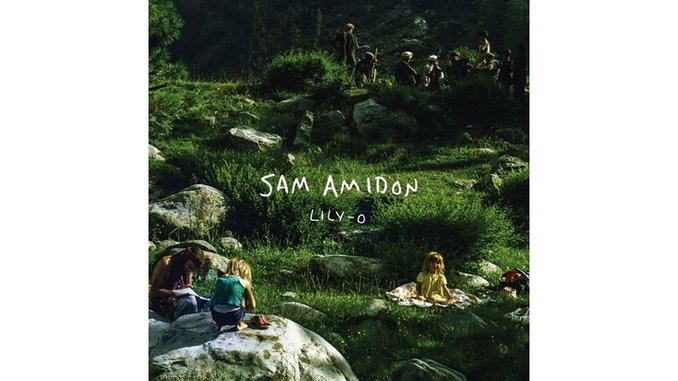
Blue Mountains – Sam Amidon

Sam Amidon is an extremely creative American Folk singer, and is currently producing music. He is a beautiful storyteller through his words, melodies, and music videos. Let’s look at the song “Blue Mountain” from his 2014 album entitled Lily-O. This album is a very beautiful work in its own and has top notch musicians on it consisting of Bill Frisell, a legendary jazz/folk guitarist.

The lyrics to Amidon’s Blue Mountains come from a traditional folk song called “Across the blue mountains,” although he leaves out quite a bit of the middle part. The song tells the story of a married man who asks a younger girl, Katie, to run away with him and cross the blue mountains. I think the music video to this song is an excellent representation and addition to the feelings conveyed in the song. In the music video, there is an almost slow motion and nostalgic effect happening. The video mostly consists of a girl (Katie) lying on the ground and going through some sort of conflict. This conflict is in herself, as she has to choose between being safe at home or running away with the love of her life. Her expressions and motions broadcasts the innocence of being a younger woman running away with an older man. In the original lyrics of this folk song, there is a part that Amidon left out that shows how Katie’s mother is desperately trying to talk her out of it. Although Katie’s mother is never mentioned in Amidon’s version, I believe her mother can be seen in the video. At around 3:58 in the video, we can see Katie on the ground with two pairs of arms reaching out to her. She crawls into one pair of arms that belong to the man she is running away with. However, I believe that the other pair of arms is meant to be her Mother’s, as she does not want Katie to go. This video beautifully illustrates the conflict that Katie must face between the love of her life and home. This video adds to the story of the song in a positive way.

“In spite of subject matter that’s often dark, the music on Lily-O somehow feels deeply reassuring (NPR). The music video to Blue Mountain also contains a sense of reassurance, especially with the focus on Katie and the objects around her. Specifically, hands bring by miniature horses and houses that go along with the story being told. The expression of Katie’s face reflects wonder and reassurance that she’s making the right decision by running away with him.

I believe the sign of good art (music or visual) is when it brings a feeling of nostalgia even when it’s the first time you’ve been exposed to it. In an interview, Joni Mitchell said something along the lines of “If you hear my music and you see me in it, you’re missing the point. If you hear my music and see yourself, now you’re getting something out of it.” With Sam Amidon’s Blue Mountain, I definitely see myself in it, and others do too. A YouTuber named Pikasde commented “I don’t know why but it reminds me of my first love. TY Sam for bringing back those emotions. Just thank you.” I think it is beautiful that a piece of art and film can stir up such emotions. Others commented “thank you sam, magic piece of film here (Brendan Timmons)” and “wat an amazing expression of feelings..man this video just rocks..(Vishal Nagabhushan)” and more. It seems that the reception of this video has been generally positive and people describe it as magical. I would describe it as magical too.

I believe this music video adds to Sam Amidon’s musical experience in a positive way. The film plays an important role in the storytelling, as it goes beyond what the words say.

Oh My Gods Is That Led Zeppelin

This past weekend I went to see the new Thor movie with my dad, and one thing I really liked about it was the soundtrack. As a trombonist I’ve always been a fan of the rather epic soundtracks associated with sci-fi and adventure films, but this one was enjoyable in a much different way. The soaring french horn melodies as the heroes descended onto the battlefield were replaced with driving rhythmic beats and synthesized sounds mimicking the 1980’s, the dramatic choral accompaniment when the villain ascends the steps of the castle were replaced by the sounds of Led Zeppelin’s loud guitar chords, and the beautiful love themes were replaced by pulsating synthesizer underneath edited vocals.

The most interesting thing I found in the movie was the transition. It begins with a fairly normal soundtrack, but slowly begins to switch over to mainly synthesizer. The first scene of the movie I noticed this was when Thor’s father dies and that event triggers the arrival of the movie’s main villain, Hela. As Odin fades away, the music turns to a minor setting as Thor grieves his loss (around 3:11). Then as the music gets darker and the portal from which Hela arrives opens, the earthy woodwind/string sound slowly gets replaced by heavy brooding brass and synthesizer. They begin to fight and the synthesizer is there, but very low and still not a main part of the score until Thor arrives on the alien planet, this is just the first instance where I noticed it’s presence and the effects of it.

Once Thor arrives on the alien planet of Sakaar where everything is 80’s colored and exciting, the music really blows up with electronic sounds. From here on out the movie is very electronic sounding and it creates a very different experience than what a normal Marvel fan might expect. I think for me at least the integration of the orchestra and the synthesizers was extremely cool and effective. The music was written by Mark Mothersbaugh, and he has stated that he combined his knowledge of synthesizers from Devo with his knowledge and access to a 100 piece orchestra to create the score.

The video I chose is a teaser trailer for this film. I particularly like this trailer because it highlights this transition of old to new in terms of score. The trailer begins with Thor hanging by a chain and voicing over, while a quiet choral interval is repeated in the background. As the scene fades and Thor begins to explain some background, the Led Zeppelin comes in nice and strong. If you go back and listen to the opening of the trailer you can hear that the choral interval is the same exact interval featured in “Immigrant Song”‘s iconic call. Also if you go back with the knowledge of the upcoming Immigrant Song, you can hear the drums very softly present underneath the chorus. This trailer does a great job in my opinion of integrating the new and old styles of soundtrack from the dramatic orchestral score to the similarly dramatic and maybe even more exciting rock and roll background music. Even though the Led Zeppelin music had different connotations with it’s release and wasn’t written specifically to match this scene of film, it’s effects are similar and even more effective in many ways. This could be possible because of the nordic connotations already in the song and the fact that it’s supposed to be “powerful and funny“, something the movie strives for in itself.

These are some comments that I thought sum up my point very well. The first uses some crass language to describe the popularity of the movie and associates it all with the music, while I don’t necessarily agree with them because who knows what the music is going to be like before watching? But whatever. The second goes as far to place the music over the aesthetic attraction to Cate Blanchett! I’d say that’s a pretty cool statement in today’s sexist world of stupid men who love fighting movies with pretty women in them. Finally the third comment reveals that the song is also used in the movie and even though it is repeated, it’s presence only amplifies the experience! That’s cool, sometimes things get overused.

All in all I thought this movie was pretty cool, and it’s use of both orchestra and synthesized sounds made it a very interesting aural experience for me. I urge you to watch the movie and even listen to the soundtrack!


Zach Hill’s “The Sancto Smile”

Zach Hill is a drummer and visual artist from Sacramento that has been involved in numerous influential bands throughout the last 15 years including Hella, The I.L.Y’s and Death Grips. This particular track comes from his self released album, FACE TAT. His music is generally stupidly fast and has a crazed energy to it. It also should be said that his drumming chops are borderline too good.

https://www.youtube.com/watch?v=nCWiogdCMY0

The music video for “The Sancto Smile” stuck out to me because of the rapid camera movement as well as the general plot of the video. The plot is relatively straightforward; a girl goes crazy with rage all of the sudden and starts breaking everything and disrupting the peace around her. She also starts making out with herself in the mirror, steals and blows up a car, and gets into other sinister things. The plot is accelerated by shortly cut clips of video linked together in rapid succession. This fits nicely with the plot and the music, which is also fast and features indecipherable lyrics and quick interruptions of noise within the song. The video is also interrupted repeatedly with closeups of her making out in the mirror and paint peeling off a wall as she carves an upside down cross in it with a knife. I’m not sure if there’s any deeper meaning to this video.

Most people in the comments were fans because of the relative obscurity of this video/artist. People are sharing background information on the actors and making jokes mostly, nothing analytical. “Herbert” wants to talk about the explosion effect on the car, which was understandably done cheaply. “Gabriel Molina” notices that an actor in the video was another member of Death Grips, Andy Morin. “The Scare Pusher” realizes that this video is an excerpt from a longer project, “California Bird Dudes”.


Overall the comments make you realize how close knit fans of different artists have become, and how segregated different styles of art and the artists of these groups are. You realize that all the people in the making of this video are supporting each other in each individual’s artistic endeavors, which is not immediately apparent. This re enforces the fact that making connections with like-minded people early on is essential.


Even though this video was made 7 years ago it still brings up the question about where this style of music could go from here. It seems like the music has gotten as fast and crazy as possible and is on the verge of exploding. Fortunately, soon after the release of FACE TAT, Zach Hill met rapper Stefan Burnett and brought his talents and ideas to Death Grips, making radically different music.

“The Sancto Smile” also shows that music videos can now be easily made by independent artists on their own terms, and can be made for lots of different songs without much cost. For example, the Death Grips album, “Government Plates” features a music video for every song. Artists can now easily intermingle their musical art with their visual art. With this there will and already have been music videos that are basically short movies centered around a song. Kendrick Lamar has done this as well as many others. Combining and mixing more than one song into what becomes a short film. I’m still waiting for a single video to accompany a whole album.


When listening to and becoming a fan of a style of music nowadays, you’re throwing yourself into a whole culture and way of life that includes music, fashion and visual art, and as I’ve said before these different cultures will multiply and segregate as the internet allows people to satisfy themselves the niche or niches that are just right for them.

https://en.wikipedia.org/wiki/Zach_Hill

https://en.wikipedia.org/wiki/Death_Grips

https://en.wikipedia.org/wiki/The_I.L.Y%27s

https://en.wikipedia.org/wiki/Hella_(band)

https://www.facebook.com/deathgripz/

The Politics of 1960s “Free Jazz”

Regardless of the intentions of individual artists, in times of struggle and political there will always be a demand for music to be a part of that struggle. When the public hears a music that seems like a good voice for the struggle, the public will latch onto that voice. There will also be later artists that are more politically driven and use the previously worked out art as a platform for their rhetoric.


It took a few decades for the theory atonality pioneered by people like Schoenberg and Webern in the 20s to permeate into the realm of jazz. The earliest evidence of atonality in jazz showed up in the music of Lennie Tristano in the 40s, and a few years later in the music of the “Third Stream” movement, an attempt to bring classical and jazz together. But there is a big difference between atonal jazz and Free Jazz. Composers and performers of early atonal jazz inserted elements of contemporary classical music into their writing and playing. The atonality in Free Jazz came simply from an advance from the highly chromatic music of bebop to free tonality. Free Jazz originated entirely from previous jazz, and the language developed entirely through improvisation. Another point that might be noteworthy is that the first people to bring atonality into jazz were white, and “Free Jazz” was invented by black people.

In 1961, Ornette Coleman released a groundbreaking album entitled “Free Jazz; a Collective Improvisation”. This album not only gave a name to the type of music the likes of Ornette Coleman and Cecil Taylor had been putting in motion for the last five years, but also segregated the listeners, critics, and very culture of jazz and influenced countless artists, each using the pillar of “Free Jazz” differently, notably John Coltrane and Peter Brotzmann.

https://www.youtube.com/watch?v=xbZIiom9rDA

What was so controversial about the album was that while it maintained traditional jazz instrumentation, it was almost completely improvised and featured a double quartet; one quartet in each channel so the music is difficult to listen to if you have never heard anything like it before. This improvisational free gave power to the instrumentalist in the creation of melodies as well as form.


The music’s upfront and powerful sound as well as its name, Free, being similar to the freedom riders and freedom schools made it immediately associated with the civil rights movement, regardless of the intentions of its creators.

While the album “Free Jazz” was not explicitly related to civil rights or black power, it inspired other artists that were, in particular Archie Shepp and Max Roach. Both artists released albums containing politically charged music, for example Roach’s “We Insist!” and Shepp’s “Fire Music” and “Attica Blues”.

At the time “Free Jazz” was considered forward thinking, but some people have considered the movement to be a return to roots. The highly chromatic harmony of bebop was disassembled, and in many free jazz albums there was a return to multiple instrumentalists soloing together, harkening back to the dixieland days. Many free jazz artists were also exploring the roots of different music from around the world, particularly africa. This relates to the black power movement’s rhetoric of a critical look at western culture.


In the end, Ornette Coleman didn’t intend for his album to be politicized, but it was the perfect voice in a time of struggle, and therefore became iconic. However, it is dangerous to look at the music through this lense of politics, as it distorts the original intentions of the artists such as Ornette Coleman. His music is beautiful in its own right and doesn’t need to be attached to a movement.


http://www.furious.com/perfect/jazzpunk.html

https://en.wikipedia.org/wiki/Free_jazz

https://www.allmusic.com/artist/ornette-coleman-mn0000484396/biography

Politics in music

      There are many mediums in which we can express political opinion, whether it be marches, boycotts, the possibilities are endless. In every single case, each advocate expresses their motives through the medium that is most accessible way that will have the highest chance of making their voice heard. Politics in music has been the most literal way for a lot of composers and performing artists to get their views and beliefs across. With substantial followings and the eloquent skills in presentation often times these artists have been able to successful spread their message to millions of people across the globe. Composers throughout history have written grandiose works to express political thought, Dimitri Shostakovich was one of the most notable composers of them. To this day we have mainstream artists utilzing their music to deliver powerful messages, and in this blog I will discussing Macklemore and Ryan Lewis’ hit song, “Same Love”, and his message of support to the gay community.

      “Same Love” is an incredibly powerful song with extremely substantial lyrics. The song starts with sustained string chords and a simple piano progression, and Macklemore opens with a simple rap-monologue that contemplating what it means to be gay, and digs into the common misconceptions about homosexuality. Although Macklemore (Ben Haggerty) is straight, he felt pressure that he must’ve been gay since he was artistic, tidy, and that his uncle was. He doesn’t hold back any punches and calls out right-wing conservatives as well as the conservative christian community in his lyrics “The right-wing conservatives think it’s a decision” and “America the brave Still fears what we don’t know, and God loves all his children it’s somehow forgotten, but we paraphrase a book written 3,500 years ago”. He criticizes the people who refuse to open their minds, and who are still stuck in traditions while using specific religious interpretations to suit their needs. The chorus is especially chilling when Mary Lambert’s erie voice enters singing, “And I can’t change, even if I tried, even if I wanted to”. The lyrics lets us know that being homosexual is a natural part of someone’s identity, and it’s not just a lifestyle people choose. Macklemore’s second verse attacks the negative connotation that has unfortunately developed around the word “gay”. I’ve seen it in the world around me when you hear someone exclaim “that’s gay!” when describing something they think is dumb or disagree with. None of the other definitions of the word offer anything remotely close to being contextually correct with that statement. It is purely disrespectful and shaming of homosexuality, and it is saddening to hear it being used in modern dialogues. Macklemore states, “Our culture [was] founded on oppression”, which is scarily accurate. It started with the Native Americans, continued through the use of slavery and segregation of Non-Whites, and continues today with people of different orientations. Reading the article on Dennis Prager just shows that this hateful ideology is still alive today. He claims that same-sex marriage is detrimental to classical music and Western Culture. He also believes that “Heterosexual AIDS has been entirely manufactured by the Left”, and you can read all about this radical claim here. Of course I disagree with this claim, and I’m sure Georg Friedrich Handel, Pyotr Ilyich Tchaikovsky, Aaron Copland, Samuel Barber, Benjamin Britten, Leonard Bernstein… the list goes on and on. All the composers above have had a significant impact on the advancement of Western Culture, and have created some of the best musical works audiences have ever enjoyed. Dennis Prager is the definitive example of the type of hateful person Macklemore describes in his song. Macklemore’s lyrics open a curtain to the harsh reality of the depressing thoughts of the community and the hateful resistance that has been around since civilization began, his song prays for peace and urges people to hope and work for a better tomorrow.

Macklemore and Ryan Lewis masterfully created a piece of art that would make it to phones and music players to millions of people internationally. With 182,087,438 views on their YouTube music video, the song went insanely viral. The duo serve as modern day political activists by operating in the medium that gets their message the most attention and traction. The song supports the gay community and helps raise awareness to take down pre-existing oppressive power. Whether you believe politics should or shouldn’t be in music, there is no denying that it has found a place in it, and has been some of the most effective way to spread love and significant messages to millions of people.


Also it is fun to note that at the Grammy Award Ceremony, Macklemore and Ryan Lewis performed “Same Love” (Even though the song lost Song of the Year  to Lorde’s “Royals”, they still won best rap album and “Thrift Shop” won for best rap performance and rap song) with Mary Lambert, Trombone Shorty, Queen Latifah, and Madonna. At the end of the last verse, Latifah presided over a wedding ceremony where 33 audience members both gay and straight exchanged rings, where at the conclusion of “Same Love”, Madonna makes her appearance singing “Open Your Heart” over the same groove of “Same Love”. (http://www.songfacts.com/detail.php?id=28073)