
When I first decided I wanted to play an instrument, I went to an instrument “try-out” day at my town’s local music store. I first tried out a flute, then a trumpet. Then I moved on to strings and picked up the violin. I remember that the sound of the bow against the strings was painful to my ears. A few minutes later, I walked over to my identical twin sister, who was smiling at what looked like a big violin. “Let me try!!!” I said, and I put the viola on my shoulder. I drew two bows on the D string, then two on the A string. Thinking, “OMG, I can already play Twinkle Twinkle Little Star”, I told my mom and sister that I wanted to play viola. My twin sister did too! As you can imagine we played a lot of viola duets over the next several years.
As a violist, I am used to the reputation this instrument has in the music world. In an orchestra, the viola plays a supportive role. Seldom receiving the melody, violists learn how to play harmony very well. When we received this blog post assignment, I knew I wanted to discuss the history of this instrument because there is a lot that goes untold (and unknown). Though, I am biased, I feel the viola’s importance should be projected. What other instrument sounds like caramel and chocolate when it’s played well?!
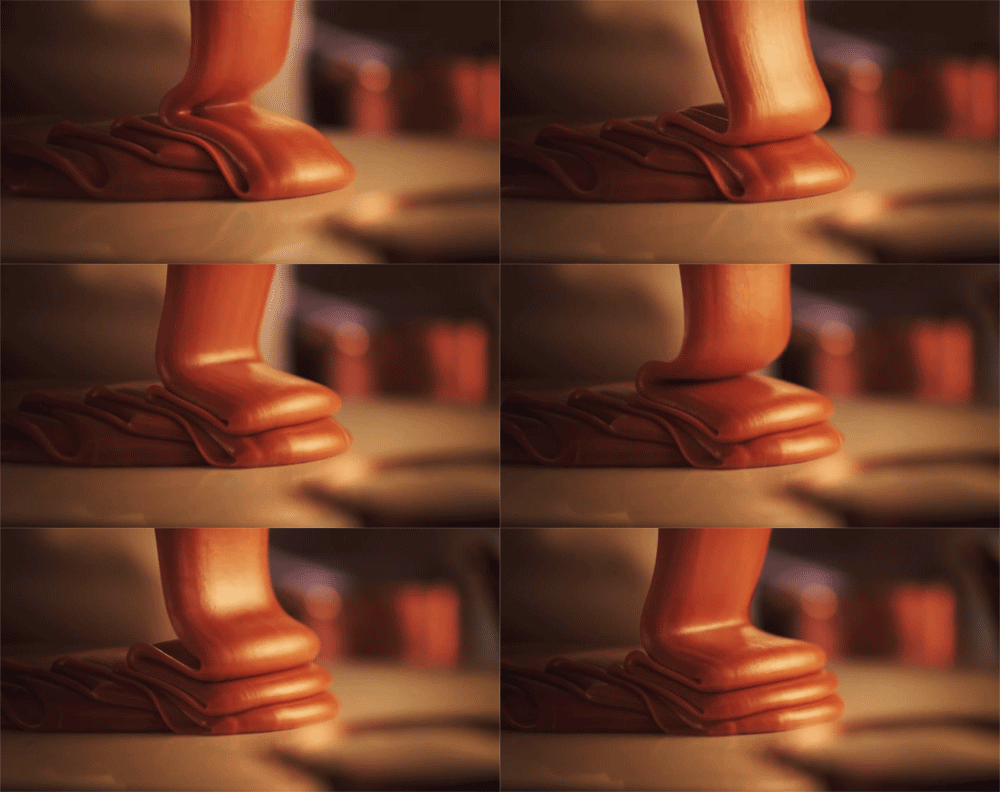 Click to play
To emphasize this gif, here is a recording of one of my favorite pieces (and one that shows off that caramel sound of the viola). Just listen to the first 30 seconds- that’s all you’ll need.
Let us go back to sixteenth century Italy. The viola is a member of the violin family, but there is no clear answer to exactly when this instrument came to be. According to the Vienna Symphonic Library the role of the viola came defined when demands for instruments that would fill out a room with sound for Baroque Opera became necessary. String instruments were often made in different sizes with the same tuning, so when a need had to be met to split the registers and have another instrument played “da braccio” or played on the arm, the viola was born.
Composers soon composed for sections to mimic the human voice (parts separated by bass, tenor, alto, and soprano registers). Naturally the viola falls into the alto category, and makers had to continually experiment to “find the optimal combination of tone, size, shape, and range to compliment the current trends in orchestra and court music” .
The viola is often misunderstood in terms of size because there is no standardized system for measurement. This makes the viola imperfect acoustically, because in order for the most amazing sound to be achieved, the body of the instrument would have to be huge (and therefore unplayable). Today there are many makers who experiment with string length and the size of the body to achieve the optimal effect. Usually, people with longer limbs and fingers play larger violas and vice versa.
A huge advance in the viola-making world came with the modern bow. Francois Tourte , a Frenchman, is often credited with many string instrument advances but the modern bow is especially important to violists. Because a viola responds less quickly because of the thicker strings, a modern bow allows for more tension between that hair and the strings. This means violists could actually project(!). Soon, the role of the viola became increasingly important in chamber music and the first solo pieces were composed for the instrument.
I encourage you to watch this TEDx talk specifically about the viola. This talk is great because there are frequent playing examples as well as great facts.
Today, there are many amazing solo violists who have created a beautiful new reputation for this instrument. Some of my favorites, including Kim Kashkashian, Nobuko Imai, Yuri Bashmet, etc. have inspired not only violists around the world, but also composers to write new and challenging works for this instrument. In the last decade new commissions and transcriptions have taken off, carving out a new path for this instrument. In this article by TimeOut New York, Steve Smith writes of new CD releases that deserve attention, honing in on many new contemporary works.
Past the viola jokes, I believe we gain a lot from understanding the technology of this instrument, and how it came to fruition. It is important to consider that instrument makers in the 16th century may have had some of the same musical concerns that instrument makers and composers have today, and that the means of creating music are constantly being improved upon.
Hi Rachel! I really enjoyed your blog post because of how personal you made it. I feel like I can relate to some of your experiences because I actually played the viola before coming to Eastman. Like you, I chose to play the viola after realizing the violin’s sound wasn’t quite the same. Your description of a viola sounding like caramel and chocolate couldn’t have been more accurate! I also loved the piece you chose to include to represent the sound. I learned a lot of new things about the viola after reading your blog post. For example, I never knew exactly how or why the viola originated. I also didn’t know that Kim Kardashian played the viola! It’s funny you talked a little bit about size and measurements of the viola, because I agree that it can be very misunderstood. Growing up the violas I played were always either too small, or too large. I liked how you tied it all together at the end by saying that music is always going through improvements. It’s interesting to think that some people are still creating instruments to give the music world both something it may need, and something its never seen. Great job, I loved reading about the viola!
Also oops on the Kim Kashkashian mixup! I thought she played the violin 🙂