
Jazz music has historically been a part of a much broader culture, specifically with African Americans. The music has unified communities, protested injustice, and most importantly been a vehicle for self expression.
Integration in Jazz Bands
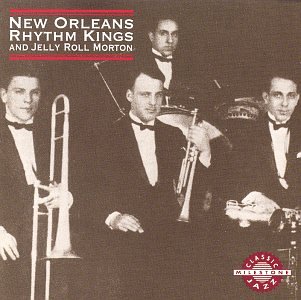
While jazz has influences of spirituals and work songs, it also has a heavy influence of western European harmonies. However, it started as mainly an African American art form. As technology prevailed in the early 20th century, the recording studio and invention of the radio became a significant way for black musicians to be heard. “Opportunities were given to black musicians by the radio and recording industry and popular black bands were promoted as long as there was a demand for jazz music by white Americans.” This was an important leap forward socially for black Americans, as the demand for jazz music was high. Another thing that occurred in the realm of jazz was the integration of orchestras and bands. Back then, it was common to have all white or all black jazz bands. However, these bands started to become integrated around the 1920’s. Black musicians would play in white bands and vise versa. One of the earliest examples of this integration was when Jelly Roll Morton, a famous creole. pianist, recorded with the Rhythm Kings, a white jazz band. This was an extremely unusual since people of any color in America were harshly discriminated against. Jazz culture was a beautiful thing because in a world where there was crude social injustice against the underrepresented minority Americans, jazz culture began to promote unity in some ways.
Jazz and the Civil Rights Movement
In the 1960’s Jazz had collided with the civil rights movement. Jazz had gone through many transformations by this point since the beginning of the 20th century. The evolution started mainly with New Orleans jazz, then evolved into swing/dance bands, and then bebop, cool jazz, and hard bop. In the 1950/60’s, an emergence of free and avant garde jazz occurred. (This is a generalization). One of the main leaders of this new music was Ornette Coleman. Free jazz was all about the individual, and the freedom of expression as it delineated from traditional forms of jazz and music in general. In the 1960’s the civil rights movement came into place. There was a huge reaction to this movement in the jazz community, as many black musicians made their voices heard through their music.
An example of a musician reacting to this was John Coltrane’s “Alabama,” which he wrote about the Birmingham church bombing in 1963.
In 1959 bassist/composer Charles Mingus recorded an album entitled “Ah Um.” This album had a track on it called Fables of Faubus, which was a response to Orval Faubus’ prevention of nine African American students’ attendance of a school in Arkansas, even after Eisenhower integrated schools in America. Fables of Faubus was a part of the civil rights movement, and here are the Lyrics:
Oh, Lord, don’t let ’em shoot us!
Oh, Lord, don’t let ’em stab us!
Oh, Lord, no more swastikas!
Oh, Lord, no more Ku Klux Klan!
Name me someone who’s ridiculous, Dannie
Governor Faubus!
Why is he so sick and ridiculous?
He won’t permit integrated schools
Then he’s a fool!
Boo! Nazi Fascist supremists!
Boo! Ku Klux Klan (with your Jim Crow plan)
Name me a handful that’s ridiculous, Dannie Richmond
Faubus, Rockefeller, Eisenhower
Why are they so sick and ridiculous?
Two, four, six, eight:
They brainwash and teach you hate
H-E-L-L-O, Hello
Musicians like Charles Mingus, John Coltrane, Nina Simone, and more made their voices heard through powerful music that was written in response to the civil rights movement of the 1960’s.
Unfortunately, there is still a great deal of social injustice against African Americans today, and we keep seeing responses to this all over the place. Recently, the quarterback of the San Francisco 49ers ,Colin Kaepernick, sat while the national anthem was played. He said that “I am not going to stand up to show pride in a flag for a country that oppresses black people and people of color.” This is an example of a modern day response to the injustice at hand. Kaepernick wanted to make a statement, so he refused to stand during the national anthem. This is not unlike how certain people reacted through music during the civil rights movement. “To me, this is bigger than football, and it would be selfish on my part to look the other way. There are bodies in the street and people getting paid leave and getting away with murder,” Kaepernick said. Whether it is through sports or through music, it is important that underrepresented Americans of color have their voices heard. We have seen this been done through music during the civil rights movement, and in protests worldwide. Through media, more and more people are being informed of the problem at hand every day.
Nate, I thoroughly enjoyed this blog about the involvement of jazz in social rights. It is undoubtedly true that jazz has played an active role in being the voice of mistreated musicians, and more specifically like you said, African American musicians. I had never heard that Mingus tune, and was very surprised at how outwardly and even aggressively political it was, despite that being typical of Mingus’ character. It is interesting to note the parallels between prominent figures in sports as well as music speaking out about civil rights, as both serve as a very effective and wide-reaching platform. However, music proves to be a much more creative outlet, especially when talking about musicians such as Ornette Coleman and John Coltrane. I always find it interesting that, despite the demand for jazz music increasing in its early stages, there was still intense segregation and mistreatment of musicians just based on their skin color, despite any level of incredible musicianship. However, jazz definitely served as a bridge for musicians of different skin colors to unite through music. If only this was true 100% of the time..