The Power of Sight and Sound

Music has always been something that we, as humans, have listened to. Unless we were watching a live performance, music has solely been aural however within the past 40 years, artist have begun adding video performances to add a different artistic perspective to the song. Often, these videos have been used to show live performances of the band, or create an artistic vision of the song, however in recent years, these music videos also create a story for the song and expand on the lyrics even more which can evoke a large range of emotions in people.

Music videos began growing in popularity in 1981 after the opening of MTV which aired new and popular videos on a weekly TV show. Although MTV was not super successful to start out, it grew in fame after many of Michael Jackson’s songs were aired on the show. One of the first music videos that really stood out to producers and fans and helped propel the music video business forward was Michael Jackson’s “Thriller” video. The actual song starts about 4 and a half minutes into the video, and everything before then paints a small scene to make almost a miniature movie out of this hit song. After this video came it, it began to change the way artists viewed their own songs and how they wished to portray the thoughts and emotions they were feeling while performing. Other artists began using MTV as a way to increase their recognition as an artist, which worked for many of them. Madonna took this approach as well as Duran Duran and Peter Gabriel, all of which are big household names to this day.

This remained a way for artists to both release their music to a wider audience while also adding a new artistic outlook to their songs for a while, however as MTV began to decline, the internet began to grow and a little thing called YouTube emerged, which became a new medium for artists to create and share music videos on.

YouTube ironically began as a website where the creators had hoped people could post videos of themselves and meet others, almost as a dating website. However, this was not favored by many people so the three creators took their idea and decided to keep the foundation, but change the videos from ones of a dating profile to funny TV or news clips people were always searching for: the idea was a hit and the website took off. Although YouTube began as a platform for people to post dumb videos, artists began to use it as a way to post their music videos in hopes that if enough people saw it, their career could take off. Other artists posted their videos there so that it could reach a broader range of people. No matter their reasoning however, YouTube became a very prominent place to succeed as an artist and has only grown as such in recent years.

One of the newer musicians these days who uses YouTube as a means to spread their music and music videos is the rapper Lil’ Dicky. He is known for his songs “$ave Dat Money” and “Lemme Freak,” however his song “Molly” which features Brendon Urie (the lead singer of the band Panic! At the Disco) is emotionally haunting and these emotions are highlighted in his music video.

Born David Andrew Burd, this rapper claims he was extremely awkward in high school (weren’t we all though?) and didn’t even get into rap until his later years. He gained popularity because he chooses not to rap about the typical “rap topics,” but instead about his own life, even going as far to make fun of himself on a regular basis. This is why is song “Molly” is so hauntingly depressing.

After listening to the song, yeah, it’s upsetting, but once you watch the music video, the tears will start flowing. The song is about how Lil’ Dicky was dating a girl named Molly, but she became fed up with his constant need to put rap above her, so they broke up and now, years later, he’s at her wedding watching her marry a different man even though he still loves her. In the song, he basically says he regrets everything he ever did to her but knows that she deserves someone better.

Obviously, anyone with a heart will sob watching it. Although the song itself is sad, the music video adds a second layer of emotions and deepens the understanding we have of the situation. The video is similar to Jackson’s “Thriller” as it begins with an opening scene which then leads to the music and creates a small movie out of this one song. The trick to this video however is that in the opening scene, the viewers expect that Lil’ Dicky is the one getting married, and it isn’t until the chorus of the song enters for the first time that we are all sorely disappointed. Had the chorus and the images not lined up at that exact time, the video may not have had the same effect. Everything in this song lines up with a scene in the video that helps portray the lyrics in a more expressive manner. This allows the true emotions of the song to emerge in a way where it is very obvious to viewers and affects them in a strong way.

Now, without looking at the comments, I could assume that I am the only person who had such a strong reaction to this video, however many people did comment and it is very obvious everyone had a similar, heartbreaking reaction. One person commented “Didn’t expect such emotional music from Dicky.” Another person commented “God damn this got me good…” and someone else said “Damn Dave… This shit is deep, has me all up in the feels. Much respect homie.” Although not all of the comments have to do about the emotions of the music, those that don’t are really only talking about the featured artists in the video. Virtually everyone who commented on here said something about how deep this song is and how the video is very misleading, which only makes it more emotional in the end. One reactor made note of how they felt fine watching the video until 1:50 into it, and thats when they were dumbfounded and began to cry.

Although the song on its own is fantastic, the music video for “Molly” just adds many extra layers to it helping portray the emotions Lil’ Dicky hoped to express. The video with this music creates a story and a powerful image for viewers which evokes a lot of strong reactions out of people. The addition of this music video allows viewers to not only experience Lil’ Dicky’s emotions aurally, but also visually, and usually people are more keen to grow attached to something while both viewing and listening. The video for this song, and many others, adds another dimension and allows the artists to be creative and even more expressive than if they were to just record audio which is why music videos have stuck around and are still spreading artist’s songs across the world to a large base of people.

Fell in Love with a Stupid, Ridiculous, Painstakingly Difficult and Time-Consuming Medium

Unless you’ve been inhabiting the space under a rock for the last half-century or so, you’re probably familiar with a certain wildly successful Dutch company known as Lego. Lego has captured the imaginations of millions of children (and adults) worldwide with their system of stackable colored bricks, offering endless possibilities for creation and even more endless opportunities for toe-stubbing. If you actually are unfamiliar with Legos, their website might give you some idea as to what I’m talking about. In any case, you can understand the ubiquity of this toy, its iconic status in popular culture. This status makes it all the more impressive that an artist could take this toy and use it in ways not previously conceived of, could re-appropriate it for artistic purposes in a totally novel way.

At first view, one might be tempted to believe that the “Fell in Love with a Girl” video is the product of some kind of pixelation filter applied to an otherwise-normal music video. However, in a style similar to claymation (a la Wallace and Gromit created by Nick Park – watch this video if you’re unfamiliar, it is well worth your time) the video was in fact created frame-by-frame with real Lego sets, shown in rapid montage to give the illusion of movement. Why this artistically bold-yet-inherently childish style for the video? The lyrics to the song suggest a kind of paradoxical struggle between love and lust, with the narrator trying (and failing) to distinguish between the two. Perhaps this duality is meant to be expressed by the silly-yet-complex Lego animation. Perhaps the depiction of people with small plastic bricks is meant to convey the humanizing force of love versus the more animal force of lust. Indeed, the people depicted in the video (often Jack and Meg White) are often stark white – is this a sign of ghastliness or purity? (It should be noted that they are rather pale in real life as well, though…) Or perhaps, and in all  honesty this is where I would put my money, this song was chosen for the Lego video because it is incredibly short.

The collective hive-mind of YouTube users tends to agree with this assessment. TheAndrewj96 writes: “THIS SONG IS TOO DAMN SHORT. You can’t put this much kickass in a song and just make it less than two minutes in length. I mean, this should be at least three minutes long.” Andrew J raises an interesting point about artistic compromise here – is it okay for an artist to limit their output due to a labor-intensive medium? Andrew isn’t forthcoming about whether or not he has ever constructed an elaborate stop-motion Lego video synchronized to music, but in case he has, he makes a valid point. The song is relatively short, for better or worse.

Other viewers seem less perturbed by the song’s length, instead focusing on its status as something of an anthem within its genre. Nugie simply writes “Timeless punk jam.” This seems to say it all, in three simple words nailing down the White Stripes’ origins in punk as well as their rise to iconic status over the last 20 years, thanks in large part to bold and recognizable songs like this one. For some interesting accounts on how the band (Jack White in particular) developed this sound, check out this series of brief interviews with some of the band’s early associates and friends.

However popular the band has become, though, there is evidently some question about their place in history, as evidenced by comments like this one, from Memedkemal Aksoy roughly one year ago: “The white stripes was a legend in the 2000’s” While on the surface this appears to be a compliment to the band, it can be read as a thinly-veiled jab at the importance of the White Stripes’ music. Were they really only at this legendary status for one decade? Has the musical culture that once welcomed them since forgotten about innovations like “Fell in Love with a Girl”? In fact, often the White Stripes are excluded from discussions of their own genre, as in this article detailing the shape of punk music over the last half-century.

Indeed, the White Stripes have only made their way into the limelight of popular music a handful of times in their existence. But does this prove the assertions of nonbelievers like Memedkemal Aksoy? Or do legends come from beyond the realm of popularity, ascending by their art alone?

Ennio Morricone’s Masterpiece

I’ll never forget the first time I watched the movie Cinema Paradiso. I was a naive 7th grader who knew nothing about film or film music. I was in awe of the gorgeous soundtrack and the heartwarming story line.  It is by far one of the most beautiful works of art ever created, and my favorite movie. Cinema Paradiso changed my life forever by sparking my obsessive interest in movies, and the music that makes each one such a unique work of art. My life was changed once again by the music of this movie when I was in high school. A few summers ago I had the amazing opportunity to perform a Cinema Paradiso medley on tour in Italy with The Philadelphia All City Orchestra. I was overwhelmed with happiness and am still so honored that I got to play one of the most inspirational pieces from my favorite movie.

*WARNING: This post does contain spoilers* 

Cinema Paradiso is an Italian film directed by Giuseppe Tornatore. It follows the nostalgic journey of the main character Toto (Salvatore), a young boy who experiences friendship, love, and appreciation for film. The majority of the movie is told as flashback, from the memories of older Toto.

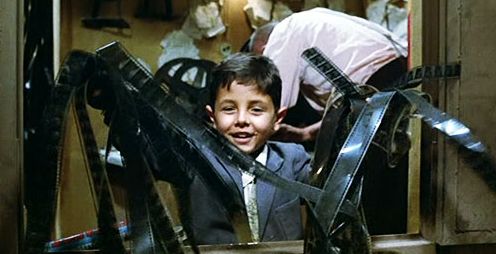
In my opinion, the ending scene sums up the overall beauty of the film. The music of this scene adds to the intensity of it’s visuals!  In this scene, Toto returns to his hometown after being away for 30 years. He is summoned back after hearing that Alfredo, his good friend and mentor had passed away. The ending scene and montage is a collection of all of the kissing footage Alfredo cut from the movies he showed at his theater when Toto was a kid. This footage was Alfredo’s final gift to Toto.

Many of the Youtube comment threads consist of both positive and melancholy reactions, like the ones shown above. I 100% agree with Franco Pozo’s comment that the ending is more of an experience (as is the whole movie)! Mo Rajabally’s comment is also very relevant with my relationship to the movie. I’ve seen it multiple times at different stages in my life, and each time I felt something totally new.

One of the many reasons this movie made cinematic history was because of the outstanding soundtrack. The music was written by the one and only Ennio Morricone, who is a world renowned composer. In the final scene of the movie, both the repetition of Morricone’s music and the kisses work well to create a unique emotional experience for the movie viewer. In my opinion it is the simplicity of both the music and visuals that trigger the most complex feelings. The music throughout the whole movie is phenomenal, and captures the mood of each scene perfectly. Morricone is also quite famous for his other soundtracks such as The Good, The Bad and The Ugly, and Gabriel’s Oboe. I would highly recommend checking out any film or musical score Morricone is associated with because they are all wonderful!

If you’ve never seen Cinema Paradiso or listened to the soundtrack, I would stop what you’re doing RIGHT NOW and let yourself experience it’s world. I can guarantee you won’t regret it.  I’ll leave you with this quote from Michael Patison’s Youtube comment regarding the final scene…

“The best scene from my favorite movie of all time. Unadulterated beauty. Every aspect of the filmmaking makes it wonderful: the careful clip selection embodying old Hollywood at its best, from passion to comedy; the tremendous performance by Perrin (his impact is far, far greater than his screen time would suggest (10minutes, maybe?); the entire, faultless film that precedes it and the stunning score (my favorite ever) by Ennio Morricone that ties it all together, reminding of the film’s past simply by playing the same general theme already played several times throughout. I’m not a cryer. Never have been, never will be. Like I really don’t cry at all. But I bawl like a newborn every single time I watch this movie and this scene. I’m just 22. Imagine how bad I’ll be crying thinking of everything it represents in 50 years.”

The wonderfully bizarre world of Yiddish Metal

A few summers ago, I and some friends were browsing YouTube for music to listen to.  One of my friends came up with the brilliant idea of searching for “Yiddish Metal.”  Without even hearing the music, the name of genre alone suggests something highly out of the ordinary – which the video I will discuss delivers upon in droves.  Apparently, the genre of Yiddish Metal is not a highly competitive one, as only one band – Gevolt is actually involved in it.

For this Blog, I will be looking at the official lyrics video for Gevolt’s Kokhotshet (I highly recommend watching the whole thing – it’s quite a unique experience):

In this video, and in many of their other works, Gevolt creates a unique flavor by combining traditional Klezmer melodies and instruments with the sounds of modern metal music.  What makes this video stand out to me it the way in which the lyrics are presented (and the random butterflies).  Note how throughout the video, the font and styling of the text changes – which may or may not relate to the meaning of the text.  However, as I am not a speaker of Yiddish, I cannot know for certain.

Note as well that there appears to be some general plot-line to the images presented along with the texts – from the introductory fields (and butterflies):

To the rush of crowds in the city (still butterflies):

And finally, to what appears to be an alien invasion (no butterflies):

While again, I do not speak Yiddish, and my attempts to translate the lyrics using Google Translate yielded mostly gibberish (predictable), I did gather the feeling that none of these images related to the text in any meaningful way!

So, the already rather surreal blending of klezmer and metal is only amplified by the weirdness of the accompanying imagery.  The combination of trombone glissandi and sudden synthesized beeps, or klezmer violin with amplified electric guitar is definitely not a combination that is often heard anywhere else, which is a shame.  This mixture of styles and forms creates a genre which is yet to be explored to its fullest potential.  When there is only one ensemble creating a musical style, it is hard for that style to expand and grow at rates that other genres are.  I assume that the reason that Yiddish Metal has not been expanded to a larger audience is that the initial audience is small, as there are not many Yiddish speakers in Israel (Gevolt’s home country).  Though, in a positive turn of events, Gevolt did perform in the MIDI music festival in china a few years back.  [check out their live vids on YouTube – they are quite bizarre]

Upon turning to the comment section in search of a few laughs (after all, it is YouTube) and maybe some further insight into this video, I instantly found that as expected, most comments were fairly useless.  About half the comments were either comparing the band to Rammstein or trying to comprehend Yiddish (an infrequently spoken language these days).  Then, there were some others which held no interest either.  Of the comments which I found interesting, the first one, from a “Noam Perlman” matched somewhat my initial reaction upon listening to Gevolt the first time:

Though, without quite as colorful language 🙂

My eventual feelings about Gevolt are now most matched by “Bubba Chunk,” who remarks:

However, in terms of actual analysis, I found most useful the thoughts of “Matthew Simpson”, who writes:

“Matthew” is probably correct in associating Gevolt to what he terms the “Yiddish Renaissance.”  While I would not call it just that, it is indeed true that Yiddish as a spoken language is beginning to make somewhat of a comeback.  It is then not so surprising that it would return to the realm of music as well.


Sources:

https://www.economist.com/blogs/prospero/2017/02/pr-ven

http://www.gevolt.com/

https://www.musixmatch.com/lyrics/Gevolt/Khokhotshet

https://www.haaretz.com/israel-news/.premium-1.813370

http://www.jpost.com/Opinion/Op-Ed-Contributors/When-Zionism-feared-Yiddish-351939

Blue Mountains – Sam Amidon

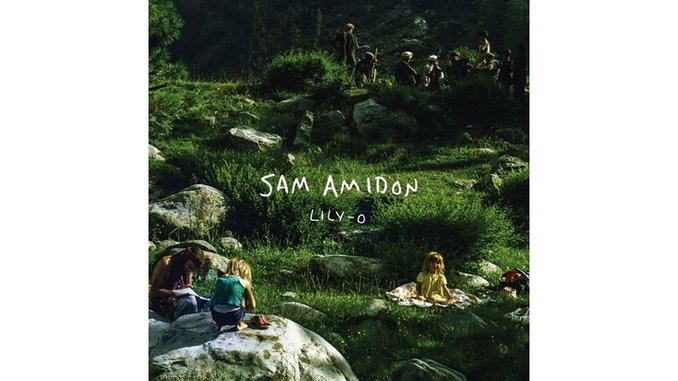
Sam Amidon is an extremely creative American Folk singer, and is currently producing music. He is a beautiful storyteller through his words, melodies, and music videos. Let’s look at the song “Blue Mountain” from his 2014 album entitled Lily-O. This album is a very beautiful work in its own and has top notch musicians on it consisting of Bill Frisell, a legendary jazz/folk guitarist.

The lyrics to Amidon’s Blue Mountains come from a traditional folk song called “Across the blue mountains,” although he leaves out quite a bit of the middle part. The song tells the story of a married man who asks a younger girl, Katie, to run away with him and cross the blue mountains. I think the music video to this song is an excellent representation and addition to the feelings conveyed in the song. In the music video, there is an almost slow motion and nostalgic effect happening. The video mostly consists of a girl (Katie) lying on the ground and going through some sort of conflict. This conflict is in herself, as she has to choose between being safe at home or running away with the love of her life. Her expressions and motions broadcasts the innocence of being a younger woman running away with an older man. In the original lyrics of this folk song, there is a part that Amidon left out that shows how Katie’s mother is desperately trying to talk her out of it. Although Katie’s mother is never mentioned in Amidon’s version, I believe her mother can be seen in the video. At around 3:58 in the video, we can see Katie on the ground with two pairs of arms reaching out to her. She crawls into one pair of arms that belong to the man she is running away with. However, I believe that the other pair of arms is meant to be her Mother’s, as she does not want Katie to go. This video beautifully illustrates the conflict that Katie must face between the love of her life and home. This video adds to the story of the song in a positive way.

“In spite of subject matter that’s often dark, the music on Lily-O somehow feels deeply reassuring (NPR). The music video to Blue Mountain also contains a sense of reassurance, especially with the focus on Katie and the objects around her. Specifically, hands bring by miniature horses and houses that go along with the story being told. The expression of Katie’s face reflects wonder and reassurance that she’s making the right decision by running away with him.

I believe the sign of good art (music or visual) is when it brings a feeling of nostalgia even when it’s the first time you’ve been exposed to it. In an interview, Joni Mitchell said something along the lines of “If you hear my music and you see me in it, you’re missing the point. If you hear my music and see yourself, now you’re getting something out of it.” With Sam Amidon’s Blue Mountain, I definitely see myself in it, and others do too. A YouTuber named Pikasde commented “I don’t know why but it reminds me of my first love. TY Sam for bringing back those emotions. Just thank you.” I think it is beautiful that a piece of art and film can stir up such emotions. Others commented “thank you sam, magic piece of film here (Brendan Timmons)” and “wat an amazing expression of feelings..man this video just rocks..(Vishal Nagabhushan)” and more. It seems that the reception of this video has been generally positive and people describe it as magical. I would describe it as magical too.

I believe this music video adds to Sam Amidon’s musical experience in a positive way. The film plays an important role in the storytelling, as it goes beyond what the words say.

Tyler, the Creator

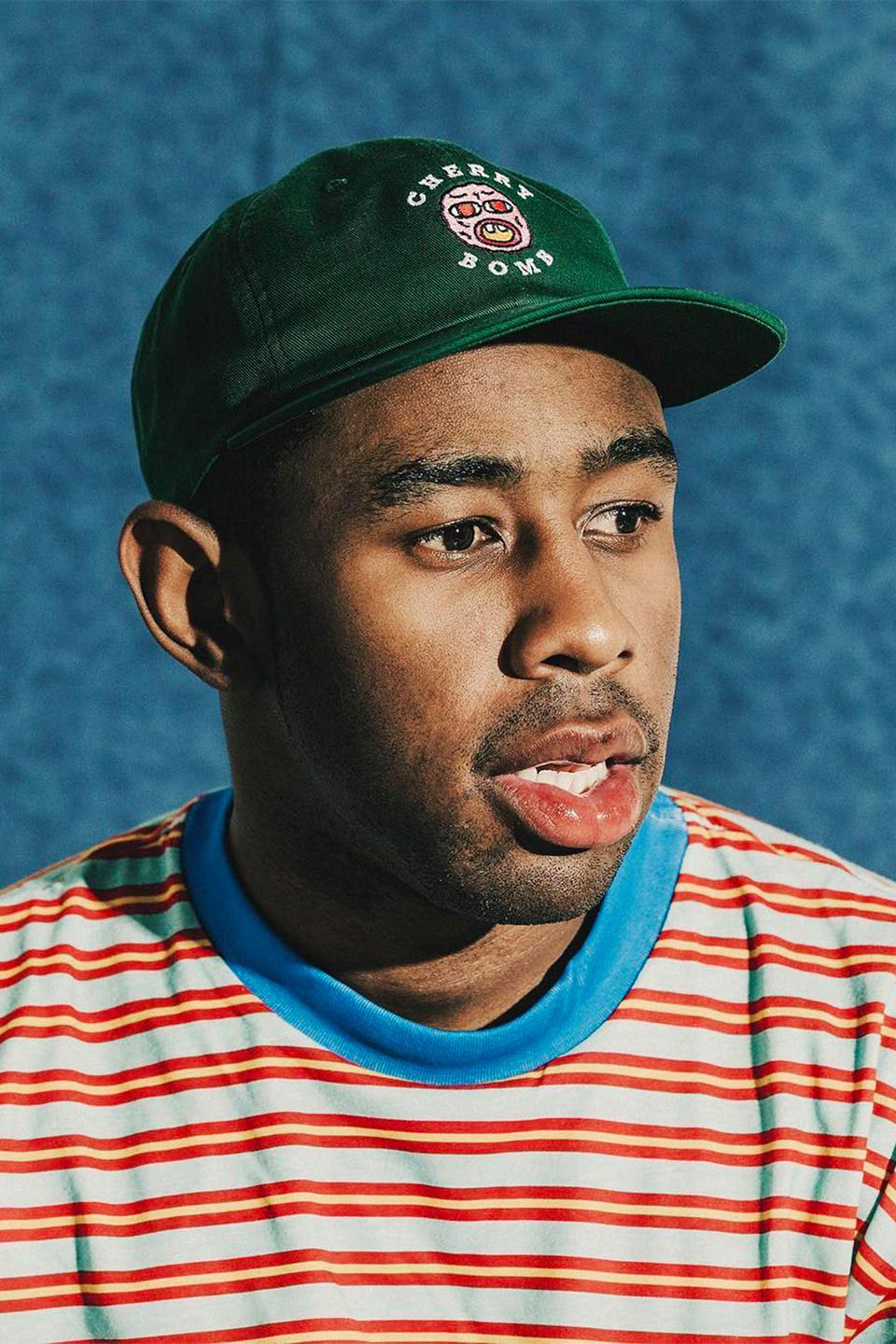
Tyler, the Creator is a leading figure in rap music as a rapper and producer. One of his most famous songs is called Yonkers, apparently based on the town Yonkers, NY. What is so interesting about this song is that everything contradicts itself, and the music video doesn’t seem to connect much to the lyrics. Many try to read between the lines to find deeper meanings, but Tyler always denies that there is a deeper meaning in any of his music. It is very easy to believe that something is more special than it is meant to be, and it seems to be very important to the listener that there is predetermined intent in the music.

Tyler, the Creator uses many techniques in his rapping that reminds me of some other artists we know in the classical world like Schumann. I find this because he uses characters in his pieces, the most important one being his alter-ego Wolf Haley, as well as a fictional therapist named Dr. TC. Much of his rapping uses extremely offensive slurs and plots, including rape and violence against women, and homophobic slurs. Yet Tyler always says none of it means anything, and it is all “simply…an admittedly absurd story that was never meant to be taken seriously”. He was one of the first to publicly support Frank Ocean when he came out, and has never been known to use violence. After knowing this about Tyler, the Creator, does it make sense to treat his music seriously or try to look deeper into his music to find hidden meanings?

Yonkers uses lyrics that contradict themselves at every turn. Starting at the beginning, “I’m a f***in’ walkin’ paradox – No I’m not”. These lyrics make no sense, but many in comments on sites used to describe what the song means, say that one of the sides is Tyler and the other side is Wolf Haley. All the contradictions are really happening in his own mind, at least that’s what the song is about. Many of the youtube comments however are very different, I found dozens that commented on the line “I’m not gay, I just want to boogie to some Marvin” suggesting that Tyler is gay (many of these comments came out because in Tyler’s new album he comes out as gay). “”I’m not gay, I just wanna boogie to some Marvin.” yah okay” – AKFORTYKAVIN.  Some comment on the contradictions between the lyrics: “the reason he did this is because wolf haley (the kid with button ups and shorts) is his evil self. if you look closely at the lyrics he is constantly contradicting himself, like him fighting against his other self. its pretty cool.” -DirtWormGames. But most just comment on how crazy they think Tyler is or how bad they think the song is: “Well f*** me, this was seriously bad all the way through. I came to this YouTube-account to understand what even makes this guy a thing to begin with, and I did not get any wiser. This was just terrible along with the rest of the things he made.” -IcaJerry and “This n**** still freaks me out to this day.”. 

The music video is quite simple. It is black and white picture, of Tyler sitting on a stool rapping with a cockroach that he eventually eats and throws up. His eyes then turn completely black before he hangs himself (shown by him knocking down the stool). It is interesting because it doesn’t really have anything to do with the lyrics, agreeing with what he said in his interviews about there not being any meaning behind the lyrics. A connection I do find between the video and the lyrics, is this conflict between Tyler and his alter-ego. You can see this when the video blurs back and forth between sides of him, and with the suicide at the end of the video.


Whether or not Tyler, the Creator really meant for any of these lyrics or this video to have meaning behind it, it is still natural for the listener to find some human connection. When something is random, we try to find a pattern even if there is none. If a piece is atonal, we will hear some bits of tonality just naturally. Is it wrong to try to find meaning in something that didn’t mean to have meaning? Is it wrong to write a song that has no meaning behind it? Whether it is or isn’t, listeners have a natural magnetic pull to connecting dots and finding meaning in the random.

“Scene d`Amour” Bernard Hermann`s Masterpiece

Livio Fasullo Blogpost 

https://www.youtube.com/watch?v=8317VVohgMo

Background info: This is the “Scene d`Amour” from Alfred Hitchcock`s 1958 film Vertigo, widely considered one of Hitchcock`s greatest achievements. The story involves a retired police officer named Scotty (Jimmy Stewart) who falls into an obsessive relationship with a woman he meets in San Francisco named Judy (Kim Novak). Judy bears an uncanny resemblance to Scotty`s former lover, Madeline. Scotty failed to save suicidal Madeline from jumping of a bell tower due to his Vertigo, a sense of rotation, rocking, and spinning (https://www.medicinenet.com/vertigo_overview/article.htm). Scotty blames himself for Madeline`s death, and his overwhelming guilt has led him to madness. Now that Scotty has met Judy, he has her dress up to look exactly like Madeline.

The Scene-What you see: Judy emerges from the bathroom dressed exactly like Madeline. As she walks toward Scotty, Judy/Madeline is covered in green light appearing ghastly. The soundtrack increases in intensity with its repetitive motifs as Judy walks towards Scotty. The two kiss, and the camera begins to revolve 360 degrees around them. Suddenly Scotty looks up and sees himself not in the hotel room but in the barn beside the mission, the last place he kissed Madeline before she died. The soundtrack continues in intensity as the camera continues to revolve around the two and the background changes back to the hotel room and the music cadences in a major tonality.

The Artists:

Bernard Hermann: Bernard Hermann was born in New York City in 1911. He wrote his first film score in 1941 for the Orson Wells` Citizen Kane. Hermann wrote many soundtracks for Hitchcock, his last being Taxi Driver. Hermann`s techniques were unconventional for his time. “In place of lush melodies, he wrote short, obsessively repeated figures, static collections of chords, parodies of past styles” writes Alex Ross in The Rest is Noise (http://www.therestisnoise.com/2006/07/vertigo.html). You will hear short repeated

motifs throughout Vertigo, especially in the “Scene d`Amour”.

Hitchcock: Alfred Hitchcock was born in London in 1899 (https://en.wikipedia.org/wiki/Alfred_Hitchcock). Often referred to as the “master of suspense”, Hitchcock used many innovative camera techniques such as the 360 degree revolving camera used in the “Scene d`Amour”. The supernatural plot of Vertigo aided by Hitchcock`s visuals (the green light covered Judy) help create a feeling of mysticism, which comes complete with the addition of Hermann`s score. To learn more about Hitchcock`s techniques, watch this video: https://www.youtube.com/watch?v=UgnNakO6JZw.

The Scene: Why it works:

Film Music Scholar Tom Schneller identifies several main motifs throughout the Vertigo soundtrack. Two of main themes are ‘Madeline’ and ‘Obsession’ (http://writings.tomschneller.net/VertigoN.htm). ‘Madeline’ consists of a light 8th note motif that never cadences, is used throughout the movie when Scotty first looks upon Madeline. There is also a theme called ‘Obsession’ consists of the familiar sweeping melody present throughout the soundtrack. The beginning of the scene consists of variations on the obsession theme, which starts accelerating as Judy enters the room and begins talking. As Scotty waits for Judy to emerge from the bathroom different variations of the ‘Madeline’ theme play. The music accelerates and reaches a high point  with the ‘Obsession’ theme as Judy emerges from the bathroom, clad in ghastly green light as the ghost of Madeline. When Scotty sees himself in the barn beside the mission the ‘Madeline’ theme emerges accelerating and moving upward-driving the scene forward. The scene ends with the ‘Obsession’ theme which ultimately cadences in a major tonality. When Hitchcock was filming this scene his instructions were  “We should let all traffic noises fade, because Mr. Herrmann may have something to say here!” (https://csosoundsandstories.org/bernard-herrmanns-score-of-longing-and-loss-in-vertigo/) Hermann`s score augments the scene beautifully.

Tradition:

Although incredibly bold and daring as a soundtrack, Hermann uses techniques that were used in late 19th early 20th cent. Romantic music. The themes that Schneller identifies throughout the soundtrack can be compared to the Leitmotifs used in the music of Salome by Richard Strauss. Alex Ross in his book The Rest is Noise compares the “Scene d`Amour” to the “Liebestod” from Wagner`s opera Tristan and Isolde, concerning the themes of doomed love and leitmotifs. (http://www.therestisnoise.com/2006/07/vertigo.html) To compare Hermann and Wagner, watch this clip of “Liebestod”. https://www.youtube.com/watch?v=RLoHcB8A63M.

Conclusion:

In 2011Michel Hazanavicius`s film The Artist used cues from Vertigo in its soundtrack, causing controversy. (https://csosoundsandstories.org/bernard-herrmanns-score-of-longing-and-loss-in-vertigo/) Many people feel that Hermann`s music is inseparable from the Hitchcock`s film. One thing is for certain, Vertigo is a masterpiece of both film and music.

Sources:

http://writings.tomschneller.net/VertigoN.htm

http://www.therestisnoise.com/2006/07/vertigo.html

https://csosoundsandstories.org/bernard-herrmanns-score-of-longing-and-loss-in-vertigo/

https://en.wikipedia.org/wiki/Alfred_Hitchcock

https://www.medicinenet.com/vertigo_overview/article.htm


This Was Tomorrow

Tomorrowland is an annual electronic music festival held in the small, picturesque Belgian town of Boom. Since 2005 it has grown into one of the world’s largest and most noteworthy festivals. From its early years, ID&T who produced the festival, focused  on experience and community over profit and renown. The particular attention to detail and incredible line-up of artists led to world record ticket sale times, with sell out occurring within seconds every year.

https://www.youtube.com/watch?v=6dVFy4d61gU

In the summer of 2011, Tomorrowland took an unprecedented step and uploaded what they titled “Aftermovie[s]” for every festival up to that point. These, at first short, videos posted to YouTube and Vimeo were meant to give attendees a sort of virtual yearbook. The first video “2005 Aftermovie” was a little over 3 minutes long. It was not until 2012’s edition of the Aftermovie that the videos received viral attention. The “Book of Life” themed 2012 edition of the festival produced an “Aftermovie” that received over 140 million views. Riding the massive EDM bubble that had begun to peak in the US, the rise of YouTube as a foremost competitor in the sector of mainstream content production and a generation that valued experience over anything else, Tomorrowland producers understood the value and importance of what they had created. 

Tomorrowland 2012 Aftermovie 
The “Aftermovie” became as much a celebration of the year’s festival as it became a viral marketing tool and celebration of the evolution of electronic music and rave culture. By 2017, it had amassed over a billion views across its Youtube channel. 

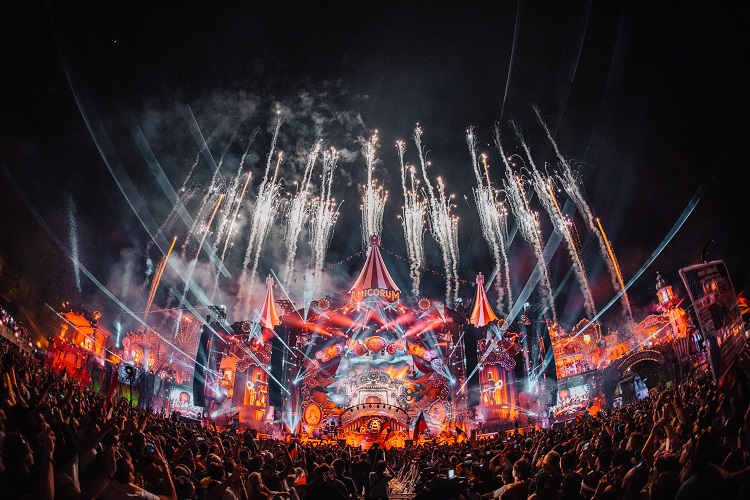
2017’s “Amicorum Spectaculum” was a Tomorrowland like no other. The largest stage to date, the most impressive and expansive line-up in Tomorrowland history, the most tickets sold, and the most countries represented by its participants since the festival’s inception.

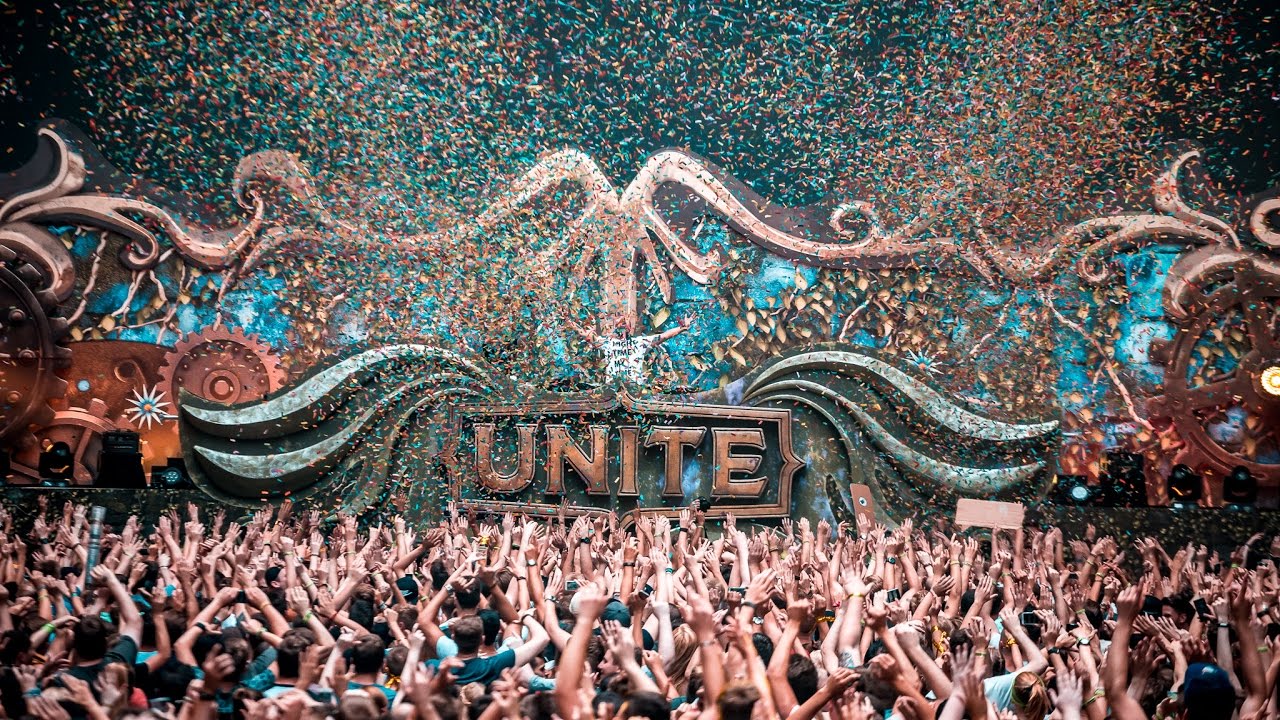
The 2017 Official Aftermovie was a paragon of seamless interplay between visual and aural experience. The almost half hour long video not only shows off the incredible production value of the event itself, but presents a narrative that explores themes of unity, multiculturalism and acceptance that the festival has preached since 2005.

The video opens with a panoramic view of the festival grounds, themed airplanes and an incredible montage of flags from all over the world that festival goers proudly display. These opening scenes are accompanied by atmospheric tracks from Steve Angello’s fittingly titled Genesis EP. The track used in this first scene, Rejoice, is a massive departure from the EDM ( specific genre of pop electronic dance music popularized in the early 2010s) sound that put electronic music on the map in foreign markets. Steve Angello as an artist maps this evolution of electronic dance music, he was at the forefront of the EDM push in the 2010s as a member of the iconic trio Swedish House Mafia. This track explores more underground sounds than those he rose to prominence with, its synthesis of grunge rock and sampling of gospel and religious vocals are indicative of the return of electronic music to its experimental and exploratory roots. An incredibly fitting tune for the opening scene of the worlds foremost electronic music festival.

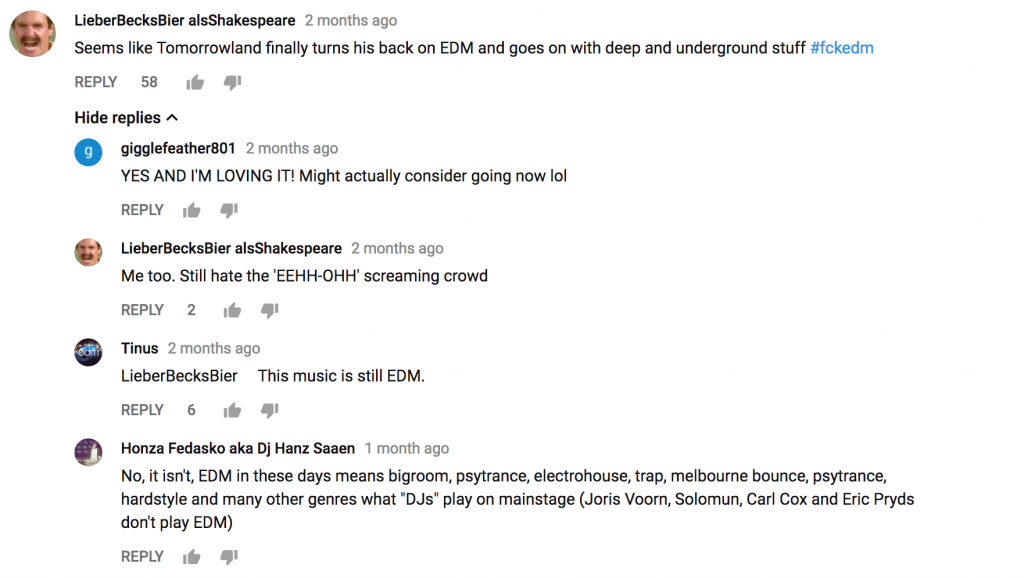
User LieberBecksBier alsShakespeare comments on this return to electronic dance music’s roots. He mentions Tomorrowland “turning its back” from EDM, a term coined in a huge multinational marketing push, meant to make the music more accessible to younger audiences. The term EDM stuck around longer than intended and became a blanket term for the incredibly diverse and imaginative sound world of electronic music. This “blanket effect” led to a long period of homogenization of mainstream dance music, which had a devastating effect on the creativity and individuality of underground artists. The popularity of Skrillex and Swedish House Mafia specifically made  the american perversion of dub-step and a very specific progressive house sound respectively, the overwhelming and sole mainstream sound for many years. Tomorrowland in this video, strategically chooses tracks and artists that embody the return to the creativity and sounds of the pre-EDM rave.

The next few minutes of the video explore the move-in process. A building trance track (Filterheadz’s Kaleidoscope) accompanies time-lapse clips of people walking into the festival’s temporary campgrounds. Interspersed between the clips are  people’s thoughts on attending the festival, representing a variety of shapes, sizes, colors and nationalities. As the music builds, the excitement and speed of the clips build as well, climaxing in the first experience of a hard “four on the floor” beat track, and a first full frame shot of the iconic Tomorrowland mainstage. The frames seem to change in time with every idiosyncrasy of the track, and as the “welcome to the jungle” vocals start to creep in, all of the festival’s 16 stages are presented in a whirlwind of quickly shifting frames. Just as quickly the music stills and nighttime falls.

This is when the incredible cinematography and production of the video and event truly come to life. The House of House, a track by the festivals main headliners Dimitri Vegas and Like Mike builds as the lights and lasers of the festival begin to come alive. The anticipation of the eventual “drop” is heightened by quickly changing frames, odd vantage points, peeks of pyrotechnic displays, as soon as the main portion of the song begins, the camera focuses on the incredible fireworks, lasers and enthusiastic dance from people and artists alike. The music, audience, Djs and stage all move to the same beat, and form a cohesive experience.

A similar cycle of low tempo ambient to high tempo house tracks accompanying a transitioning from day to night is employed in the next part of the video. Smiles, flying hands, bouncing heads are featured from all kinds of festival goers. This concludes with words by the godfather of modern electronic dance music, Armin Van Buuren .

On the  mainstage with the word “UNITE” proudly displayed at its base, he brings attention to the 7 satellite shows providing live stream coverage around the world; Germany, Dubai, Lebanon, Malta, Spain, South Korea, Israel.  This scene is accompanied by Martin Garix’s track Pizza, not only does the incorporation of string instruments make the moment incredibly nostalgic, but it speaks to the future of the genre. A 21 year old wunderkind, Garrix represents a controversial but promising future of globalization and multiculturalism embodied in electronic dance music’s next generation of fans.

“It’s an amazing feeling to know that while you’re getting goosebumps at the MainStage in Belgium, literally millions of people around the world are watching my performance, even organizing home parties and having an amazing time as well.” -Armin Van Buuren

This globalization of the art form, and incredible role technology continues to play on the dissemination and consumption of the music is further explored in user vadeske’s comment:

The festival’s online presence has allowed it to reach homes across the world, in a way that could never have been imagined in its inception. The idea of unity earns a new meaning when social media and live stream engagement for  Tomorrowland’s 2017 edition garnered over 1.2 billion views by more than 200 million unique fans.

 “Not only has the growth of the event itself been amazing but also the content that they produce, like the live registration and after-movie. It just gets better and better each year. I think it’s great that people at home can watch the live stream and experience the festival as if they were there themselves.” -David Guetta

The video ends with an incredibly moving snippet of  London Grammar’s Hell to the Liars Remixed by Kölsch. Along with text thanking performer, artist and visitor alike for the creation of the experience, the music creates a nostalgic and incredibly emotional atmosphere. This track takes an indie-pop Nottingham native band’s song, translates it into trance style sounds, and ultimately fades to a string orchestration, very reminiscent of late romantic music, faded and echoey vocals and incredibly faint acid house sounds are barely perceptible. One would we be hard pressed to find a track that more perfectly embodies the state of transformation electronic music is experiencing so beautifully curated by Tomorrowland.

In its final scene the video urges viewers to take the beauty of the experience and use the impulse to “spread [their] message to the world…” Live today, love tomorrow, unite forever. These egalitarian, utopian and community oriented ideas may seem idealistic, but for three days every year, this video and festival argues that Tomorrowland proves living by these principles is achievable.

Progress and cohesion are central to driving this point home, and many comments below the video praise not only the cinematic and musical content, but the accurate representation of the ideals and atmosphere of the festival experience.

Tomorrowland 2017’s “Official After Movie” is a celebration of its performers, audience, artists, but more importantly explores the real-time evolution of electronic dance music and serves as a platform to further preach its ideas of unity, acceptance and multiculturalism.

Cats and Absurdism

The best part of Thundercat and Eric Andre’s collaboration in the music video for “Tron Song”, is that the images and music absolutely do not combine to create any form of traditionally meaningful or powerful experience. Instead, the video consists of an amalgam Thundercat’s numerous personality quirks slammed together with Eric Andre’s distinctive directorial style and absurdist humor, resulting in three minutes and change of wackiness and tonal ambiguity that both confound and enchant the listener.

A track off of Thundercat’s second album, Apocalypse, Tron Song has all of seven distinct lines of lyrics, with the majority of the track consisting of Thundercat’s chordal bass guitar (emphasis on the guitar) technique, paired with multiple tracks of Thundercat’s floaty falsetto harmonizing over itself. To call the track a ballad is misleading, especially with Flying Lotus’ constantly shifting percussion that occasionally underlines Thundercat, but the feeling behind the track is that of a traditional ballad with the main lines of the hook, “Don’t you ever leave me turbo troooooooooooooooon, Don’t ever wonder where I’m going”, being a loving reference to Thundercat’s cat, Turbo Tron Over 9000 Jesus Baby Sally.

This provides a segue into how a video of this aesthetic even came into existence.  A comedy collective named JASH began a series on YouTube (of which this is the second video) with the simple premise of giving $5,000 and full creative control to a comedian and musician tandem to create a music video. It’s fitting that JASH chose one of the most unique voices in television currently, as Eric Andre hosts quite possibly the most absurd talk-show of all time on Adult Swim. A bonafide master in the art of cringe comedy, low-budget spectacle and all around nonsense (as evidenced by simply the intro of his first show), Andre is the perfect choice to direct for this premise, and pairing him with the most singular bassists since Jaco Pastorius (and one of the most unique personalities in the music scene today) was a great way to extend such as the 5K music video idea.

As for the video itself, low budget is the name of the game as Eric Andre uses effects to create tape glitch or distorted effects, reminiscent of schlocky 90’s b-movies that you would find on VHS in the back of a video store. This could easily come off as gimmicky if it weren’t for the fact that Thundercat looks and dresses like a character straight out of a 90’s B-movie with hair in every direction and a wardrobe that defies any conventions, ranging from varsity jackets to Vegeta’s armor from the TV show Dragon Ball Z. If there was any doubt over the nonsensical direction this music video would take, Andre eliminates it by cutting in an image of Thundercat playing his bass on backside where there are no strings in the first thirty seconds. The breaking point in the video is around the 40th second where Thundercat’s discovery of a handgun (and subsequent suicide?) in a human-sized litter box coincides with Flying Lotus’ drum pattern crashing in. The following images that range from police brutality to Thundercat traveling through Tron’s anus into space to defecation and sexual acts in the aforementioned litter box are almost to an extent disturbing, especially considering the cute quirkiness of the first half a minute. Herein lies Eric Andre’s brilliance though, as he employs a technique he used to make his talk show a viral hit. Andre takes a pre-established format familiar to the average person (such as a talk show, or in this case, a typical love song video), but throws out every semblance of internal logic and coherence, instead attempting to provoke simply any type of reaction, be it disgust, incredulousness or anger via increasingly absurd images. This type of direction and aesthetic is perfect for Thundercat, who as a bassist also capitalizes on a level of incredulity and subversion. The traditional bassist plays on four strings, single notes, and for the most part is part of the background and foundation of the music rather than the ornament. Thundercat turns all of these standards on their heads, playing a six-string bass in a very guitar-like matter, with outrageous eye-catching clothes and a penchant to very rarely play on the low-end of the instrument (similar to his perpetual falsetto), all of which serve to emphasize the absurdity of his existence as a musician.

As for Youtube’s response to the video, the majority of people appear to already have some knowledge of either personality involved so this portrays their general reaction after watching the video.

Some people though, such as Unreal Psycho, are more perplexed that there was any money involved, asking, “where’d the 5k go to?”. In all actuality, my guess would be that the most expensive aspect of the video was having to buy the rights for the outro where Andre’s head blows up and Mortal Kombat’s classic FATALITY is said. Past that, the most expensive part would probably be buying a chroma key program (not expensive) to impose Thundercat playing bass over weird locations.

Jesse Smith states: “fuck this man. This is him just messing around, but the melody is life threateningly good”. I can’t exactly argue with this logic, but I’m not sure what Smith was expecting since none of Thundercat’s previous artistic output has ever been extremely self-serious.  His whole artistic personality is based off of tongue in cheek humor and sarcasm. Finally, with a more serious comment attempting to process the track itself, Hambloko says, “really digging the chord progressions. It’s like Prog R&B”. In general, I feel as though attempting to categorize someone as unique as Thundercat just ends up in redundancy, giving people both expectations that are impossible to fill, since Thundercat doesn’t fit into any category perfectly, while also possibly turning off potential listeners, especially since genres like Prog have a somewhat elitist and indecipherable connotation. He is right that the chord progression is dope though.


Opportunities for further exploration:

Or any other Eric Andre skit or interview (there’s plenty of compilations on Youtube)

An interview to get a better idea of Thundercat and his beliefs in music and life

Hannibal Burress and Chance the Rapper’s JASH video


Beyoncé’s “XO” : A Multisensory Music Video

Beyoncé’s song “XO” is track number 10 on her 2013 self-titled album, “Beyoncé”. Beyoncé labeled this album her “visual album” , as every song also has a music video. “XO” quickly gained popularity after its release. The majority of fans loved the song, however others had a negative reaction.

The song begins with the voice of a NASA Public Affairs Officer moments after the space shuttle Challenger exploded in 1986. Some of Beyoncé’s fans deemed using this recording insensitive, especially those who had lost loved ones in the disaster. Beyoncé responded to this saying “The song ‘XO’ was recorded with the sincerest intention to help heal those who have lost loved ones and to remind us that unexpected things happen, so love and appreciate every minute you have with those who mean the most to you”.

The music video, set in Coney Island (Brooklyn, NYC), illustrates what Beyoncé intended with the message of this song. I will break up my analysis into a few pieces: text painting, camera footage, and the effect of the music within the pace of the video’s visual story.

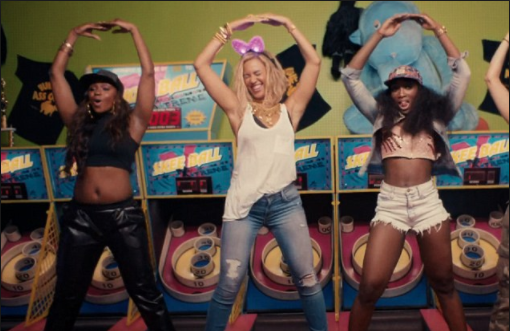
The music video begins with flashing colorful lights, and the first lyrics we hear Beyoncé sing are “Your love is bright as ever/ Even in the Shadows”. Immediately viewers see the contrast of light and dark. There is a sense of temporality both in the video and the lyrics, as we start seeing different scenes of Beyoncé singing individually, Beyoncé with friends in the amusement park and arcade, and random people having fun in the park. The lyrics “We don’t have forever/ Baby daylight’s wasting” Is shown with some scenes of the video being filmed in daylight, and some at night. When Beyoncé sings, “In the darkest night hour/ I searched through the crowd, Beyoncé is surrounded by people. Sun sets in the video with the lyrics “We don’t have forever”. I could go on and on, but basically this video does a great job visually representing the literal meanings behind the lyrics. This makes the song not only more digestible, but it becomes an experience of multiple senses.

The camera shots in this video are also very effective in creating a powerful musical experience. We see the juxtaposition of more intimate and close up angles of Beyoncé alongside moving and sometimes out of focus shots of people in the park. The clip of Beyoncé and her friends on the roller coaster is also an interesting camera shot because we can almost experience the ride as if we were Beyoncé. The camera is also very focused on people smiling and loving each other, which again makes the experience more intimate both visually and musically.


The music and the video come together harmoniously. Scenes are pieces in rhythm to the music, and because most of the clips are moving, the video compliments how upbeat the song is. Beyoncé and her friends also make a dance move out of “XO” with their hands that goes along with the music.

Overall this music video is very stimulating and makes listening to the song that much more meaningful. As I scrolled through the comments, I found three that sum up the general reaction to this music video.

These comments about being able to “feel” the music and the song taking them back to a certain place or atmospheric feeling are definitely influenced by the powerful experience of the video! Anyone who has been to an amusement park, have been out with friends late at night, or have even just had a great time with loved ones at any time can relate to this song and video, which is why it is such a powerful piece of art.

I hope watching this video inspires you to go check out some of Beyoncé’s other awesome music videos. Here are three that I was considering for this blog post and are just as cool and a testament to how music can be a multisensory experience with image, sound, and screen!

“Love on Top”

“Pretty Hurts”

“Halo”