Lingering Discord: K-Pop Star Vs. Politics

K-Pop. What can be said which already hasn’t been said? K-Pop, or Korean Pop, has become a music sensation spanning the entire globe, destroying the cultural barriers separating the West and Eastern hemispheres. With upbeat rhythms, insane choreography,

and overall presentation, it’s no wonder that K-Pop has become the global phenomenon it is currently today. However, it’s all ingrained in a fog of limbo between music and politics. Tiffany Hwang[1], a budding K-Pop artist and member of the popular group “Girls’ Generation”, made a critical mistake due to her lack of knowledge in cross country tensions and almost led to the end of her career.

Before getting into any form of politics, some important historical background of Korea is needed. During the early 1900’s, specifically from 1910-1945, Japan placed Korea under colonial rule and tensions were high between the two countries. Japanese occupation was ruthless as any of amount of freedom was severely limited. Koreans were forced to ban their own native language in schools, and were even demanded to change their names to Japanese, with a whole 80% of the populace complying with their demands.[2] However, the biggest atrocity to come out of Japanese occupation was the use of “comfort women”; essentially Korean women who were used as sexual slaves for Japanese soldiers.

Korean Comfort Women

This caused an immense rift between the two countries, one which still lasts to this day. In this article,[3] Jazeera writes “But they [Japanese] misjudged how deeply ingrained the issue is in South Korean society.” This single quote demonstrates the decades long strained relationship between both Korean and Japan.

Now, why include historical background when discussing K-Pop? It’s due to the fact that something as worldwide and influential as K-Pop cannot escape the grasp of past misdoings and politics. First, let me point out that K-Pop as a medium is extremely successful in East Asian countries, especially in Japan. KARA, a five member girl group, was able to generate a whopping $60 million dollars of revenue in Japanese CD and DVD sales alone on their 2011 tour.

The five members of KARA

On the surface, this seems like a simple transaction of cultural exchange and in way, it is. There was no ill intent both by the members of KARA and the Japanese audience. However, while the same could be said of Tiffany Hwang, the reception was drastically different and demonstrated the lingering political tensions between Korea and Japan. During Girls’ Generation’s tour in Japan during August 2016, Hwang posted several pictures on Snapchat with the Japanese Imperial Flag, serving as a way for her fans to know her current location.

This act in itself poses no political outcry and was just an innocent way of communicating between performer and audience. The problem comes from the fact that she posted these pictures on Korea’s Liberation Day.[4] As the name implies, this was the day when Korea broke free from Japanese occupation, liberated by both United States and Soviet Union forces. Due to the dense history between the two East Asian countries, this act by Hwang was deemed incredibly offensive to the Korean populace, especially on their day of liberation. Hwang was able to delete the pictures in a quick three minutes, but it was far too late: “Her career literally came to a halt,”[5] with sponsorships and television roles being taken from her instantly. In a way, this story correlates with Colin Kaepernick’s refusal to stand during “The Star-Spangled Banner”, albeit with differing connotations. In an article from The New Yorker, Kaepernick says, ““I am not going to stand up to show pride in a flag for a country that oppresses black people and people of color.”[6] This type of mindset is reminiscent of the people of Korea in how the Japanese Imperial Flag represents the same type of oppression Kaepernick himself feels. The Imperial flag is a symbol of inhumane oppression and is shrouded in decades of dark history and in Kaepernick’s mind, the United States shares this trait. It is also important to note that Kaepernick’s own devotion to protest the anthem is different than Hwang’s unknowing mistake; one was purposeful and the other was accidental. However, the theme of oppression is apparent in both and demonstrates the correlation between both stories.

In my mind, both Kaepernick and the people of Korea are justified in their reactions. I believe Blake put it well when he used the phrase “us and them” in his blogpost. In Kaepernick’s position, he was protesting against the history of the United States and the recent events which painted the country’s flag as a symbol of oppression; a fight between minority vs. majority. In Hwang’s position, it was almost as if the people of Korea were asking her the question, “Japan or us”. Hwang’s mistake essentially cements the idea that K-Pop stars are not immune to such scrutiny, especially with their celebrity status in Korea. Politics, those especially concerning Japan, are still touchy subjects and possesses the power to bring down the cultural powerhouse of K-Pop should the opportunity arise.

[1] https://en.wikipedia.org/wiki/Tiffany_Hwang

[2] http://afe.easia.columbia.edu/main_pop/kpct/kp_koreaimperialism.htm

[3] http://www.aljazeera.com/news/2017/09/south-korea-world-longest-protest-comfort-women-170908024721239.html

[4] https://www.army.mil/article/192286/korean_national_liberation_day

[5] http://thepolitic.org/when-pop-music-goes-nuclear-the-explosive-politics-of-k-pop-in-asia/

[6] https://www.newyorker.com/culture/culture-desk/colin-kaepernick-and-the-radical-uses-of-the-star-spangled-banner
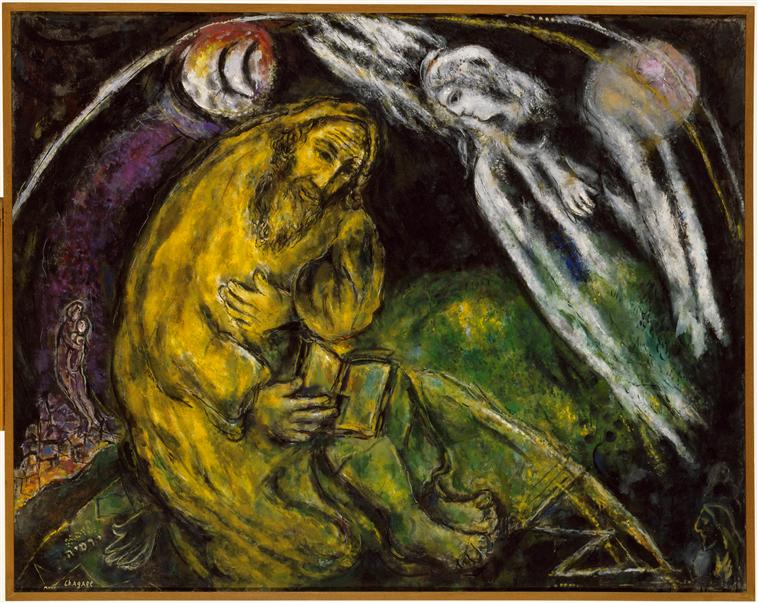
I Profeti

https://uploads4.wikiart.org/images/marc-chagall/prophet-jeremiah-1968.jpg

The year is 1931.  In the United States, the effects of the Great Depression are beginning to take a toll.  In Europe, unease reigns supreme.  The feeble peace brought by the treaty of Versailles still holds, but is beginning to crumble.  Antisemitism is once more on the rise.  As always when times are troubled, a scapegoat is found.  In the lead up to the horrors of World War II, Europe brings back the traditional bogeyman of the Jew.  While it is still years removed from the absolute evil of the Holocaust, Jewish life in Europe feels threatened.

In Italy, Mario Castelnuovo-Tedesco, a famed guitarist and composer of Jewish Heritage is approached by Jascha Heifetz with a request.  Heifetz wishes have a concerto composed for him, to be premiered by himself and Arturo Toscanini.  By 1931, Heifetz is already possessed of fame and glamour he will maintain for the rest of his life.  He has also been a naturalized US citizen for six years.  Castelnuovo-Tedesco accedes Heifetz’s request, and so Castelnuovo-Tedesco’s 2nd Violin Concerto, subtitled I Profeti, is born.  Into this work, Castelnuovo Tedesco channels all his pride in his Jewish Heritage, and all his fear and defiance towards the uncertain grim future.

I Profeti is divided into three movements, each named after a prophet from the Torah (Old Testament).  These movements are, in order:

  1. Grave e meditative Isaiah
  2. Espressivo e dolente Jeremiah
  3. Fiero e impetuoso (ma sostenuto e ben marcato il ritmo) Elijah

While the concerto is generally in minor mode, the final movement Elijah is a rather boisterous march in major.  This, combined with the fireworks in the solo violin may signal Castelnuovo-Tedesco’s optimistic outlook towards the future.  Another, darker interpretation, stems from the religious implications of Elijah’s return.  According to Jewish liturgical lore, Elijah is set to return at the end of the world, at the age of ultimate redemption.  [Side note – every Passover, Jewish Families set aside a cup of wine at Seder for Elijah, and leave a door open for him]  Thus, the celebratory finale may also be seen as a sign of Castelnuovo-Tedesco’s readiness for the end of days.

While the social implications of such a work of art are clear, the political implications may be more obscured.  Unfortunately, both in 1931 and now, Hate is political.  To stand up to it then becomes a poltical gesture in itself.  Castelnuovo-Tedesco was under no obligation to open himself up to further attacks by exposing his Jewishness in such a clear manner.  Yet, he chose to remain true to himself and his heritage.  Often, a work of art becomes more than the simple lines on canvas or sound waves in a concert hall – it becomes imbued with the politics and social standings of its creator.

While a work of art can reflect history, it can not change it.  Castelnuovo-Tedesco’s valiant effort to change his world through his art failed, as history shows.  Persecution of Jews in Italy only escalated.  By the late 1930’s, works by Jewish composers were no longer permitted on the stage or the airwaves.  Castelnuovo-Tedesco’s livelihood is at stake.  In 1939, months before the beginning of World War II, he flees to the United States, where he rejoins Heifetz in California, which has become a hub of the artistic Jewish Émigré community.  He remains there for the rest of his life through his death in 1968, and rebuilds his reputation, composing soundtracks for over two hundred Hollywood films, as well as numerous works for guitar.

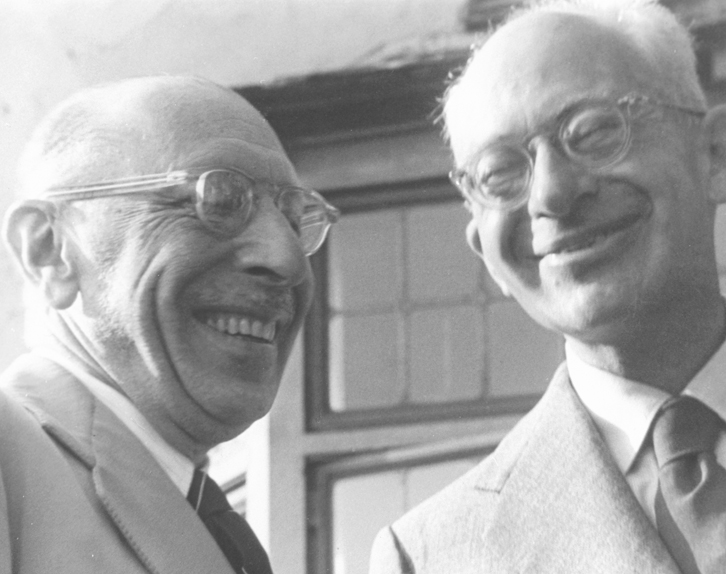
(Castelnuovo-Tedesco with Igor Stravinsky – http://www.milkenarchive.org/artists/view/mario-castelnuovo-tedesco/)

To me, I Profeti holds a special place in the pantheon of works for violin for the defiance that went into its composition.  Castelnuovo-Tedesco refused to be cowed into submission by the forces of hatred.  He chose to celebrate his Jewish Heritage rather than be terrified by the consequences of it.  I Profeti stands strong as a celebration of Jewish Culture and learning, and remains relevant today not just as a work of art, but as an act of political courage.


Sources:

Biography

http://www.milkenarchive.org/music/volumes/view/a-garden-eastward/work/violin-concerto-no-2/

http://www.chabad.org/library/article_cdo/aid/111833/jewish/The-Prophet-Elijah.htm

https://en.wikipedia.org/wiki/Mario_Castelnuovo-Tedesco

Europe in 1931

Elon, Amos. The Pity of It All: a Portrait of German Jews 1743-1933. Penguin, 2004.

“Back In the USSR”: Parody or Political Statement?

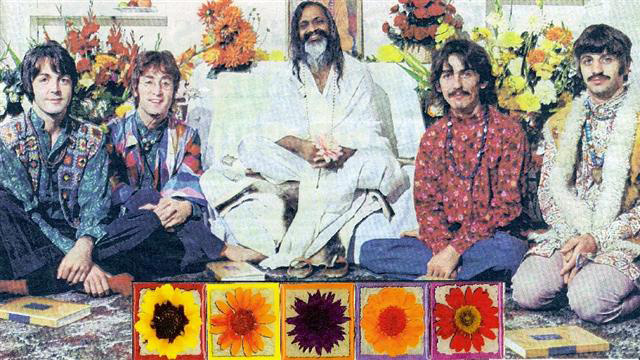
In early 1968 , The Beatles went on a meditation retreat in Rishikesh, India. They aimed to study Transcendental Meditation with their guru Maharishi, and eventually become teachers of this craft. Mike Love, from the Beach Boys, was also on this trip.

The Beatles with the Maharishi Mahesh Yogi

Love recalls  “sitting at the breakfast table and McCartney came down with his acoustic guitar and he was playing ‘Back In The U.S.S.R.’ and I told him that what you ought to do is talk about the girls all around Russia, The Ukraine and Georgia. [Paul] was plenty creative not to need any lyrical help from me but I gave him the idea for that little section”. McCartney did in fact take Love’s suggestion and wrote about admiring girls from Georgia, Ukraine, and Moscow, all locations represented in the USSR (Union of Soviet Socialist Republics).

Album Sleeve


A performance of “Back in the USSR” by the Beatles


“Back to the USSR” represents influence and power that music has in creating political controversy. When the song was released in 1968, America was at war with Vietnam. Because Russia supported the Viet Cong, conservative Americans immediately rejected this song, believing the Beatles were sympathizing with the enemy and promoting communism. The lyrics to this song fueled anger in Americans, especially the John Birch Society, who were particularly offended by the lines “You don’t know how lucky you are, boys”.

Additionally, this song caused controversy in Russia. Rock and roll was not respected at the time and the Beatles were not either. This said, Back in the USSR became wildly popular in Russia, and people sought to listen to the song even from tapes smuggled into the country. Elton John performed the song in Moscow a year after Americans had boycotted the 1980 Summer Olympics in Russia and wrote “they went ape s—. It was like playing ‘Philadelphia Freedom’ in Philadelphia”. The fact that there was such varied reactions to this song only made it more controversial.

Paul McCartney argues the claims of this song being politically charged by explaining this song as a parody of Chuck Berry’s hit “Back in the USA”.

McCartney says “I just liked the idea of Georgia girls…and talking about places like the Ukraine as if they were California, you know?…Its a jokey song, but it’s also become a bit of an anthem now…In my mind its just about a [Russian] spy who’s been in America for a long time and he’s become very American but when he gets back to the USSR he’s saying ‘Leave it ‘til tomorrow to unpack my case, Honey, disconnect the phone’”. It is interesting that McCartney had to defend himself for attempting to humanize young people on the other side of the world, and was also forced to defend the feeling of pride and comfort when a person returns home.

Performance of “Back In the USA” by Chuck Berry


In the article “Colin Kaepernick and the Radical Uses of the Star Spangled Banner”, Robin writes “Our national symbols are always more complicated than their original myths”. Kneeling at a football game to illuminate long-standing racism is viewed as a disrespectful and criminal act amongst conservatives. This can relate to Back in the USSR. Just as kneeling down during the Star Spangled Banner has become a controversial symbol of a larger national issue, Back in the USSR developed into a symbol of controversy during a time when a war was taking place . A parody song aiming to humanize non-American young people became a highly political debate.

This topic is very relevant to our class so far because we have focused so much on audience reception, the power of change and imitation, and how composers adapted to political ideals or brought to light political issues in their music. Politics and music will always be intertwined because politics inspires the cultural environment. As music is a pillar of culture, it is fair to say that these two will always have a powerful connection.

Miriam Makeba: “Mama Africa”

It is crazy to think that apartheid, the system of institutionalized racism in South Africa, was abolished way too recently in 1991. It was just twenty-six years ago that South African people were classified into four different racial groups with the goal of maintaining white supremacy. It gave rise to some of the most influential protest movements, within the country, by characters and heroes such as Nelson Mandela, as well as on a global scale. The arts and specifically music had a huge role in the fight against apartheid, with singer Miriam Makeba as a leading musician campaigning against the cruel injustices of apartheid in South Africa.

I’m sure you will recognize Makeba when listening to her performing her awesome “Pata Pata”:

However, today we will be focusing on her performing of the song “Soweto Blues,” by her one of her husbands, which talks about the 1976 Soweto uprising in South Africa. It was decreed in 1974 that the language Afrikaans was to be taught as much as English in schools. Because Afrikaans is inherently linked with racism, between 10,000 and 20,000 black students took to the streets of Soweto to peacefully protest the new law. The police quickly applied their forces very violently, leaving thousands of people injured and around 100-700 dead (the number of casualties is unclear).

Upon this tremendous tragedy, Miriam Makeba performed “Soweto Blues” at every chance. Its lyrics exclaiming,

“There was a full moon on the golden city Looking at the door was the man without pity / Accusing everyone of conspiracy / Tightening the curfew charging people with walking / Yes, the border is where he was waiting / Waiting for the children, frightened and running / A handful got away but all the others / Hurried their chain without any publicity.”

Miriam Makeba had an extensive musical career and participated in various bands, jazz bands, musicals, and films in Africa since very young. She got to travel to Venice to receive an award for her role in the controversial movie Come Back Africa, a documentary on South Africa. Makeba was soon in trouble with the African authorities for it because it portrayed their true and terrible side, and they obviously didn’t like it. She decided to not come back to South Africa, even if it meant she would practically get no payment for her performances. South Africa then revoked her passport, having Makeba officially in exile and preventing her from attending her mother’s funeral in 1960.

Miriam took refuge in London before coming over to the United States, where she would shoot to fame, performing for president John F. Kennedy, as well as alongside Nina Simone and other legendary artists in different occasions. She became a major activist against the injustice of the apartheid system.

“Music was a central part of the struggle against apartheid. The South African government censored many forms of expression, while many foreign entertainers refused to perform in South Africa and discouraged others from doing so in an attempt to isolate the white authorities and show their opposition to the regime. . . From abroad, Ms. Makeba acted as a constant reminder of the events in her homeland as the white power structure struggled to contain or pre-empt unrest among the black majority.” 

As if her stunning singing wasn’t enough, she even went on to testify for the United Nations Special Committee against Apartheid:

No wonder she is often called “Mama Africa!”

Let’s connect this to present day events, shall we? This movement against apartheid very clearly connects to Colin Kaepernick’s refusal to stand during the rendition of “the Star Spangled Banner” in protest and awareness of the oppression people of color are still living every day in the United States. I find the discussion on the various transformations of the anthem very meaningful and relevant to the crucial issue at hand—the oppression of an entire group of people because of their race—and directly connects to the music of protest and activism against apartheid in South Africa.  The Civil Rights Movement in the U.S. and the anti-apartheid movement in South Africa shared various similarities and both achieved a lot for people of color in terms of legal equality. However,  there is still a lot to be done in terms of social equality, and that’s what characters like Colin Kaepernick are rightfully protesting.


Musicians During the Great Depression

How important is it for artists to create or play music that is personal to them? Artists during the Great Depression were hired to be in the WPA by the American Government in the 1930s. They were paid to write and play music that lifted the spirits of a poor nation, that showed patriotism and pride in the US. Orchestras would play selections from the European classics as well, but were always required to play music from an American composer. These American composers were heavily influenced to write in as American of a style as possible, with the overall goal of ending the Depression.

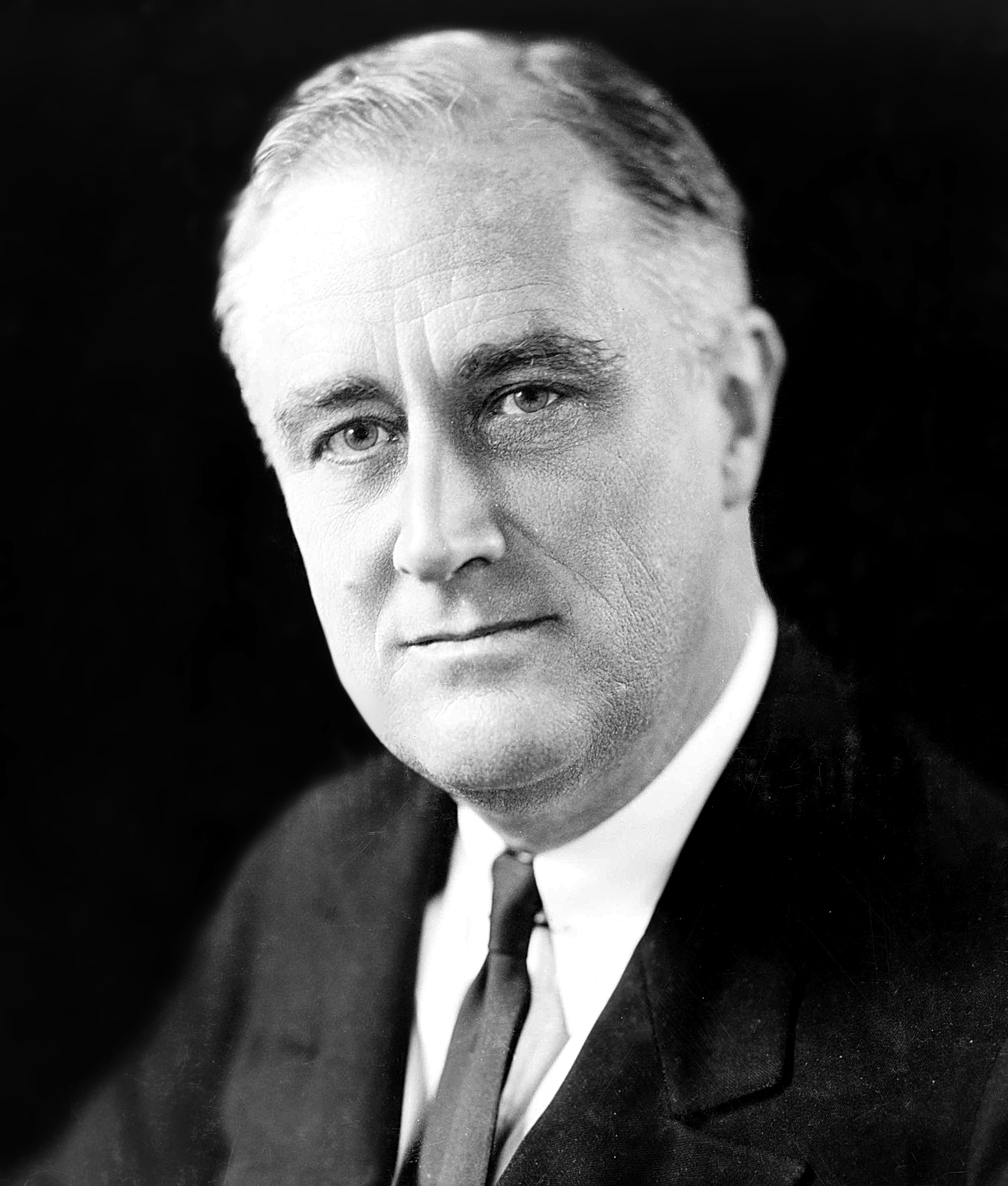
The WPA began on May 6th, 1935 by the Franklin D. Roosevelt administration. The purpose of the Works Progress Administration was to give jobs to Americans during the Great Depression. This was part of FDR’s New Deal, and the idea was to put the Americans to work being creative and uplifting the spirits in the nation. Eleanor Roosevelt was a major influence on FDR to create jobs for Americans in their field where they could be paid, this was very important for boosting the pride and self confidence of Americans. The WPA had many branches to it, and the one for musicians was called the FMP (Federal Music Project). The FMP hired all sorts of musicians including teachers, orchestral players, chamber music players, jazz musicians, singers, composers, etc. It was a bit of a struggle to get classical musicians to support American music at the time, because there was a huge appreciation for European music. Since the WPA was made to create American jobs and focus on American success, it was very important to the US government to insist on a certain amount of the music to be composed by American composers.

One of these American Composers hired by the WPA was Aaron Copland. Many composers of this time were pretty far left on the political scale, and Copland was not necessarily an exception although he didn’t seem to be an activist. During this war and anti-communist period, the political party in power was the Democratic Party but it was on the conservative side, so as not to appear socialist. This made far leftist musicians not the majority, although the majority of artists and intellectuals were interested in socialist values. Despite some political differences, the WPA still hired musicians based on merit more-so than political ideology (although there were a few cases where the government would not fund a show if it had “inappropriate” content, such as in the play The Cradle Will Rock by Marc Blitzstein). Copland was very popular among the population and the government. He created the sound that we associate “American” music with now. Some of his most famous pieces include Rodeo, Billy The Kid, and Appalachian Spring. He used many American folk tunes to create nationalist music, very similar to how European composers wrote their nationalist music. For example, Appalachian Spring is heavily influenced by Stravinsky’s Rite of Spring because of its use of authentic national music.


https://www.youtube.com/watch?v=WVahuS9hk_s

The question that I have to ask about this program; did it cause composers and musicians to write or play music they wouldn’t naturally have done? And is it the right of the American government to dictate what should be written and played? In the 2017 article Trump is Wrong if He Thinks Symphonies are Superior, Mr. Tommasini writes that President Trump believes that Western music was far superior to specifically Radical-Islamic cultures, essentially encouraging American classical composers to write music to show how much better we are than other cultures. Many politicians during the Great Depression were so afraid of communism (much like Trump is of Islam), that they wanted music to influence American values to show how different they were from communists. Yet by doing this, they copied what the Soviet Union was doing during the Socialist Realism period. Composers in the Soviet Union, like Shostakovich, were afraid of writing music that wasn’t liked by the government because they could be arrested, so they had to find ways to write music following those rules or at least hiding it so well that no one understood. Copland wasn’t afraid of the government coming to take him away in the middle of the night, but it is possible that composers would fear they wouldn’t have a job if they wrote anti-American music. They had to create something that they didn’t necessarily believe in, especially if they were socialists/communists.

Where is the line that we as musicians shouldn’t cross to remain true to our creative selves? Is it more important to treat music as a job or as an art, or can it be both? I don’t think it is fair to say that Copland was a sellout to the American government, but how much should we allow the government to dictate what we can create as art?

The not so crazy Eminem Freestyle.

Earlier this month the BET awards showed a ‘highly controversial’ cypher featuring rapper Eminem bashing Donald Trump. The video can be seen here:

https://www.youtube.com/watch?v=LunHybOKIjU

While this naturally received a slew of press, celebrity endorsements, and right-wing hatred, to me it seemed to play into all the ideals that hip-hop has always stood for. Hip-hop, as an urban and traditionally African-American art-form naturally has a liberal agenda, values equality and inclusion, and esp. stands for civil rights (think Public Enemy, N.W.A., Mos Def, etc.). Therefore, while Eminem was definitely audacious (per his usual self) his views were certainly not a surprise given the hip-hop genre’s continued expression of left-wing ideals. In no way do I mean to discredit the ideals associated with hip-hop, in fact I stand with them, but I do mean to say that people getting surprised at a rapper having democratic views, would be like a teacher getting surprised that there students do their blogpost the day beforehand.

Needless to say this politically charged rant was met with cheers among other outspoken advocates for equality. The rap notable stands with Colin Kaepernick with the line “This is for Colin, ball up a fist.” Colin Kaepernick, of course made recent headlines with his refusal to stand for the national anthem at a preseason NFL game. Colin was quoted in an article with The New Yorker, saying that “To me, this is bigger than football, and it would be selfish on my part to look the other way. There are bodies in the street and people getting paid leave and getting away with murder.” Colin gave a shout out to Eminem showing his support via Eminem was also given props by J. Cole and Lebron James, among many other celebrities.

To me these celebrity endorsements definitely show support for Eminem, but they do little beyond that. These tweets seem to circumvent actually saying anything substantial by merely showing support. I suppose in the Twitter age this is how support is shown, but at some point it makes you wonder when they are actually going to open a serious dialogue about their positions. The entertainment industry as a whole has expressed their disapproval for Trump several times now, but simply talking about it doesn’t seem to be doing much but catching headlines for a few weeks. I suppose what I’m saying is that art in this case Hip-Hop has advocated in attempts to affect social change for some time, but to me and it seems like to Eminem and other celebrities, we want to do more than just talk about social change we want to actually affect social change.

One idea that I think is pertinent to mention in discussing actually affecting social change is the “us and them” mentality, as it plays right into the hands of people who want to divide us. In keeping with the us and them mentality that divides the left and right parties of America respectively, Trump was recently quoted in an article by the New York Times saying “We write symphonies,” and in doing that essentially inferred that the white, right-wing, western world writes symphonies, (the pinnacle of music), and that, as a clear expression of our superior intellect, will help us overcome the barbaric savages we currently fight against (hard sarcasm). Trump’s ideals aren’t so much shocking anymore, but the fascinating thing is the clear connection he is making with music and politics. Our last president, Barrack Obama, was noted as having several rapper’s visit the White House, and said his favorite song of 2015 was Kendrick Lamar’s “how much a dollar cost.” Clearly, showing that president’s use their music choices to represent to the public something about themselves and their ideals. The problem with this and the ‘us and them’ mentality, is that when Obama was bringing rappers into the White House it was met with much contempt by the right wing, and now when Trump references symphonies the New York Times rips him apart in the aforementioned article. I think it is important to stand for what you believe in, but the “I’m right because you’re wrong” mentality I think is only dividing us further. It also isn’t to say that having one party where we all get along is ever going to happen either, as we clearly observed with the U.S.S.R. and socialist realism works of composers of that time. The point isn’t to make everyone fall in line and believe one ideal, but it also isn’t to alienate people and mock their views. We are not all going to get along, but I think if we can come together on some common ground, we could at least open a dialogue, which at this point seems out of the question by left-wing advocates like Eminem, but also by Trump himself.

Further research

Full Lyrics of Eminem’s Cypher

New York Times article about Eminem’s cypher

USA Today article about Eminem’s cypher

For other rapper’s speaking out against Trump, please see Snoop Dogg’s Lavender which was condemned by Trump in an article by the New York Times. 


Will Musicians ever learn to Breathe?

https://www.youtube.com/watch?v=k1dbb5x7PSQ

Breathe Dammit!

rants by Livio Fasullo 9/17/17

Every morning hundreds of tired Eastman Students get out of bed and walk across Main St. to begin their morning practice sessions in the Eastman School of Music Annex. Some of these students play string and percussion instruments while others sing and wind instruments. Most of these young and ambitious Eastmanites are completely unaware that they are constantly filtering oxygen through their lungs in a process known as breathing (too focused on the next seating audition, or concerto competition). Those who are aware and conscious of their breathing and how it can create greater ease in their playing will likely see much improvement in their studies, regardless of instrument (yes, even string players).

Ironically, many of us take deep and shallow breathes from our chest, keeping us nervous and un-focused (with the additional aid of Java`s Coffee) and then spend hours in the practice room trying to get better. In the weeks leading up to juries Eastman feels like an Urgent Care with countless students in casts due to practicing injuries. Many of us forget that we can incorporate much more ease into our practice and life by simply breathing, and it`s free! (Unlike PT).  Our breathing system is an essential technology for us humans that when used naturally allows for enhanced quality of life by relaxing our mind and focusing our muscles.

Breathing as a Technology

According the Merriam-Webster online dictionary a technology consists of “the practical application of knowledge especially in a particular area”. (https://www.merriam-webster.com/dictionary/technology) We are all unconsciously applying our breathing apparatus (diaphragm, lungs, brain, veins/arteries) every day (if you didn`t you would die), but many of us have allowed our minds to turn our breathing apparatus on auto pilot. To understand this better let`s take a look at how breathing works.

  The Science of Breathing

The actual scientific process of breathing is quite complicated, but luckily for us, we can breathe instinctively without thought. Breathing generally consists of  two large phases, inspiration and exhalation. As we inhale our diaphragms move downward increasing the volume of the upper body (thorax), which lowers the existing air pressure in the lungs allowing air to enter from the atmosphere. As we exhale the diaphragm relaxes and the volume of the upper thorax decreases forcing existing air to leave the lungs. (https://www.unm.edu/~lkravitz/Article%20folder/Breathing.html).

When we go into our Sympathetic Nervous System (Fight or Flight) which involves heightened senses and quick shallow breathing when our mind believes that we are in a dangerous situation.(https://www.sciencedaily.com/terms/sympathetic_nervous_system.htm) Eastman students regularly experience their Sympathetic Nervous System when trying to find a practice room one hour before their lesson or when being “vibed” by other students. Unfortunately, many students also experience their sympathetic nervous system when practicing and performing.

The Parasympathetic Nervous System takes hold when we our minds are at ease. (http://www.medicinenet.com/script/main/art.asp?articlekey=4770)  The Parasympathetic Nervous System can always be reached through deep breathing.

History of Deep Breathing

Most Eastern cultures and nearly all martial arts consider deep breathing to be fundamental skill that all should have. Deep breathing helps relax muscle and focus the mind. It is a essential part of Tai Chi, Karate, Qi Qong, and Yoga. The Pranayama is a series of deep breathing techniques used throughout the practice of Yoga. Pranayama roughly translates to extend the life force/breath that is sustaining the body (https://www.yogajournal.com/practice/healing-breath). Yoga has been in existence for thousands of years, while common practice classical music was (arguably) first written in the 17th-18th century. But proper breathing can actually be traced back to the beginning of mankind. We all have the innate programming to breathe properly. If you watch a baby sleep, you will notice that it sleeps on its back and its stomach moves through the deep breathing process. We can lose that process as we get older due to an overabundance in stimulus in the digital age. As musicians we can find ourselves taking shallow breathes while worrying about our careers and upcoming performances. In the book Effortless Mastery, Kenny Werner refers to these dominating powers over  our lives as fear and ego (pg. 21). For a video on deep breathing check out his link:

https://www.youtube.com/watch?v=k1dbb5x7PSQ

Musical Benefits

As previously stated, deep breathing helps relax muscle and focus the mind. So how does this help us as musicians? Kenny Werner talks about the “Space”, a meditative state of being achieved through deep breathing and the release of ego. In the “Space”, a musician performs music effortlessly and thoughtlessly. (pg. 77) From a less philosophical standpoint breathing helps you to clear your mind of distracting thoughts and release unnecessary tension during practice and performance. Here is a video describing deep breathing for wind players:

https://www.youtube.com/watch?time_continue=34&v=sCEj3R_26wY

Some musicians who have mastered deep breathing do not need to move dramatically when they perform or play. In his book Effortless Mastery, Kenny Werner describes the excessive movement and shallow breathing of musicians as an attempt to coax out unmastered music (pg. 59). If you watch the first minute of this video of Ralph Bowen improvising on the saxophone, you will notice how he plays from the “Space” that Kenny Werner writes about. Take note of his deep breathing. You can see his chest and stomach move as he inhales. Also note that his mastery of  breath allows him to be still, almost at rest as he plays complicated music effortlessly.

https://www.youtube.com/watch?v=6IoUnl_1fgc&t=58s

Ralph Bowen has said that all playing the saxophone really involves is “air and fingers” (http://jazzprofiles.blogspot.com/2017/05/ralph-bowen.html). By practicing his deep breathing in conjunction with his instrument he becomes more relaxed and focused every time that he plays his instrument- as can all of us if we make deep breathing a regular part of out practice routine.

What does this mean for me?

Regardless of your profession, by understanding the technology of deep breathing you can become more relaxed and focused, allowing you to complete tasks at a higher level of efficiency. As musicians, deep breathing helps us to play and learn more efficiently, gain confidence in practice and performance and save time and money avoiding physical therapy. I hope that all Eastman students will take time to develop their breathing and become the best stress-free musicians that they can possibly be.

  Sources:

https://www.unm.edu/~lkravitz/Article%20folder/Breathing.html

https://www.merriam-webster.com/dictionary/technology

https://www.drdavidwilliams.com/proper-breathing-improves-health

https://www.bluedragonkungfu.com/breathing-exercises-martial-arts/

http://jazzprofiles.blogspot.com/2017/05/ralph-bowen.html

Effortless Mastery by Kenny Werner

Roland TB-303 and the rise of Acid House and Techno

Very few electronic musical instruments have left such a lasting impression and influence as the Roland TB-303. This “synth” machine was released in  1982 and marketed as an accompaniment machine for guitarists.  It was quickly written off as a failure due to its unrealistic distortions and confusing interface. The release of this bass machine synthesizer was so poorly received that production was halted in 1942 after the production of a mere 10,000 units. Despite its low price of $400, many groups complained of its unnatural sound which could never duplicate the human intricacies of a bass player.

“The switches and control knobs have several functions, so operating the TB-303 may seem a little complicated. You may find difficulty using the TB-303 at first, because it is so different from a bass guitar or keyboard instrument. There, this manual includes a basic, intermediate, and advanced course to help you understand these operations step by step. However, each individual operation is quite simple, so take your time and master each step.”

-This quote is taken directly from the Roland TB-303’s 1982 user’s manual.

Interestingly enough, the confusion and uselessness it afforded to the guitarists for whom this machine was created led to its ready availability in pawn shops and second hand stores across the country. The cheap and interestingly designed machine caught the eye of many garage-based producers and mixers in impoverished areas across the country. No where was this machine’s impact as immense as in Chicago’s  House and Electronic underground.  A few producers, most notably Chicago based Dj Pierre took this machine’s idiosyncrasies and fashioned  an entirely new bass beat, in effect creating a  new genre of electronic music.

“‘Acid Tracks wasn’t pre-programmed man… DJ Pierre, he was over and he was just messing with this thing and he came up with that pattern, man…So we were listening to it, getting drunk, man. “Hey, this is kinda hot, man. This is a great mood man. Let’s put it out””

-producer Marshall Jefferson

The Roland TB 303 features a keyboard spanning an 8va range, and a total of 6 knobs which control various effects. The machine also left producers to choose wether to work with a saw waveform, a complete revolution and distortion of the traditional square waveform.  When innovators such as DJ Pierre began using these controls to distort and augment simple baselines, they realized the “slippery” and completely new sound world the Roland made accessible.

These “slippery” sounds can be  heard in one of the most revolutionary works in contemporary music in history, the Dj Pierre produced ‘Acid Tracks” This new sound confused audiences at first, but after a few months, this track gained massive support in the underground rave scene and many more Chicago based Djs began to champion the Roland TB-303 and its new soundscape. This new sound in traditional Chicago House was dubbed Acid House, taking its name from the pioneering Dj Pierre track. This popularity spread as far as Britain by way of Ibiza where Acid-House beats reached main-stream popularity, in part aided by the Rave culture of the 1980s and 1990s.

Acid House’s focus on subtle evolution of a beat, and otherworldly sounds quickly became synonymous with the club drug culture already in its peak by the mid 1980s. Drugs like MDMA (known as molly, ecstasy, XTC etc.) LSD, Ketamine and others, quickly became synonymous with the scenes in which Acid House was dominant as the shifts and insistence of its sound provided an excellent compliment to many of these illegal drug’s effects. This led Acid House, by way of the Roland TB-303’s quirky unrealistic sounds, to become the soundtrack for the cultural revolution and  decadent freedom of the era.

“Back in the 80s those early acid records spoke about alienation , they said square peg round hole , the surrounding records were almost gospel like messages of hard times and hope , quite churchy. Or euphoric weekend escape Anthems like Someday ‘Aint no Stopping us now’,they had R n B roots. Something like Phuture or Adonis hit the spot for me with insistent abstraction, it was outsider music with pure energy, it had cut from the line of history, it was a page turned, a clean page. These machines meant we all had the same accent ,previously a UK record and a US record, or a Belgian record or a Dutch record all had an accent musically speaking, Roland was an esperanto.”

-Graham Massy, producer

Acid House’s dominance in the world of electronic and mainstream music came to an end almost as quickly as it rose. By July of 1989 Acid-House had faded into the mid ground of electronic sounds, but this was not before it had influenced the next generation of music. Mainstream dance pop was not immune to the Roland’s new sound, most notably the Madonna track “Ray of Light. New genres like trance, techno, big beat,  and trip hop can all be directly traced back to experimentation with Acid House tracks.  It’s influence is still incredibly apparent today, with many almost exact physical clones on the market, and numerous software dupes. Little did anyone know that this initial market failure, and quirky little piece of confusing plastic would change the face of pop culture in such an extraordinary way.

Full of Hot Air: Balloons, Dadaism, and The Avant-Garde

“Is there any way you can make that more cantabile?” the conductor asked. His question was met with resounding laughter from the rest of the ensemble, myself included. Though this is certainly not an odd request for a conductor to make in a rehearsal, the fact that the target of this question (a percussionist by trade) held in his hand an only-just-recently-deflated balloon made the whole thing seem just a little absurd. Found more commonly at amusement parks or clown conventions, your everyday garden-variety Mylar balloon also happens to be an instrument called for in the score of Talhoffer’s Crawfish (below), a piece of contemporary classical music. The question now becomes, how did a balloon make its way into our rehearsal space as an instrument as opposed to an accessory to a 5-year-old’s birthday party?

https://soundcloud.com/user-893617903/talhoffers-crawfish

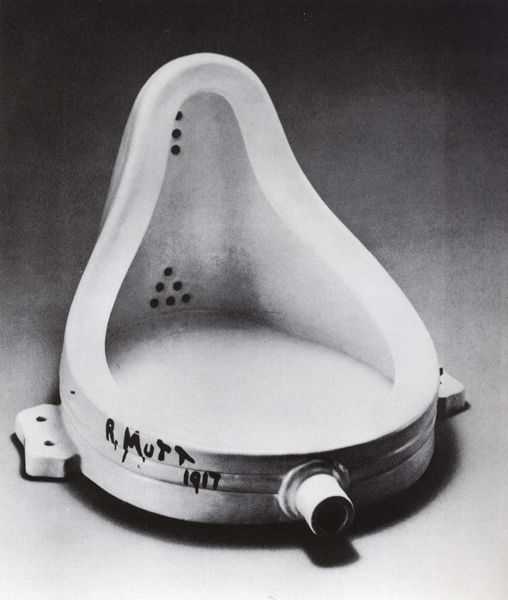
In order to uncover this, let’s delve a little bit into the use of regular objects in art. The use of found objects in 20th century visual art can be found most famously in the works of the Dadaist movement. One particularly well known example is Marcel Duchamp’s Fountain,

Marcel Duchamp’s Fountain, 1917

which is really just a urinal turned on its side with “R. Mutt 1917” scrawled along the base. As one of the first pieces of this iconoclastic genre of modern art, this article states Duchamp’s own summation of the work, a response in a 1917 issue of the avant-garde journal The Blind Man: “Some contended it was immoral, vulgar. Others, it was plagiarism, a plain piece of plumbing.” This touches on some key elements of the Dada movement, and modernism in general: the idea that the concept behind the piece becomes part of the piece itself, and that to be controversial is a positive thing. Dada originated as an avant-garde movement reacting to the terrible bloodshed and brutality seen during World War I. It was meant, in the words of Jean Arp (one of Duchamp’s Dadaist contemporaries), as a way “to destroy the hoaxes of reason and to discover an unreasoned order.” Dadaists placed emphasis on absurdity, repurposing of found objects, and the laws of chance. Though one of many different niches of modernist thought cropping up during the early 20th century, it would later be revived by the Neo-Dadaists in the 1950s and ‘60s.


The Neo-Dada movement revived Dadaist thoughts during the Cold War later in the century. Neo-Dadaism used things such as found objects and chance to shift the focus away from the artist him- or herself and instead on the audience’s reaction and interaction with the piece in question. This was not only a movement in visual art (Jasper Johns and Robert Rauschenberg are two big players here — you can read more about them here and here, respectively, if interested) but also in music. John Cage, possibly most famous for claiming silence as music in his work 4’33” (performed below by NOLA the Cat), was an important composer of this school of thought.

Cage followed the Neo-Dadaist philosophy of using found objects and chance in his works, something derived from their earlier Dadaist forerunners. 4’33” is in a sense completely a work of chance music, as the resulting sonic landscape of four minutes and 33 seconds of silence is whatever anyone in the hall happens to hear — the focus shifts from the music itself instead to the audience’s perception of that music. This particular work and others by Cage have influenced many musicians after him (a collection of reactions to his works and his contributions to the music world can be found here). Without Dada, Neo-Dada, and Cage and his like-minded contemporaries, it is unlikely that we would have ever been able to have that lighthearted exchange in our rehearsal concerning the cantabile-ness or lack thereof of a balloon deflating.

This brings us back to our original question: how did I end up in a rehearsal last weekend with someone playing the balloon, and why can we call that a musical instrument? To me, the origin of a balloon as a musical technology isn’t in the actual physical structure of it, but rather can be found in the artistic movements that allow us the freedom and openmindedness to see it as such. Without our avant-garde, Dada, and Neo-Dada forefathers, the use of balloons as a found object musical instrument would not likely be something we could come across in our scores today. Even though it’s something that can be found at any grocery store, the balloon is an instrument that takes practice and patience to get that perfect cantabile sound — and a lifetime to master.

https://www.youtube.com/watch?v=sIskW0xEGvM

Losing Touch: the age of headphones

Remove your headphones and an odd scene is revealed before you. All around people smile and laugh as they sway and shuffle about and yet there is something missing. This dance floor is eerily quite. There is no band. There’s not even any music playing out loud! Every person is in fact in their own world, isolated by a wall of sound in their brightly colored headphones. This is the silent disco!

It has been a long road to the world of “mobile clubbing”. Like many modern technologies, headphones have had a long and often static history, with more rapid evolution coming in recent years. The first headphones, designed by Ernest Mercadier, were used in the late nineteenth century for telephone operators. Shortly thereafter headphones were introduced to the music industry as the company Electrophone began a service in which Londoners could listen to live broadcasted performances of music and theatre. After a long stretch in which developments in headphone technology mainly came from the military, John Koss achieved the next defining moment. An avid music listener, Koss designed the first stereophonic headphones which resulted in higher audio quality and a more authentic listening experience. The most current advancement has not come in the form of headphones but in music players. Sony’s “Walkman” and more recently Apple’s “iPod” have worked hand in hand with headphones to enact fundamental changes in the way we consume and produce music

Electrophone headphones and stand.

The advent and widespread use of headphones has motivated adjustments in the way recorded music is produced. The primary reason behind these changes is physical; unlike stereo speakers, headphones contain a relatively small audio-producing mechanism and feed directly into each ear. These two differences create some issues and a quick Google search will uncover a raging debate on the proper methods of mixing music in today’s world. How can one make music sound good on monitors and in headphones? Is it ok to mix a recording using headphones? Is it absolutely necessary to mix with headphones?

In an article on forbes.com, Nick Messitte explains how producers boost the mid-range overtones of bass sounds to “fool” your ears into thinking there is more bass than earbuds can actually produce. What headphones lack in bass output, they more than make up for in mid-range frequencies and producers have learned to take full advantage.

The “in-ear” nature of headphones has also necessitated some changes in effective music recording methods. This article explains why panning instruments to different channels is no longer a good option. When instruments are panned to one side or the other on stereo speakers, it can make the recording sound more authentic; when we hear live music, the musicians are generally set up in some configuration in front of us so that we hear each instrument slightly more strongly in one ear than the other. There is a phenomenon by the name of “crossfeed” in play here. If a sound emanates from your right, your right ear will receive the signal more strongly and fraction of a second before your left. Your brain has learned to localize the source of sounds from this specific set of signals. The issue with headphones is that they eliminate natural crossfeed as each ear hears only what comes out of its respective side. If a recording includes panned tracks then it will sound somewhat unnatural as we hear the instrument more strongly in one ear, associate it with being positioned to the corresponding side, but then don’t receive the validation of the weak delayed signal in our other ear. A good example of this is The Beatles’ “Eleanor Rigby”. The Youtube version features all the tracks sounding straight down the middle (more or less) while the Spotify version has heavily panned lead vocals. Listen with headphones to each version, paying special attention to 0:13 where the first verse begins.

The panned version sounds as though Paul McCartney is singing directly into your right ear! The more recently adjusted version sounds more natural. As illustrated by this example, it makes sense for producers to move away from panning in favor of pleasing headphone listeners, even at the expense of losing the more “live” atmosphere of well mixed stereo recordings.

In a more abstract but just as important way, headphones have changed the way humans consume and interact with music. In an article in The Atlantic, Derek Thompson points out research that music evolved to “serve as a technology of social bonding”. Although Western cultures have been moving toward a more elite and specialized use of music for some time, the widespread use of headphones completes the about-face from “social bonding”. Headphones allow us to enjoy music completely alone, acting as a portable auditory social barrier even in the midst of a crowded social space.

While losing interpersonal connections is concerning, David Byrne worries at an even deeper level about the lose of connection with ourselves. In his book, How Music Works, Byrne argues that the constant presence of recorded music in our lives, enabled in large part by the technology of headphones, prevents us from hearing the “music ‘playing’ in our heads”. His point is that the humming, whistling, and audiating we constantly engage in while not listening to music is much more than a silly habit. It is in fact an essential creative process that connects us more deeply to music. In the age of headphones, music is more and more often a solitary one-way street in which we consume but fail to interact. Too often we defer to listening to what Byrne calls the “experts” (recorded artists) and forget that silence is absolutely necessary to allow for processing, synthesizing, and creating. Music is interactive in nature and we must avoid allowing headphones to lead us to becoming increasingly passive listeners.

From the tangible effects of adjusted production techniques to less obvious changes in the ways we consume music, headphones have had profound impacts on our lives. In conjunction with the advent of recorded music and portable music players, headphones have allowed music to be both more present in our lives and also more isolating than ever before. While headphones can be a wonderfully convenient and useful technology, it would be smart of us to be conscious of when and why we use them and how they effect our relationship to the music we can’t seem to get enough of.

Sources:

www.forbes.com/sites/nickmessitte/2014/04/19/how-earbuds-have-changed-the-sound-and-business-of-pop/2/#aab6b0a7c189

www.theatlantic.com/technology/archive/2012/05/how-headphones-changed-the-world/257830/

www.smithsonanmag.com/arts-culture/a-partial-history-of-headphones-4693742

www.stuff.tv/features/headphones-complete-history/rise-walkman-1979-1990

https://ehomerecordingstudio.com/best-mixing-headphones/

Byrne, David. “How Music Works.” Three Rivers Press, an Imprint of the Crown Publishing Group, a Division of Penguin Random House LLC, 2017, pp. 139–141.